Fishing landed late on the morning of October 7, and the first version was careful. Carve gorge hooks from bone, rig a pole from two sticks, a cord and a hook, cut bait from meat, cast at a pool at dawn or dusk, watch the float shiver and go under, then strike. On the fish, holding left mouse kept the rod up to absorb its runs, and running or wading spooked a pool for a minute or so.
A playtest that afternoon asked for fun first, and pointed at three things: the hand on the pole, a rod that looked snapped where its joint was, and a dashed streak on the water. Less than two and a half hours after the first version, the hand closed on the pole’s own twine-wrapped butt, the rod became one willow model that bends with the fish, with no joint to break, and the streak was gone. The pace changed too: bites within a minute at a good spot, a longer take so a strike feels fair, trout that jump often, and only running or wading to spook them. The fight was turned around. The rod now stays up on its own, and left mouse hauls the line in.
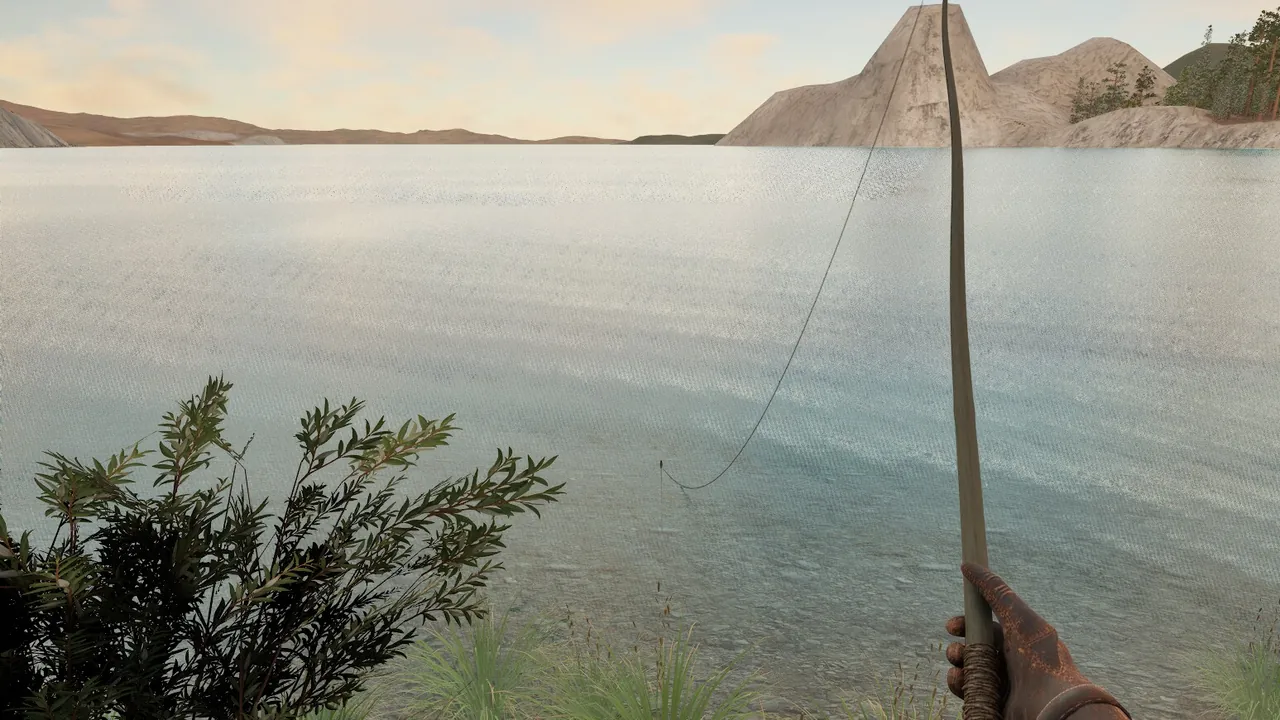
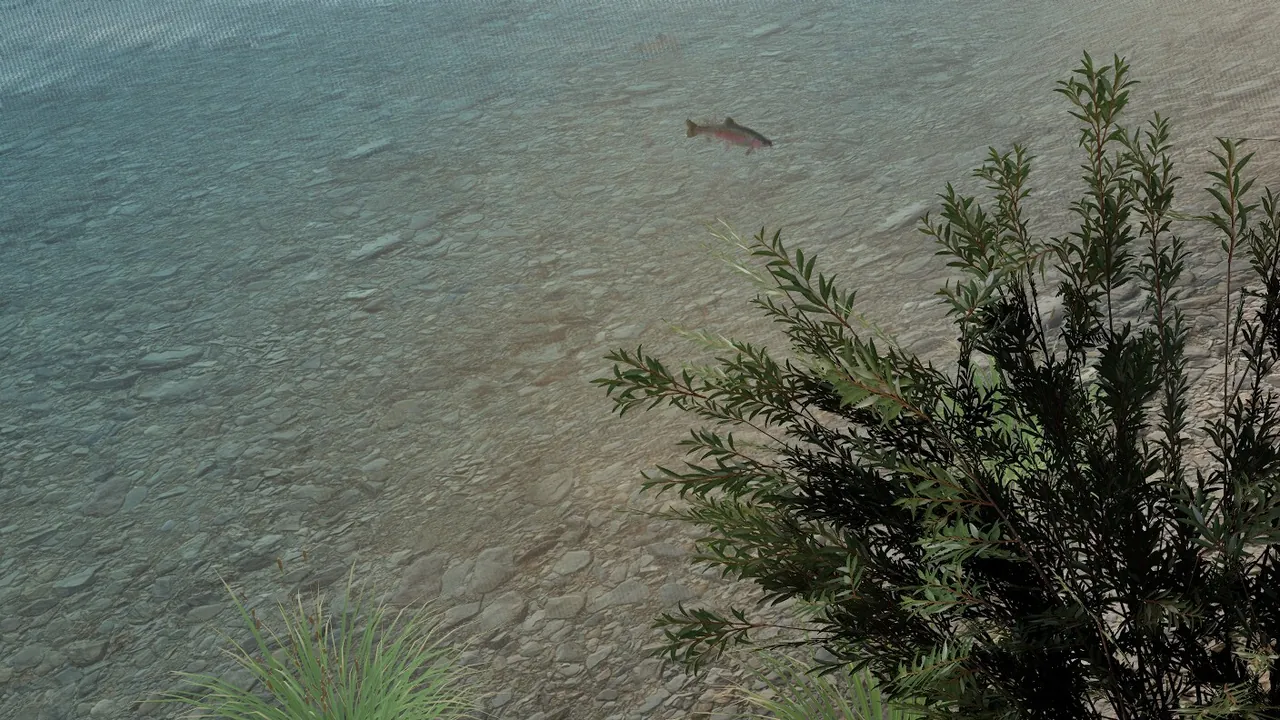
That night the trout became visible: dark-backed shapes holding in clear shallows, with their shadows on the gravel. The catch got its moments, with spray when a trout leaps, a shower of drops as it is lifted out and a fish flopping on the stones. Then the big browns got a way in. Twine always parts on a 70 cm brown, so at Fishing 10 a pole can be re-lined with sinew, which until then had no use at all.
Seeing the fish made the last step possible. On October 8 a spear, a bone harpoon, a javelin or an arrow thrown at a trout in the shallows pins it if the point meets the fish where it swims, and a miss sends the whole pool away for half a minute. A bug sweep that afternoon found that a hard throw could cross a shallow stream in a single step of the game’s physics and take nothing, not even a splash. A thrown point is now judged against the water however fast it flies.
Whether fishing stays fun over a whole evening is the next thing a playtest has to say.