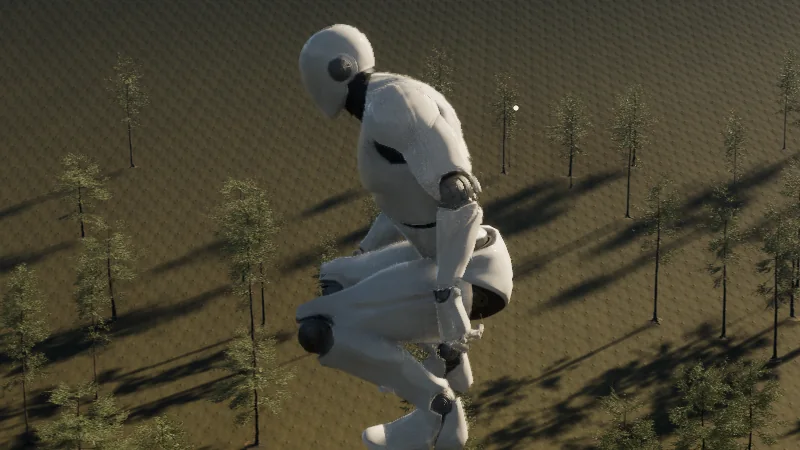
Sprinting first ramped from walking speed up to 6.5 m/s over 2.2 seconds, starting slowly. In play it felt as if the key press had been ignored. The ramp became a 1.15-second ease-out that responds at once: from a walk, reaching jogging pace dropped from about 0.43 seconds to 0.07. The held tool also started swaying with each stride, settling exactly back to rest, and dropping the sway at impact so strikes still land where they are aimed.
Jumps that keep their speed
Playtesting then flagged a second problem: jumping cost speed. A copy of the engine’s movement code explained why. The sprint reset at takeoff and ground braking kept working in the air, so a 6.5 m/s sprint jump landed at 3.0 m/s. Stepping over a log ended in a dead stop, and a jump while running uphill cleared the slope by only 24 cm.
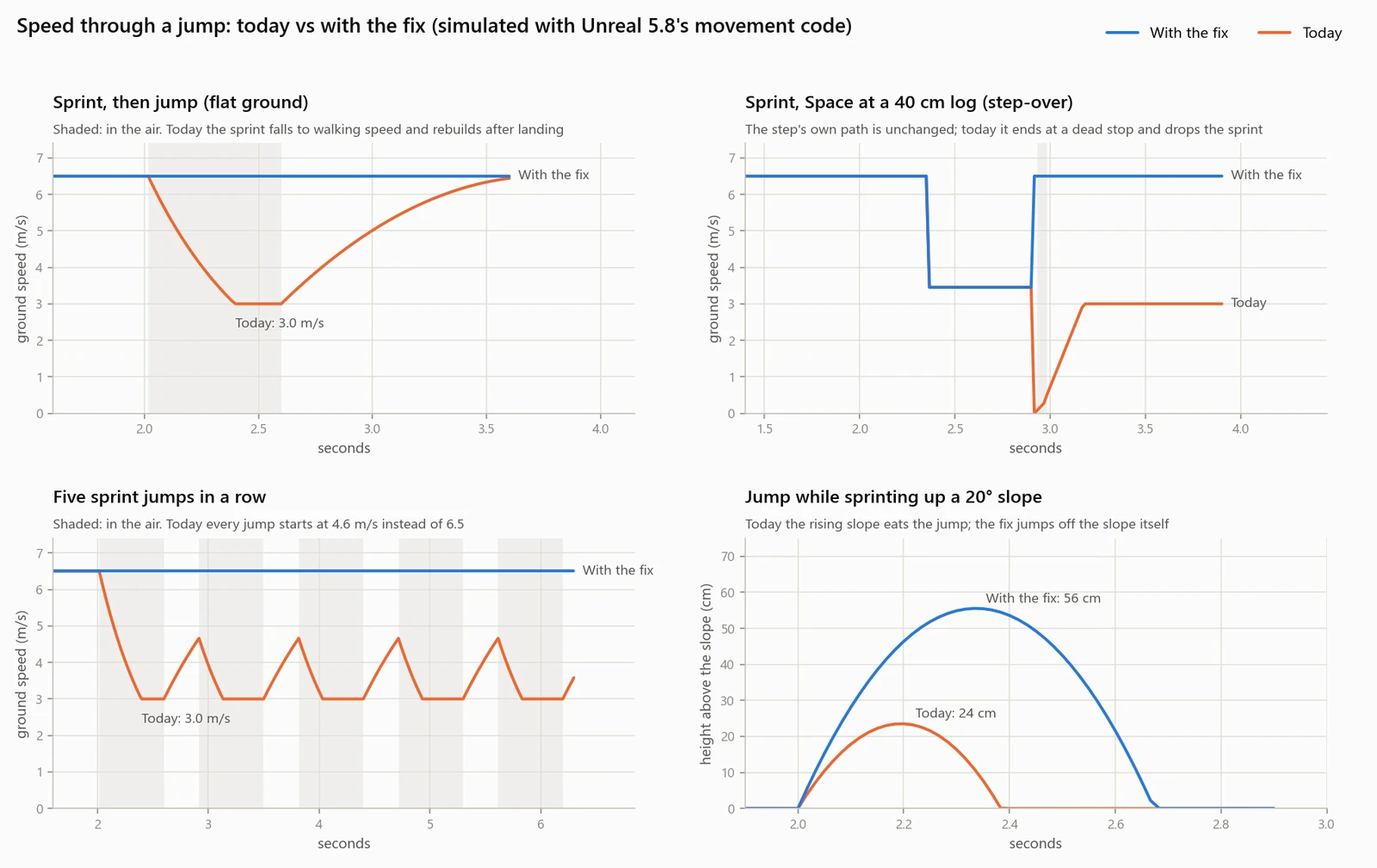
Jumps now keep their speed, sprinting resumes from the speed carried through the air, jumps push off the slope itself, and only hard landings from above about 1.2 m cost speed. Gravity also moved from 1.65 times Earth’s to normal Earth gravity. The landing thresholds are design estimates rather than measurements, and at the time this was checked in single player only.