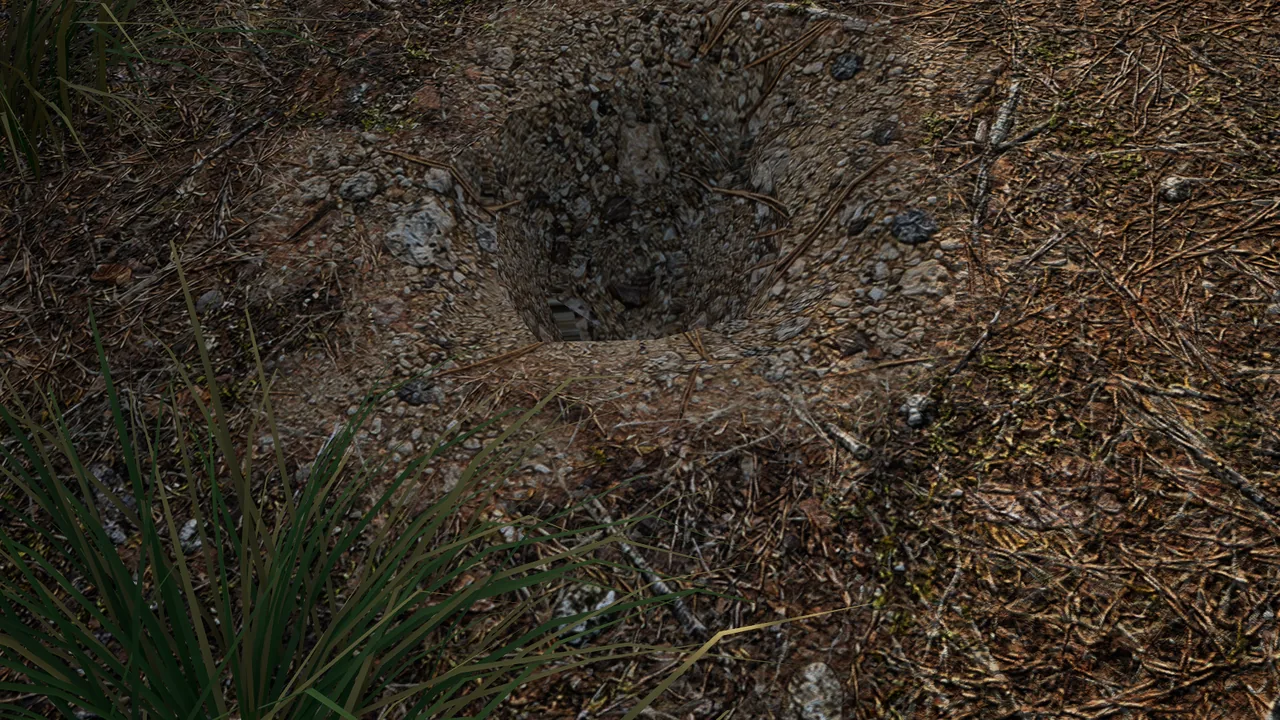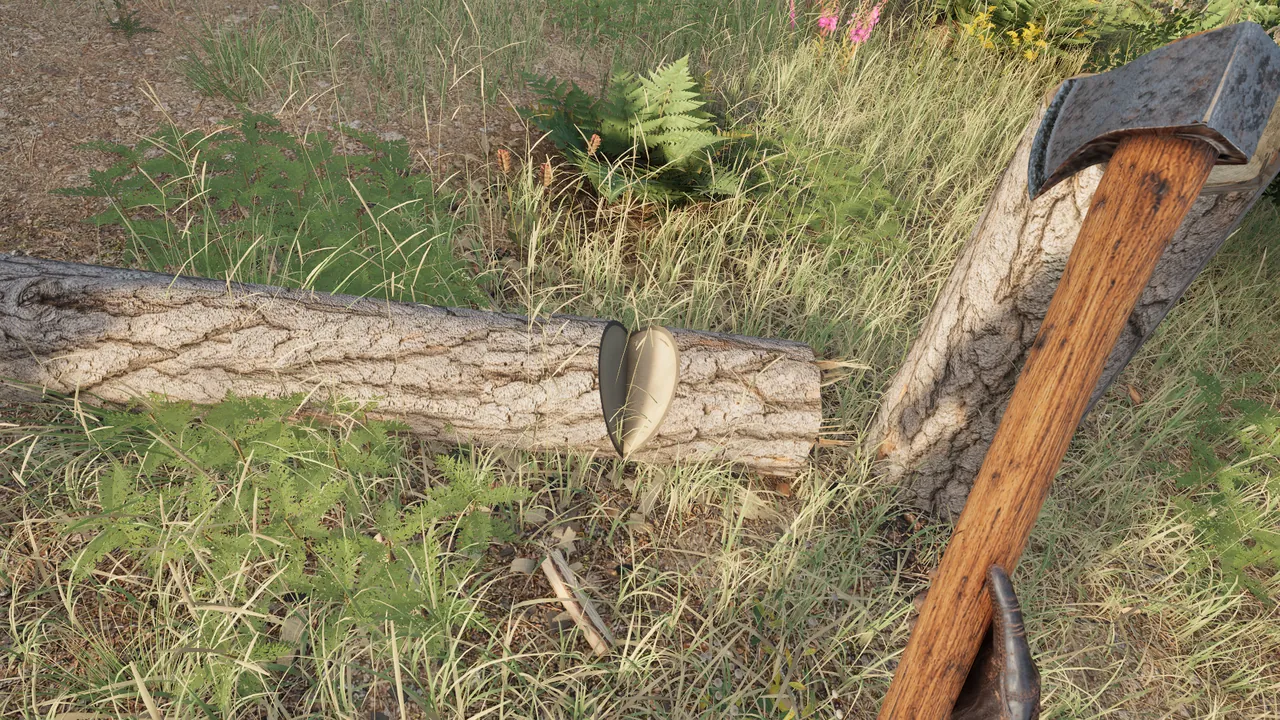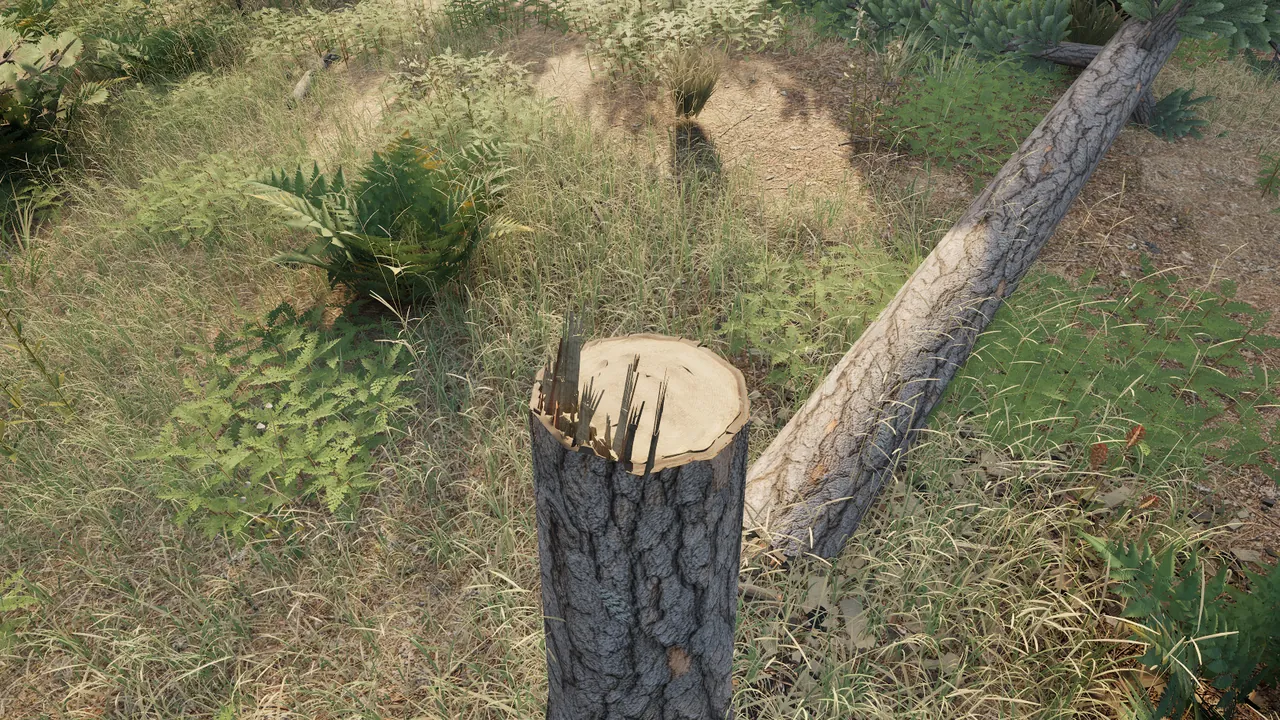
Chop a big tree down the proper way, a notch on the side you want it to fall and then the back from the other side, and look at the stump. Its top is flat and chopped, a patchwork of axe facets with the growth rings showing and a darker rim by the bark, instead of a smooth pale bowl. Across it stands a torn ridge of pale splinters, slabs of wood that split into ragged tips and brushes of fibers, and the log’s end is torn to match.
The chips your blows knock out are thick wedges and curled chunks, some with their bark still on, lying in clumps where they came out, and every chip is there: a big tree used to show only a third of them. The notch’s upper face shows axe scars, and wherever two blows meet you see a crisp edge, a small step where one cut deeper.
Only the wood holds the tree now, never the bark. The strip your blows leave is about a tenth of the trunk in real wood, and a token blow on the back no longer counts as a proper back cut. Once the hinge has torn, the butt rides its stump for a moment, then slides off the edge and drops, and the log comes to rest beside the stump instead of lying across its top. As it goes over, a spray of needle sprigs and a twig or two come off the crown in the air and flutter down behind it.