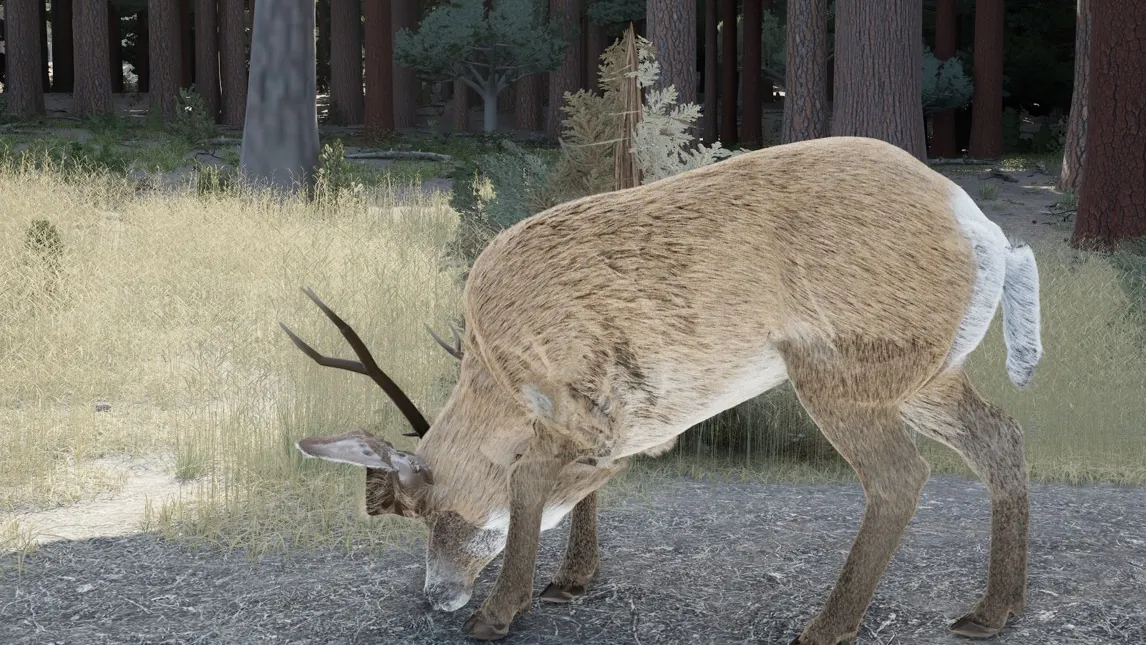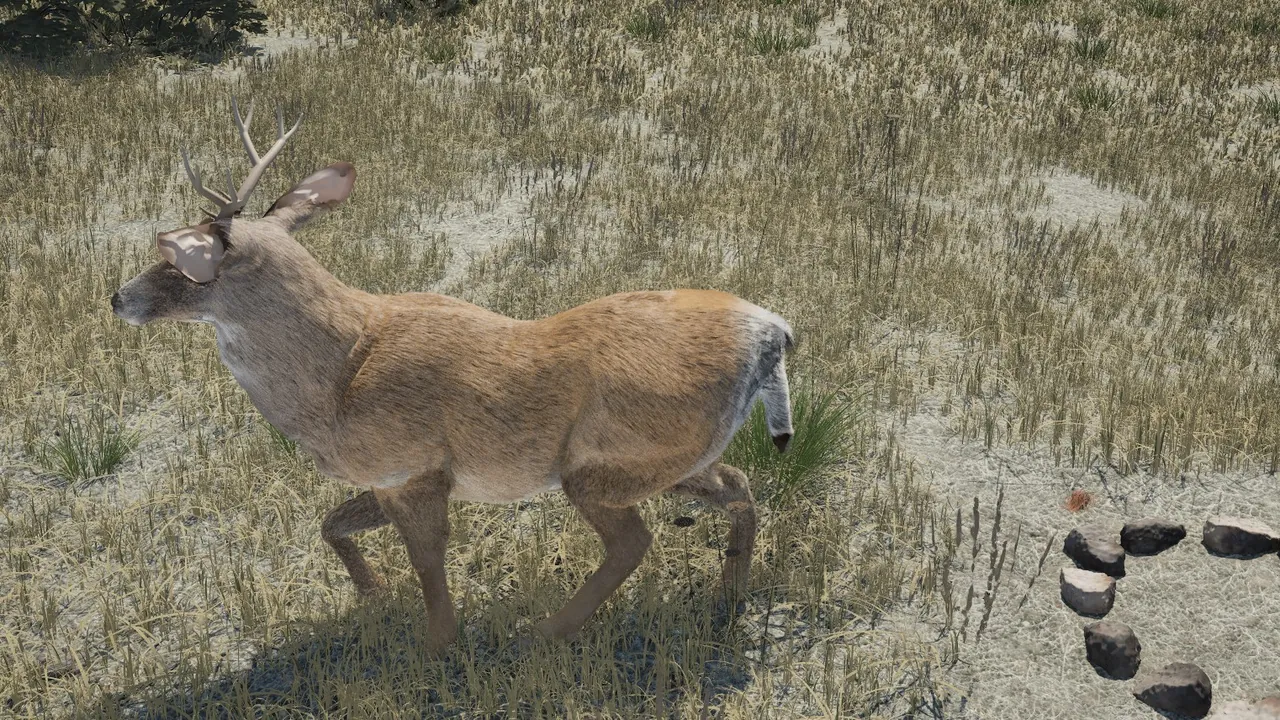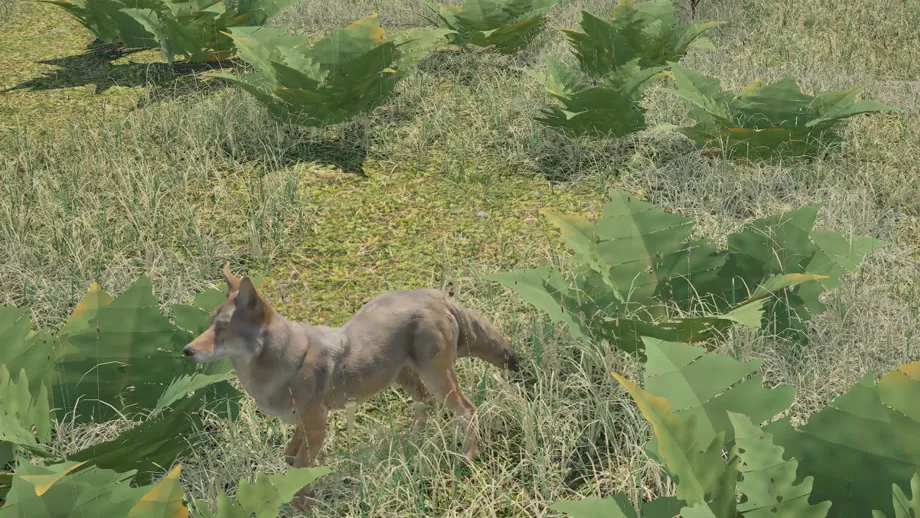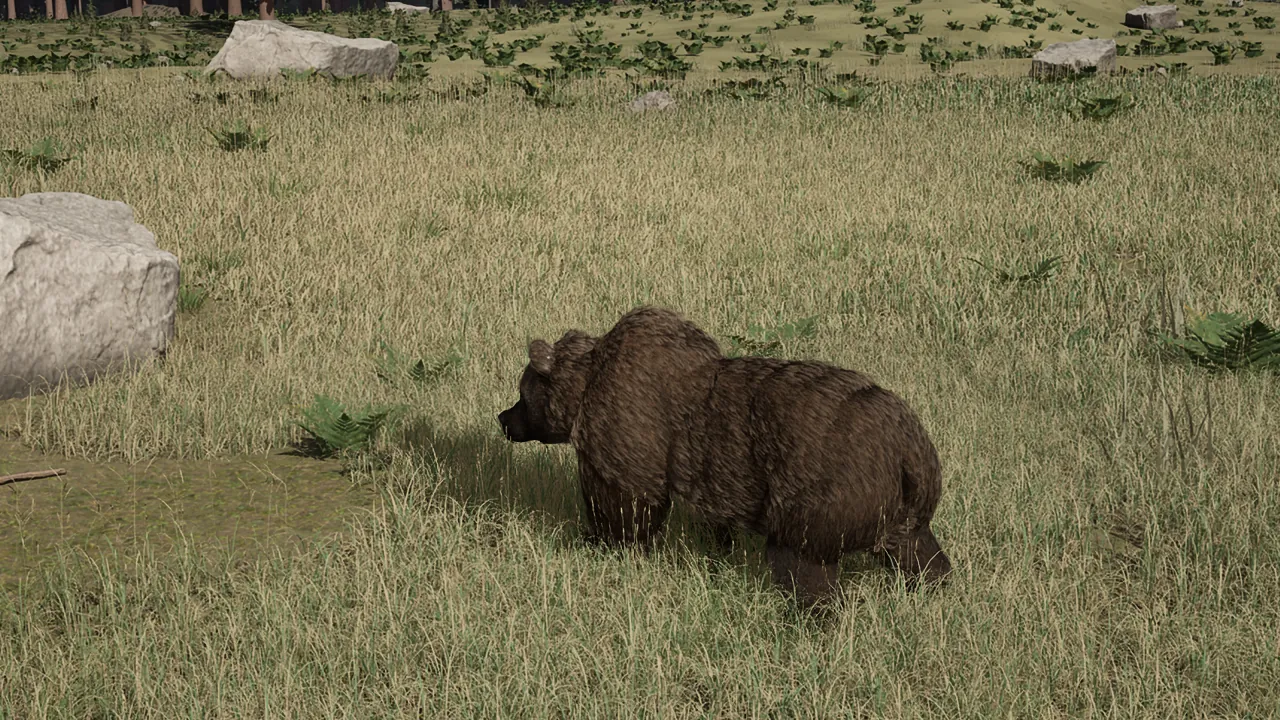
Two bears share the map. Black bears roam the conifer forest, the oak woodland and the meadows, about one to a square kilometer, out by day and at dusk. California grizzlies, gone from the Sierra since the 1920s, are back as they were before 1850: they live lower, in valley grassland, foothill oak and meadows, and are rarer. Both den from December to March, so you will not meet one in snow.
They move like bears: a flat-footed walk with the heel down, slow and rolling at the shoulders, a faster amble, and a gallop when they bolt. Both wear coats of real hair. About a third of black bears are black and the rest chocolate brown or cinnamon, picked for each bear. A calm black bear grazes with its head down and its shoulders high, a pose keyed from park footage of a black bear grazing.
A bear can be butchered like a deer for a lot of meat and fat, a heavy hide, sinew and bones, and a grizzly gives the most of any animal. Birds near a bear go quiet and the jays scold over there, so you can hear one before you see it.
When they arrived both bears were shy and ambled off as you came near. That lasted until November 3, when grizzlies began to stand their ground. Since November 5 black bears react to you the same way, though they are shy and most still walk away. There are no cubs yet.