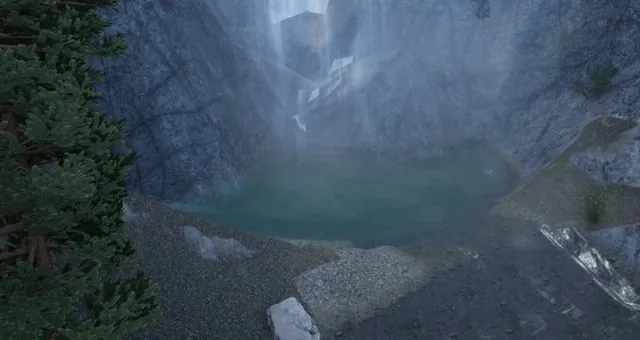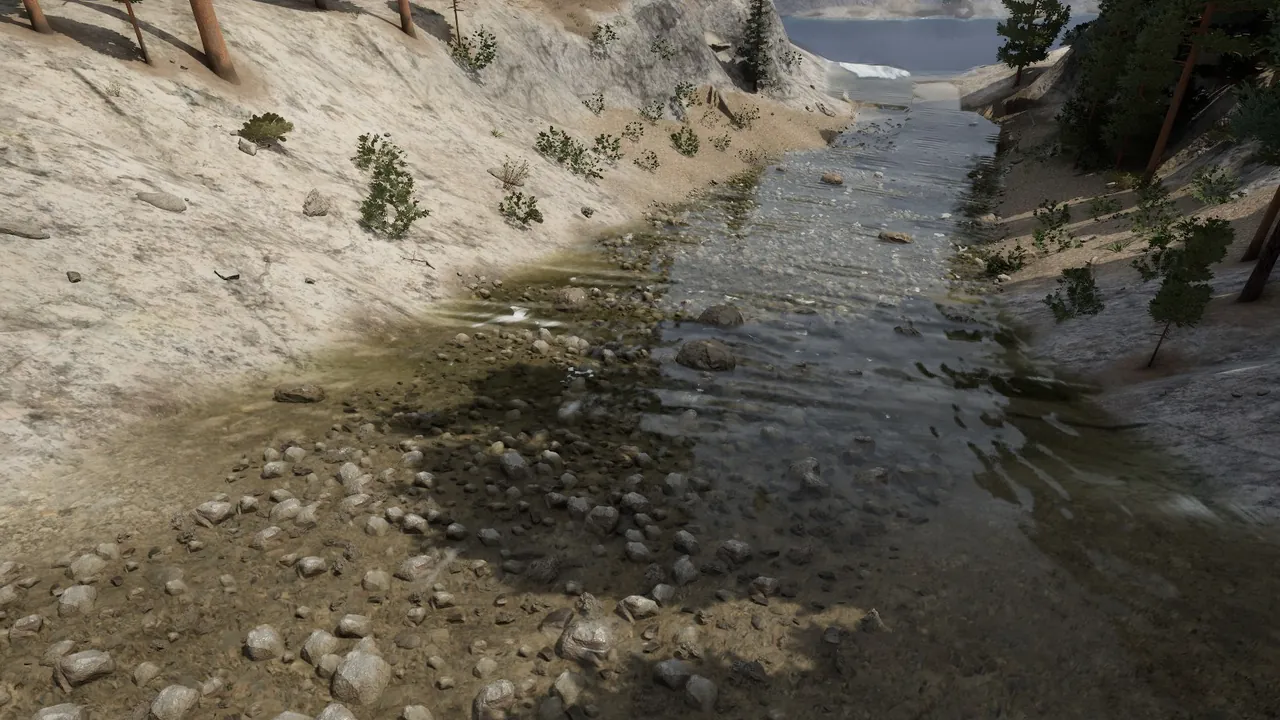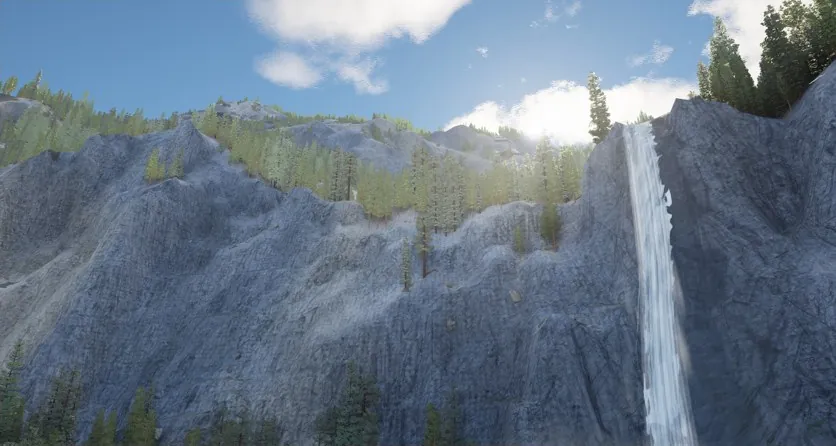
Glide past a tall waterfall on a granite wall and the rock beside it reads as lit granite, with only the wet darkening right along the water. The big black, stair-stepped slabs that stood there were not shadow. The river’s water level at the brink was carried down onto the cliff below it, so the ground drew those patches as deep river bed.
The wall keeps its blocks, ledges and recesses as you come in. That relief reaches about 450 m out, so a wall no longer flips to flat facets as you approach, and three small black teeth that stood on the face are gone. Ledges on a sheer wall are bare granite instead of dark plates of soil, and they look weathered, with dark lichen, grit and rough rock, not pale polished strips.
Two more marks left the wall beside one camp’s fall on November 13: a band of dark saw-teeth, one every 4 m, where the ground’s dampness smeared up the cliff, and a mud-brown band of sand that no ground that steep could hold. Dark vertical slots low on that wall are still visible.