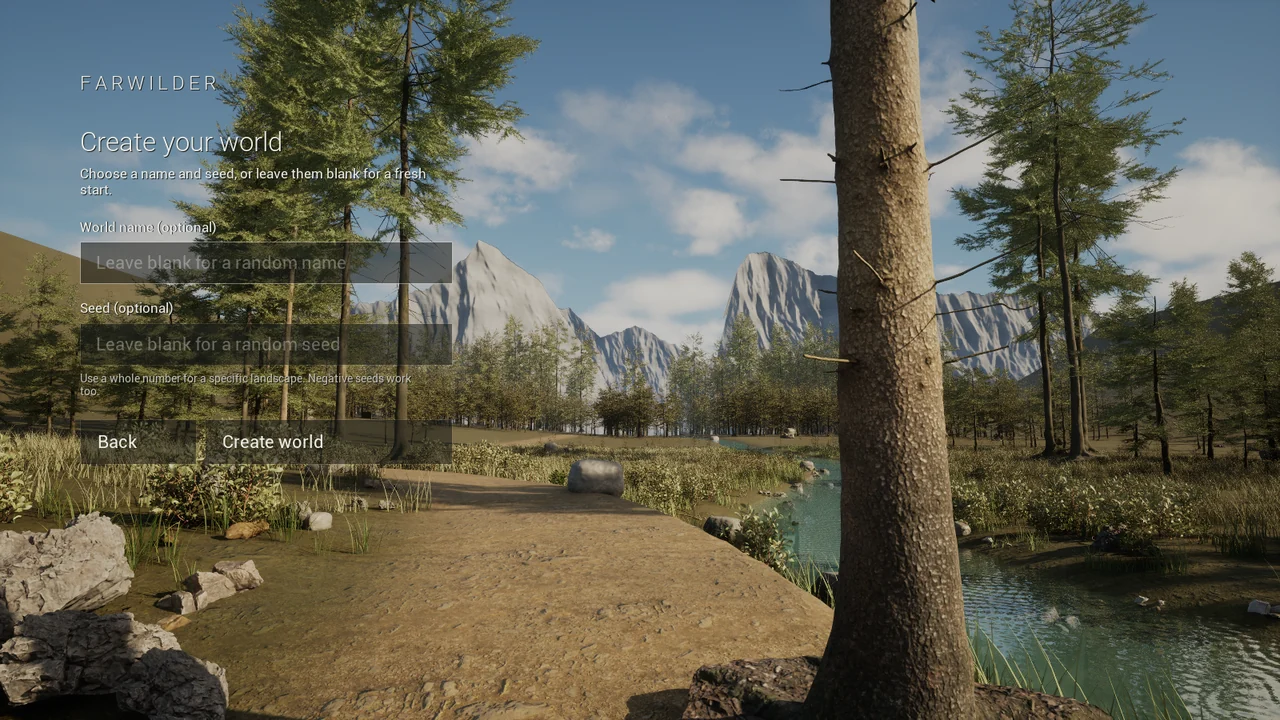
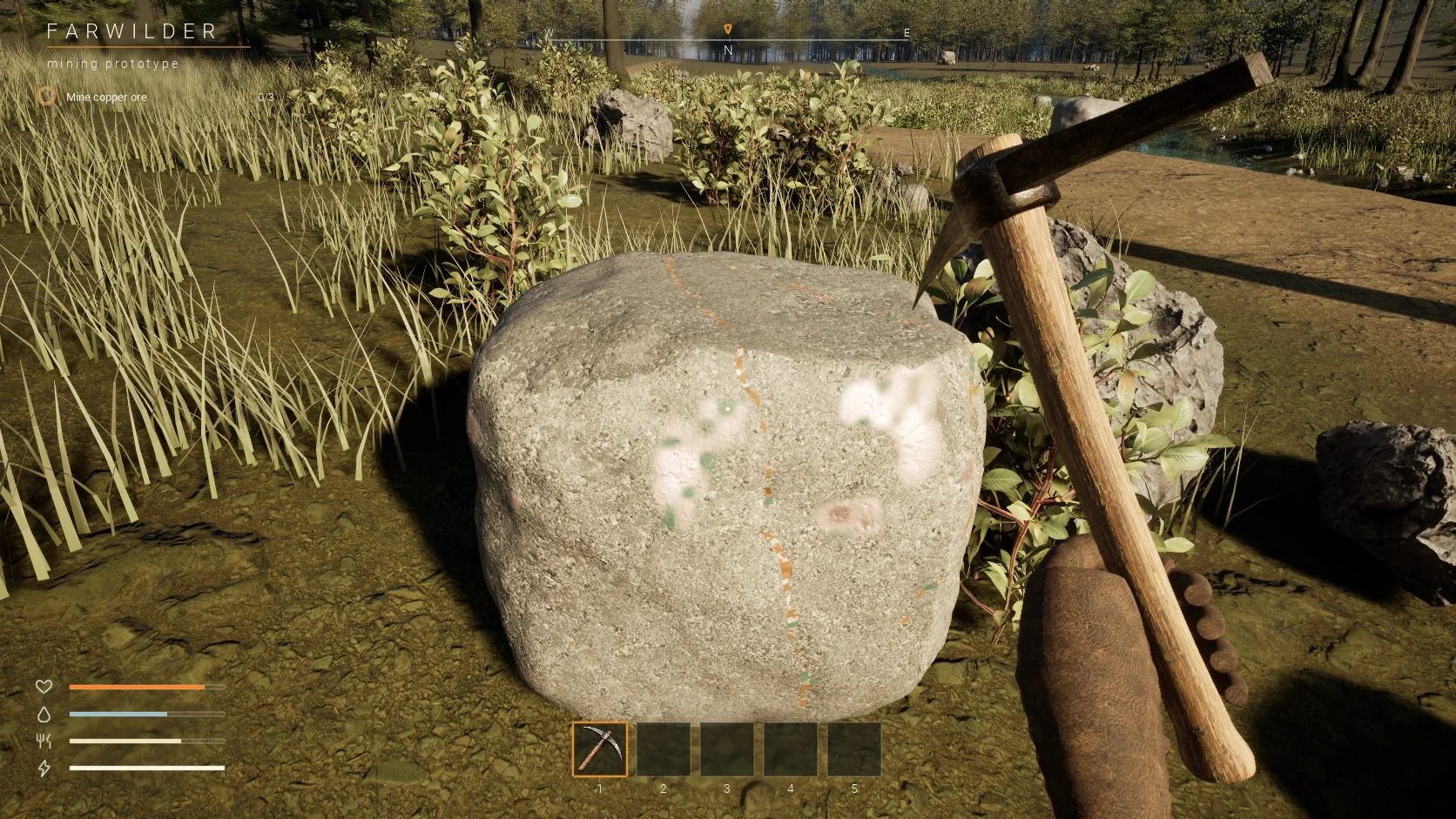
Farwilder’s worlds are generated from a seed. The generator starts with broad structure rather than surface noise: plates and uplift, rock types, climate, rivers, creeks and erosion. Any 256 m chunk comes out identical whether it is built on its own or cut from a larger area, which matters when a world is built piece by piece as someone walks through it.
To check whether the mountains looked like mountains, generated terrain was compared with real elevation data from the Sierra Nevada around Yosemite. The generated areas fell inside the real range on all 14 terrain statistics used. The tests caught real mistakes on the way: dashed rows of what looked like exposed rock turned out to be drainage channels, not granite faces.
One seed, one world
A seed is only useful if it produces the same world everywhere. One test found a single seed producing five slightly different worlds, depending on the type of build and which math instructions the processor used. The differences were tiny, around a millimeter of height, and changed no trees or biomes. In a shared world, a millimeter is still enough for two machines to disagree about where the ground is.
Forcing precise math and one fixed instruction path produced a single world in every variant tested, for about 6 percent more generation time. That was tested on one Windows machine by switching math paths, not across different processor families or platforms. Generated worlds became playable in the development build the same day, and there is no promise yet of an endless world.