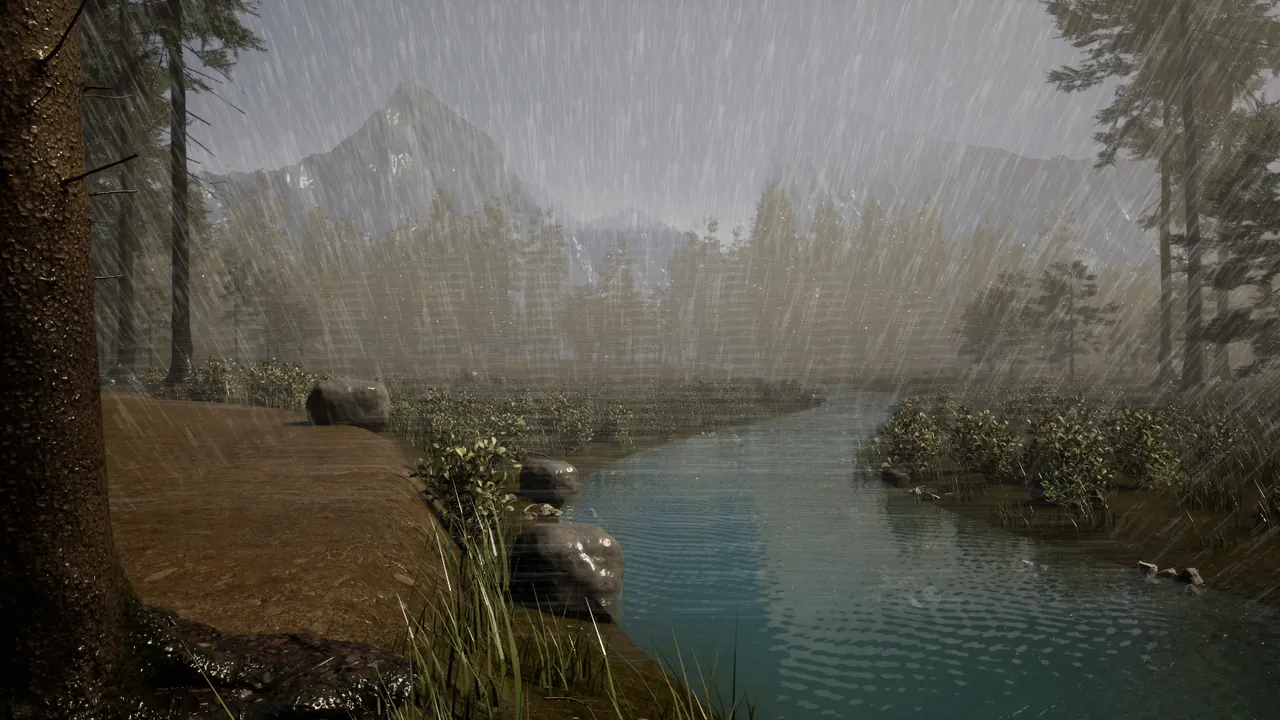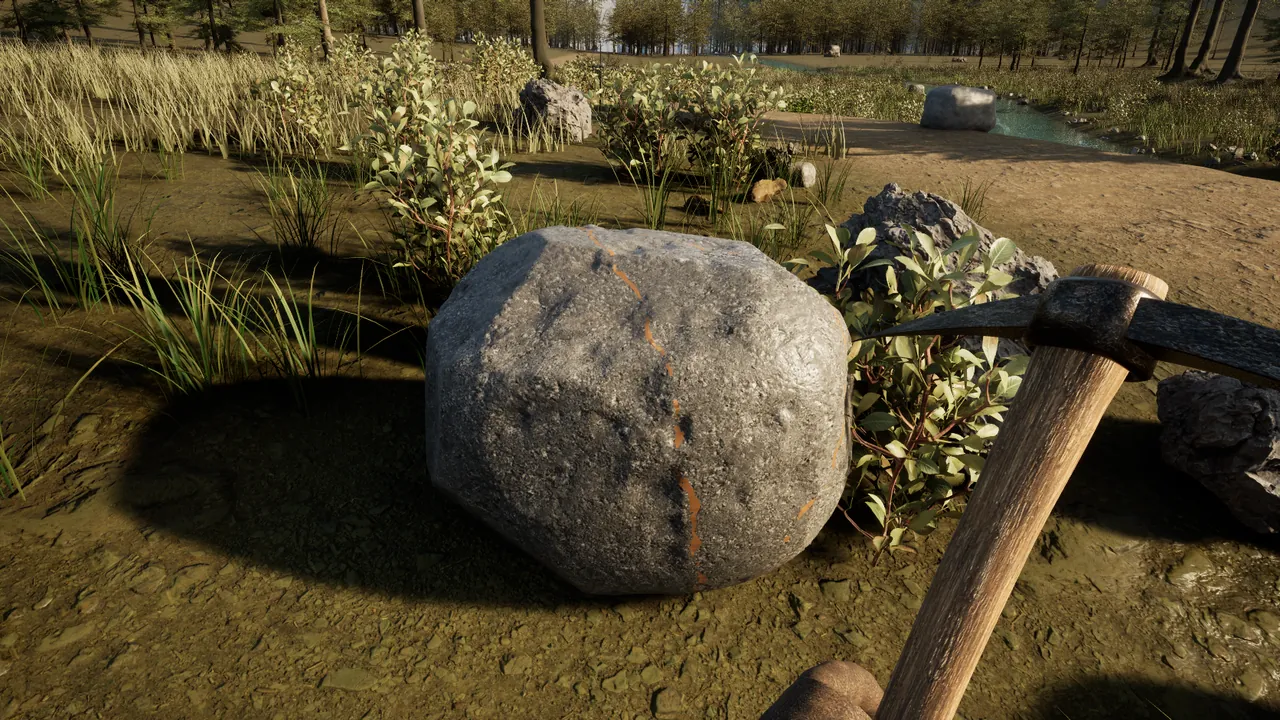
Early lighting work compared the mining scene with the approved target image. Measured that way, the front of the ore rock was about 6.8 times too bright, while distant water was too dark. Turning the whole scene down would have fixed the rock and made the water worse.
Moving the sun behind the rock went too far the other way, and its face became unreadably dark. A low, grazing light across the face worked better, because it picks out the relief of the stone instead of flattening it.
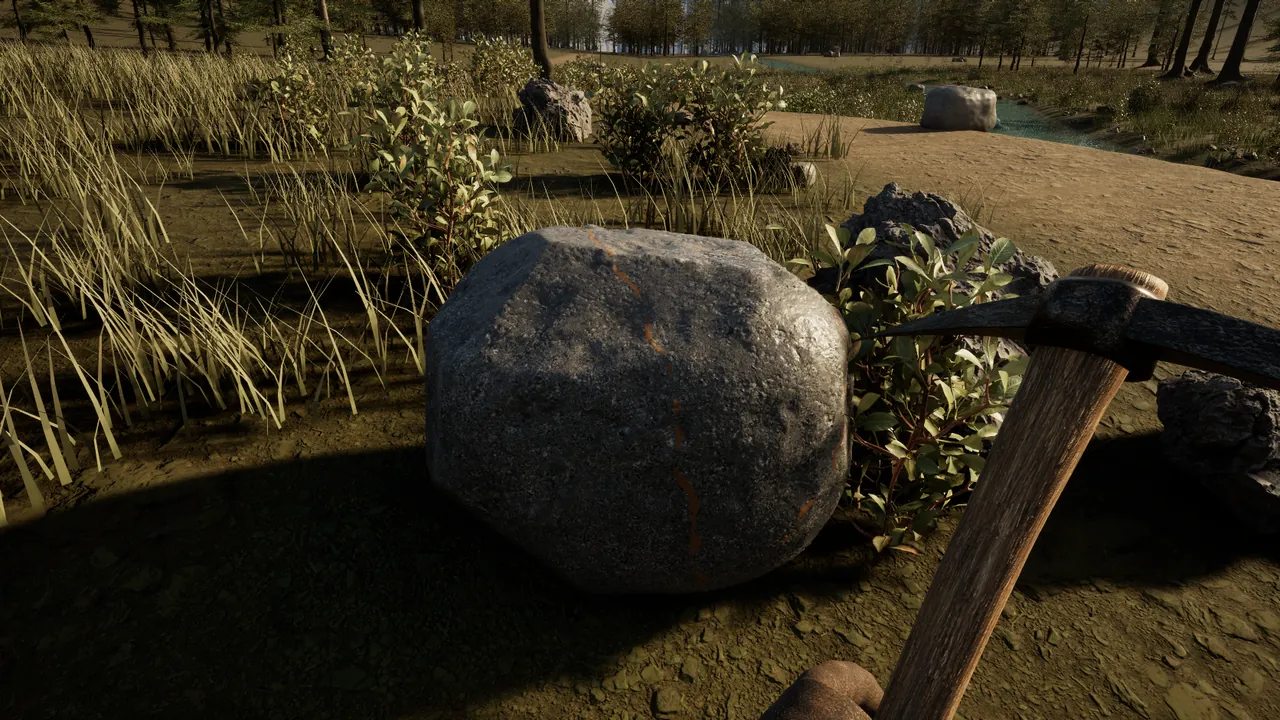
One tempting fix was ruled out by measurement. A more detailed global illumination setting brightened the shrubs but moved the ore’s shading by about three hundredths of one brightness level, so it was not worth its cost for this problem.
These were optional settings used for a playtest, not new defaults. The study covered one view on one high-end graphics card, so it says nothing about performance elsewhere, and the target it was measured against is an image rather than a photograph.