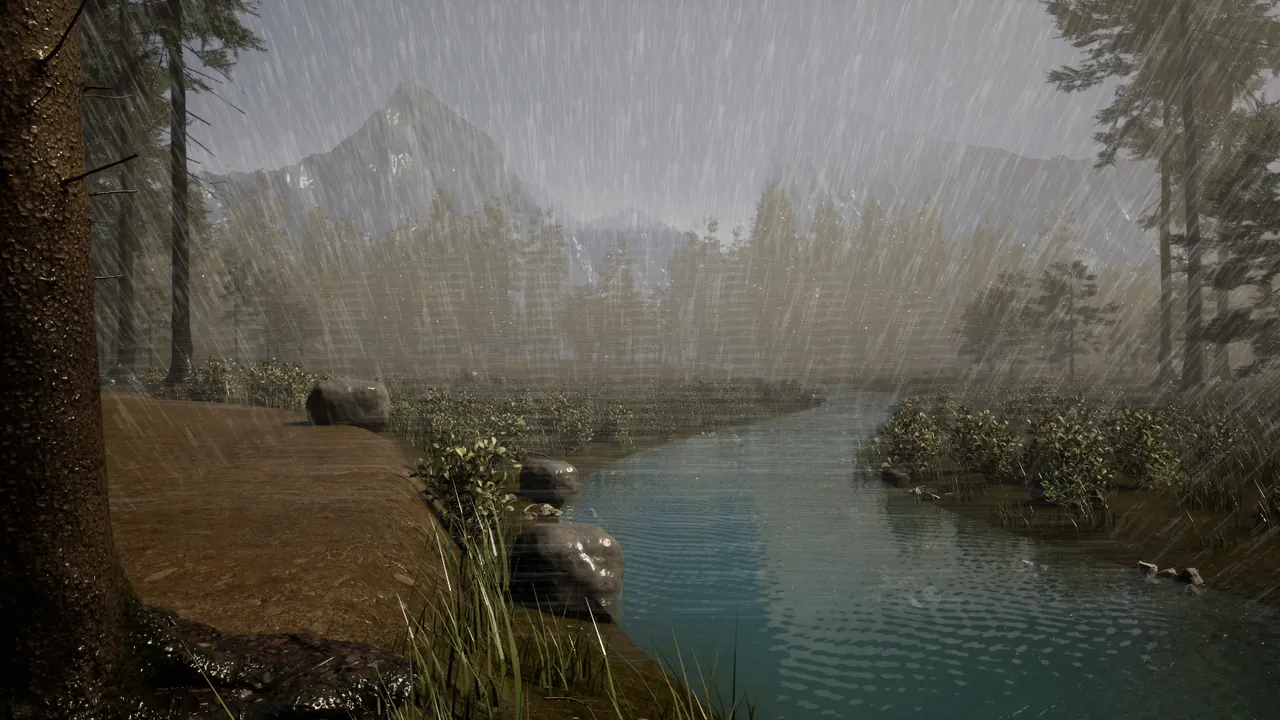
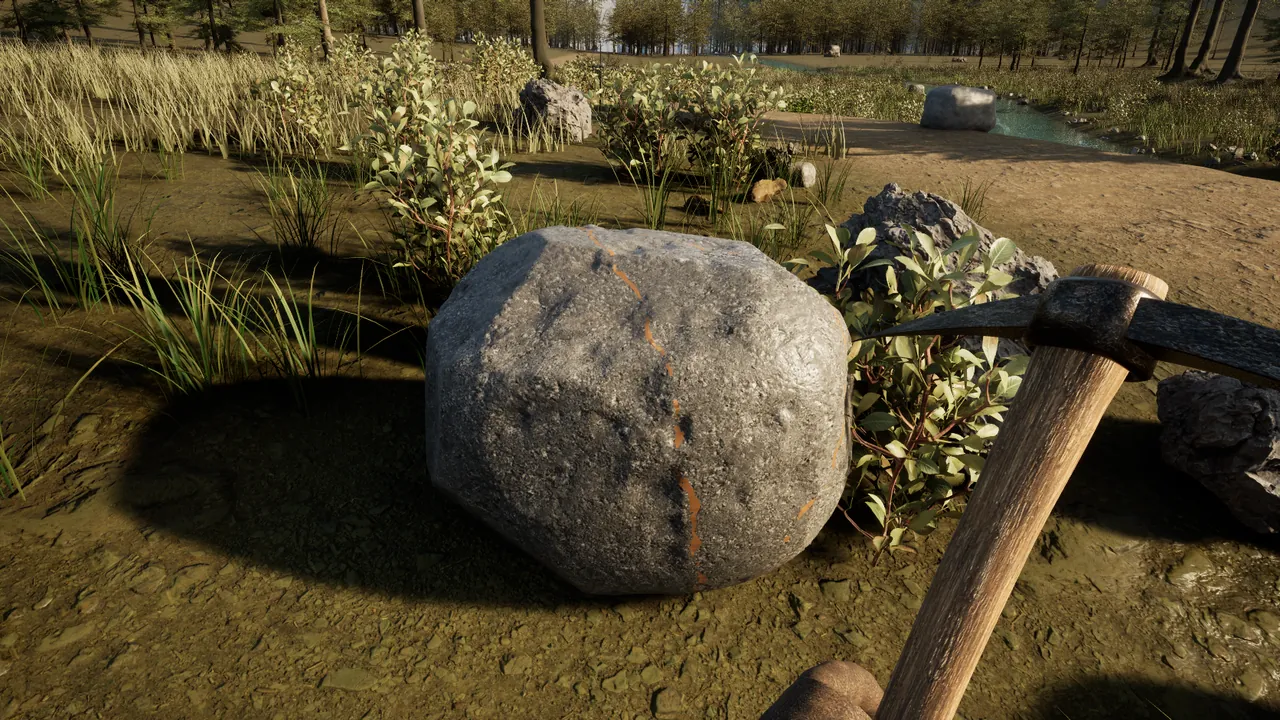
Two notes from playtests pointed at the same place. The shade under the trees looked too dark, and the picture did not blend together. It sounded like one problem. It was four, found within a day.
The first was the simplest. At midday the grass and the ground in the shade of trees read as near black, so late on October 2 shade was lifted by day, with the sunlit ground left exactly as it was. The second was the picture itself: the game got a camera grade, with less glow around bright rock and sky, lighter corners and a little more detail kept in the deepest shade under plants. It changes no colors on purpose.
With those two in, the evenings were still wrong. The sun’s light was being dimmed and slanted twice. Midday ran hot and every low sun was far too weak. Golden hour came out orange under a teal sky with a dark cliff, and sunset and early dusk had red-black or black skies, so nothing in the evening could be judged. With the doubled dimming and slanting removed, golden hour turned warm, the last sun glowed on the cliff tops and the sunset sky went peach and pink.
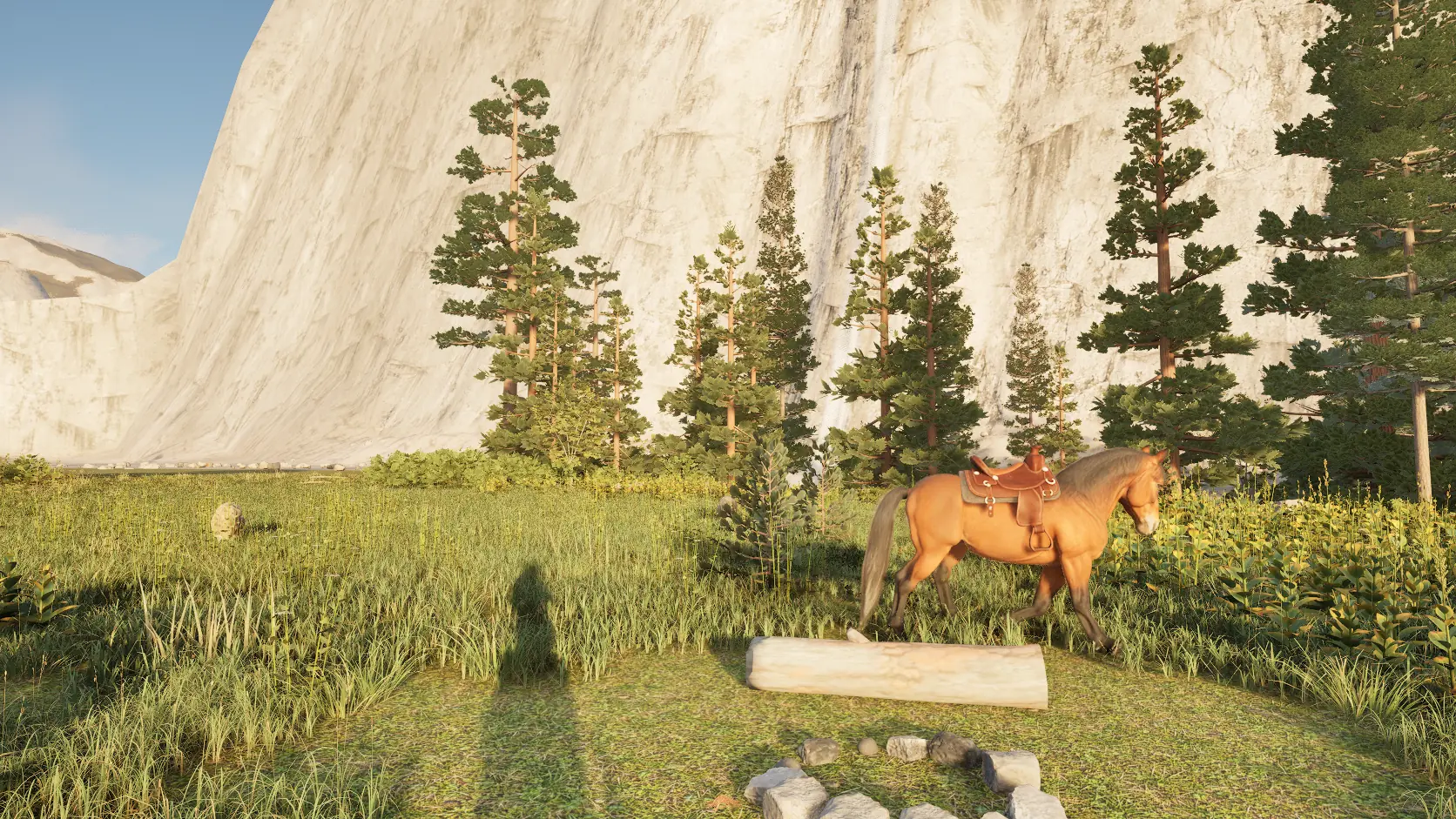
The fourth cause was not the light at all. At the game’s fast day, where a whole day lasts twenty minutes, the camera’s eye adjusted too slowly to the falling light, so from sunset on everything looked far darker than the light really was. Once it kept pace, dusk stayed readable through the pink and purple twilight and faded smoothly into night. The moon now takes over a little later, when the glow has nearly gone, so there is no black moment between dusk and moonlight.
Each fix made the next problem easier to see, which is the real lesson: nobody could have judged the evening sky while the shade was wrong, or judged the eye while the sun was dim. The way through was to stand in the same open meadow from about half past six to a quarter to nine, watch the sky, the cliffs and the ground, and change one thing at a time.
Night itself is unchanged. One question is still open: whether the lifted shade now looks flat instead of dark.