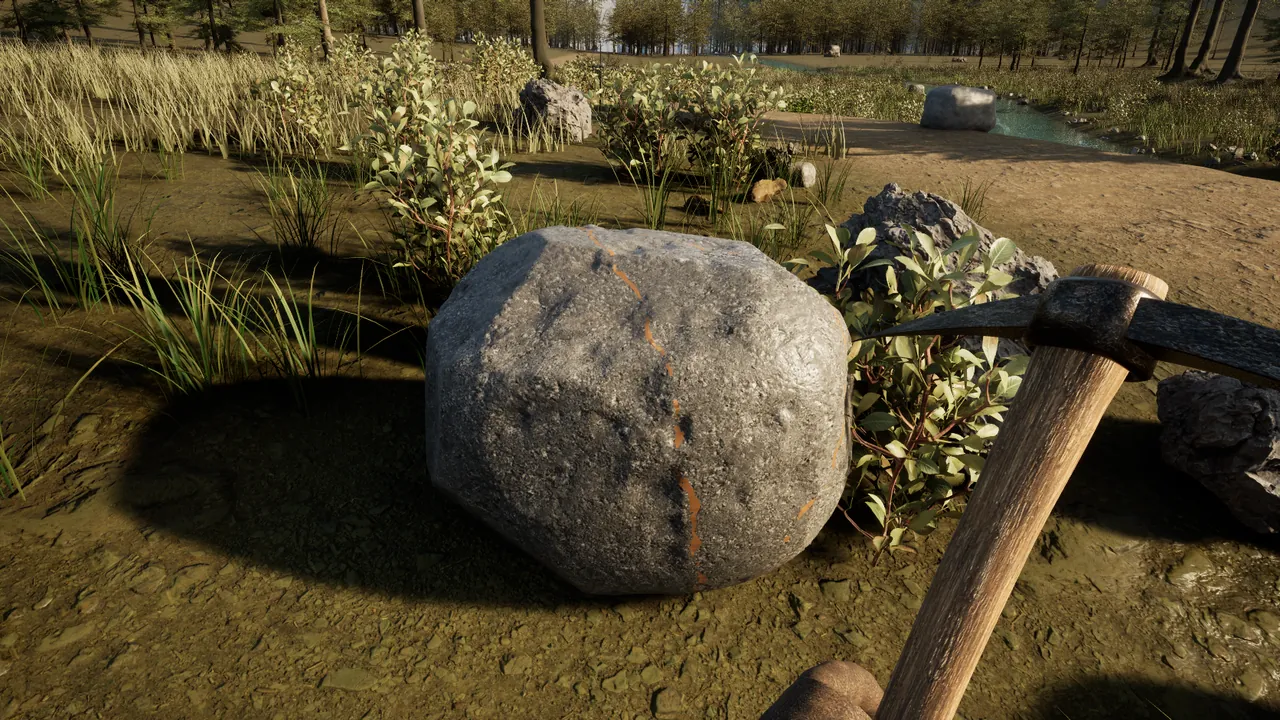
Seasons, weather and storms are now one repeatable calculation from the world’s seed and the time. Every machine works out the same sky without weather having to be sent between them.
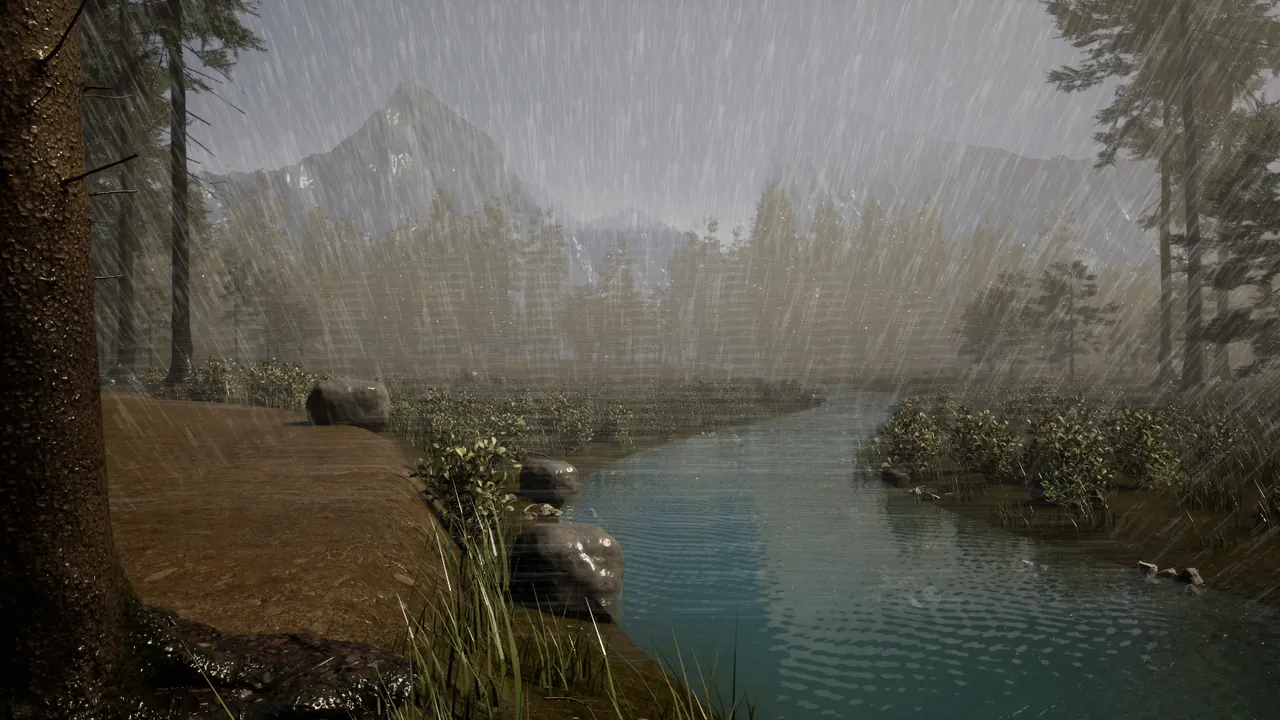
Storms are not painted onto the whole map at once. Fronts give warning, with high thin cloud the day before, and they cross the land at 13 to 22 meters per second, so a place 20 km downwind meets the rain about 23 minutes later. Rain follows published measurements rather than guesses: moderate rain falls at about 5.3 m/s, and visibility drops to about 3 km in 10 mm of rain an hour. The earlier estimate was roughly three times too clear.
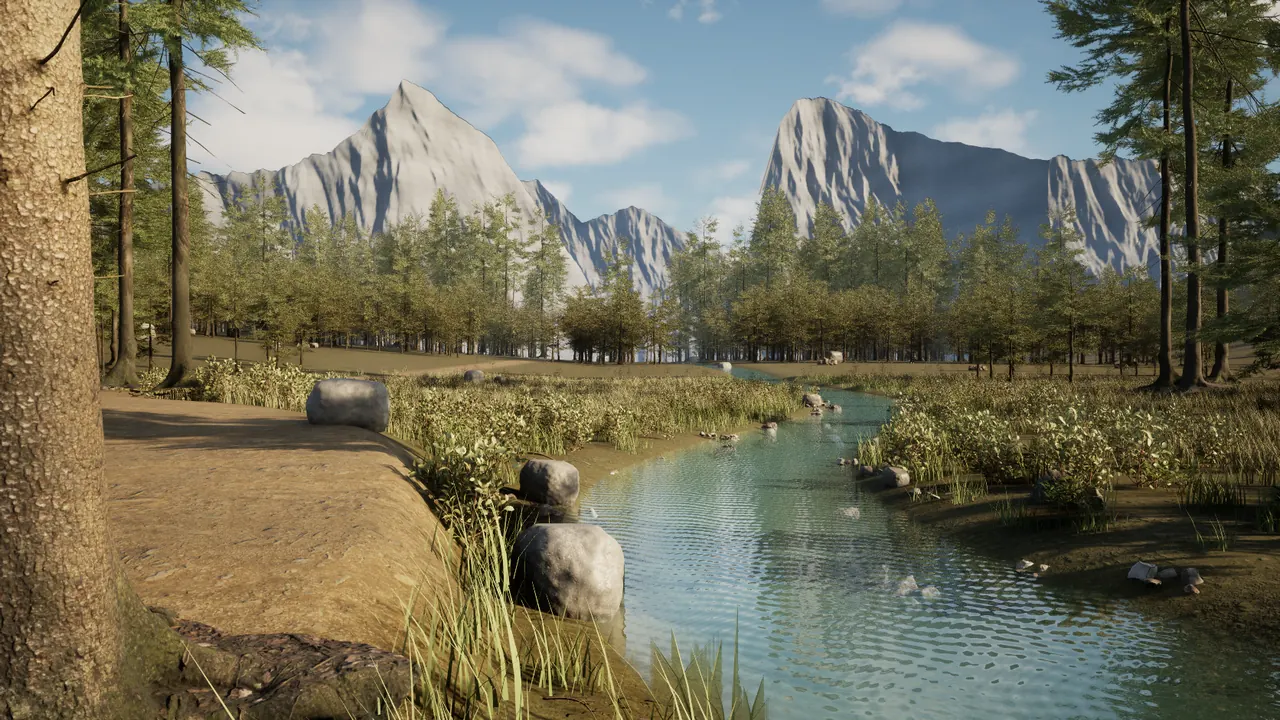
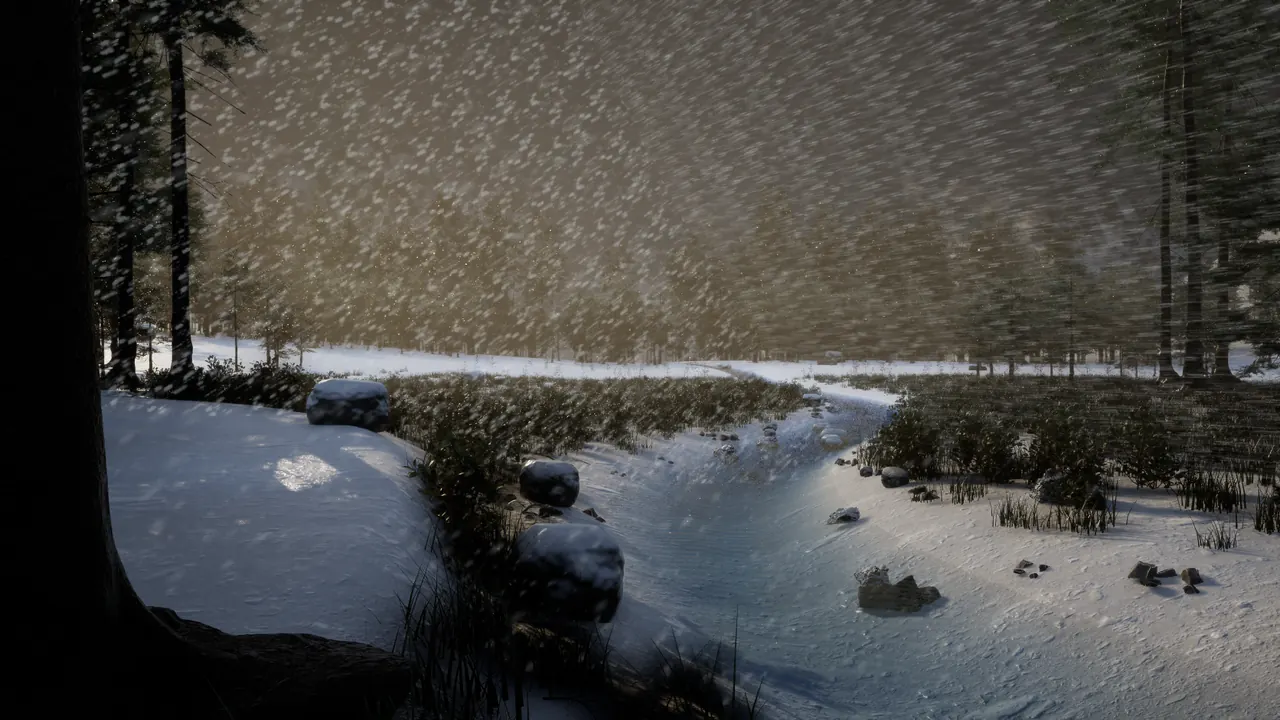
The ground gets wet, snow builds up and melts, and the world clock keeps running while nobody is playing, up to a limit. The model began on September 11 as a simulated year of Sierra weather, in which plants follow warmth and moisture rather than the calendar.
The sun was 2.5 times too wide
A late check of what the weather system does to the approved afternoon found everything matching except two values. The sun’s apparent size and the glow of the air had been scaled from generic defaults instead of that afternoon’s own values. With weather on, the sun disc was 2.538 times wider than intended, which softens the edge of every shadow, and the air glowed 7.2 percent more. A drift check had passed all eleven of its values, because it only covered values that had a reference to compare against. That fix is written but not yet in the development build.