At the end of October the hide glider flew, but near the ground the wing dove in, a fast touchdown ended in a tumble, and a running launch down a bumpy slope landed on the first bump. Three days of work, October 28 to 30, went into how it flies and what a pilot hears and sees. Then a playtest sent some of the changes back.
On the evening of October 28 the launch changed. Open the wing on flat ground with R, hop with Space, and the launch lifts you about 13 m for a flight of roughly 15 s, 260 m. The wing levels out near the ground, a fast, gentle touchdown is a run-out, and Shift+W builds speed to about 34 m/s for much less height than a dive. The flight is a list of tuning numbers. Until that evening one bad number threw the whole list away; from then on it was clamped and the rest was kept.
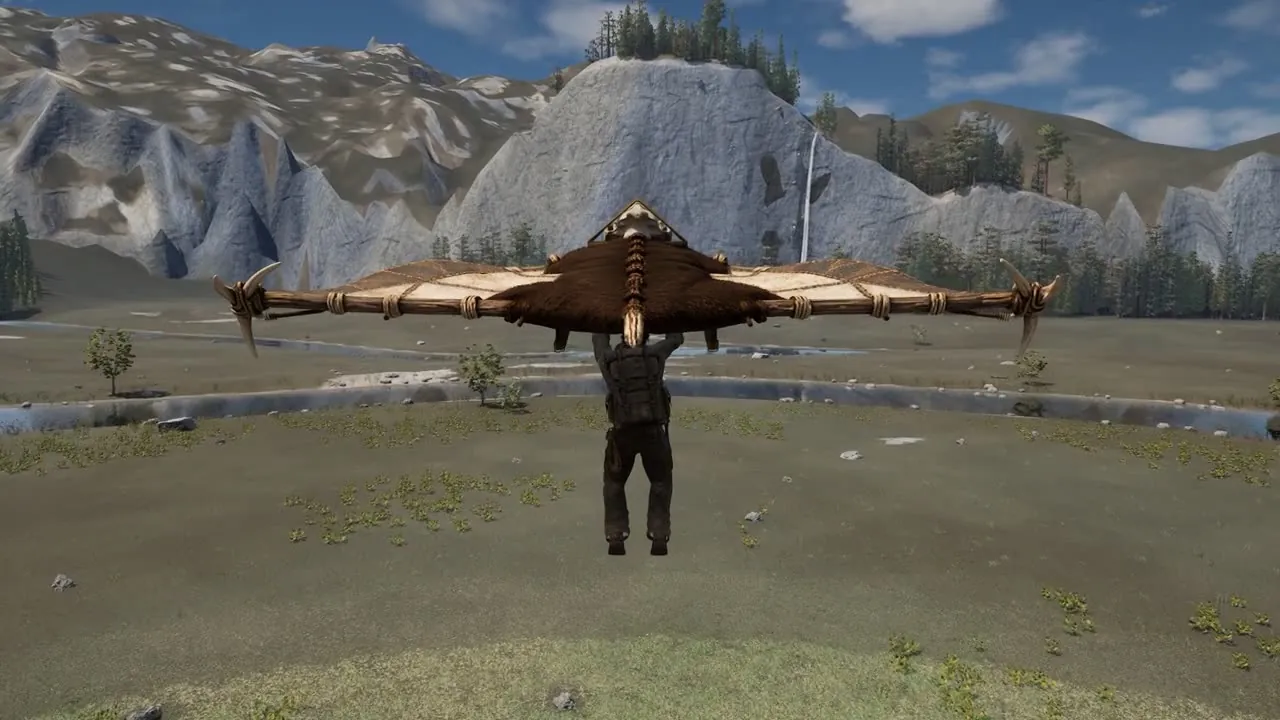
Early on October 29 came the cues. A variometer beeped in a climb, higher and faster the stronger the lift, and dropped to one low tone in strong sink. Near top speed the view widened by up to 8 degrees and shivered lightly.
Less than two hours later the beep was gone. In its place was the wing itself: wind that rises and brightens with speed, and a creak from the frame as the wing loads up entering a thermal, borrowed from the bow until the glider had sounds of its own. The same change gave the running launch a number: a run stays a run until the feet are about 0.4 m off the ground. Later that day the pilot, who had hung in a slanted S under the bar, was made to hang plumb and to swing out in a turn like weight on a strap.
That evening the turn was tuned. The circle was too wide to stay in a thermal’s core: of six tested, one could be climbed by circling. In a steady turn the wing now slows from 18 toward 13 m/s, which tightens the circle to about 37 m across instead of 56 m, and all six climbed. None of it was filmed in the game. On October 30 a new test flight, circling over a thermal just after a launch off a ridge, held its height and did not climb. The main cause was found the same day. The air had been measuring the glider’s height from a rough copy of the terrain that sat up to about 190 m above the real ground, and took the glider to be underground. With the real ground under it, a test flight climbed 48 m in 35 s.
Circle across in a steady turn
- Beforeabout 56 m
- Afterabout 37 m
Test wings that could be climbed by circling
- Before1 of 6
- After6 of 6
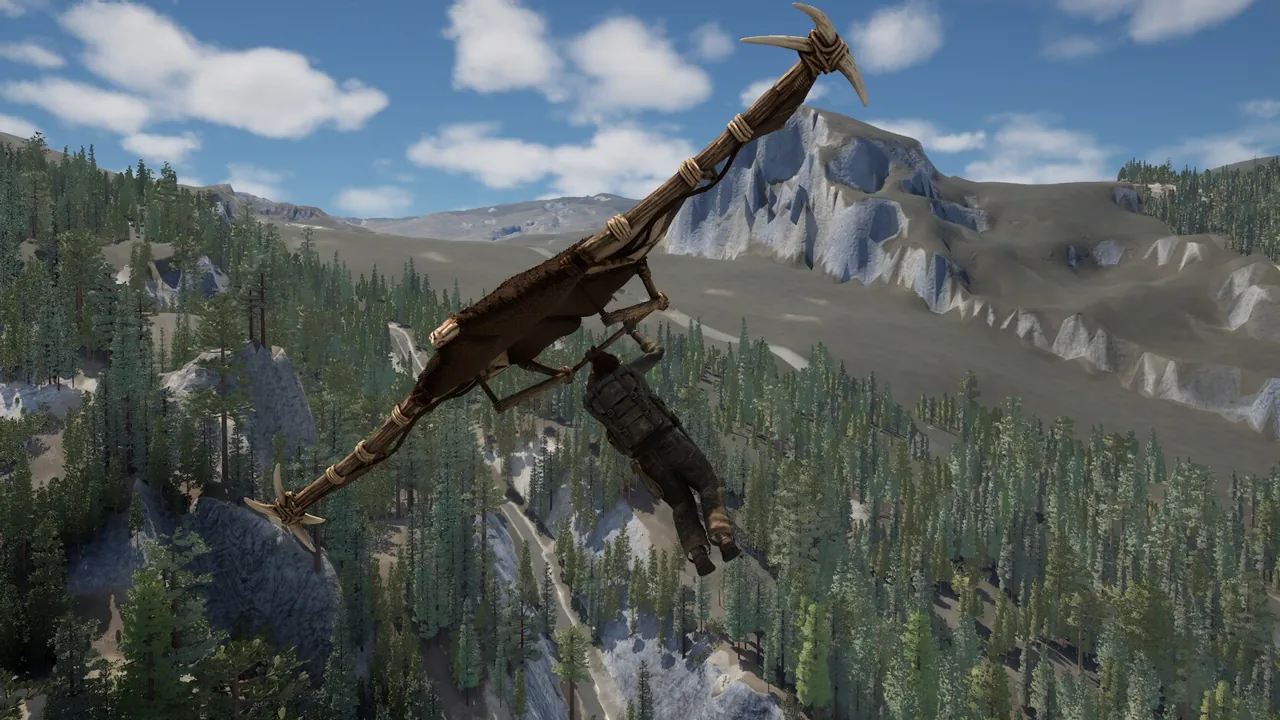
On November 4 a playtest came back with faults of comfort, not of flight: the hair glitched, the pilot’s head jumped under the bar, the camera shook, the creak squeaked and the wind was too quiet. Some of these were the cues of October 29. The shiver at speed became a slow, small sway; the widening stayed. The bow’s creak gave way to a low creak of wood and rawhide that plays only on a real pull, at most every 7 s, and the wind got louder with speed.
The hair was snapping back to its resting shape whenever the body moved more than half a meter in one frame, which in a dive is every frame. That was fixed the same day. For the head, the wing’s roll now eases into and out of a turn instead of stopping dead. Measured jolts of more than 3 g fell from three in a test film to one or two. Those are in hard thermal turns, where the swinging body reaches the end of the arms’ slack.
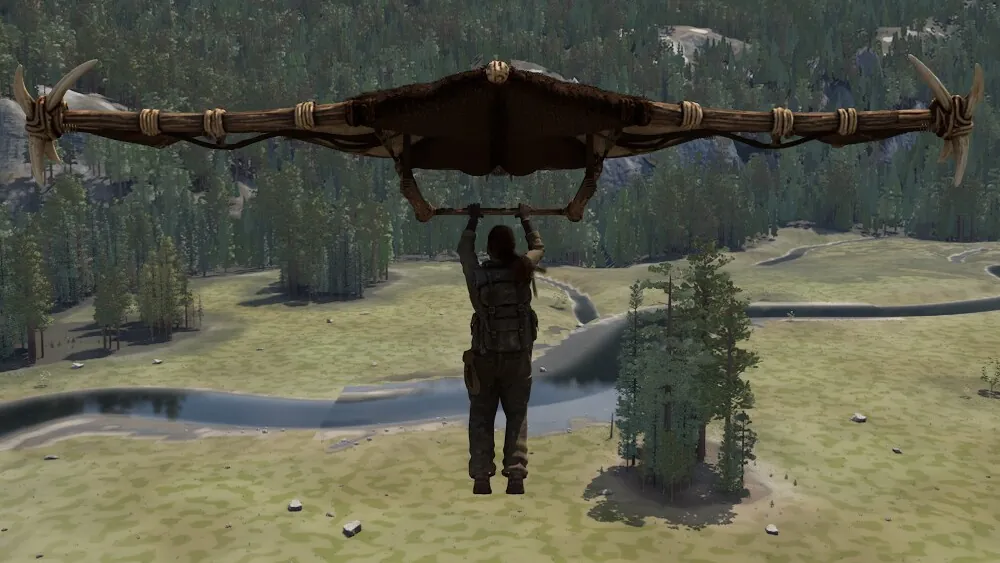
On November 5 a second cause of bad hair turned up: a trick meant to steady the hair on quick turns was kicking every strand, and was taken out. On November 6 the sail got a voice. The hide flutters and luffs when the glider flies slow, goes quiet once the wing loads up, and the edge of a thermal gives a soft swish of air.
Some of this is unproven. The new creak and sail sounds were chosen by measurement and had not yet been judged by ear when they landed. Hair that comes apart in a spin on the spot could not be reproduced, so it is not known to be fixed.