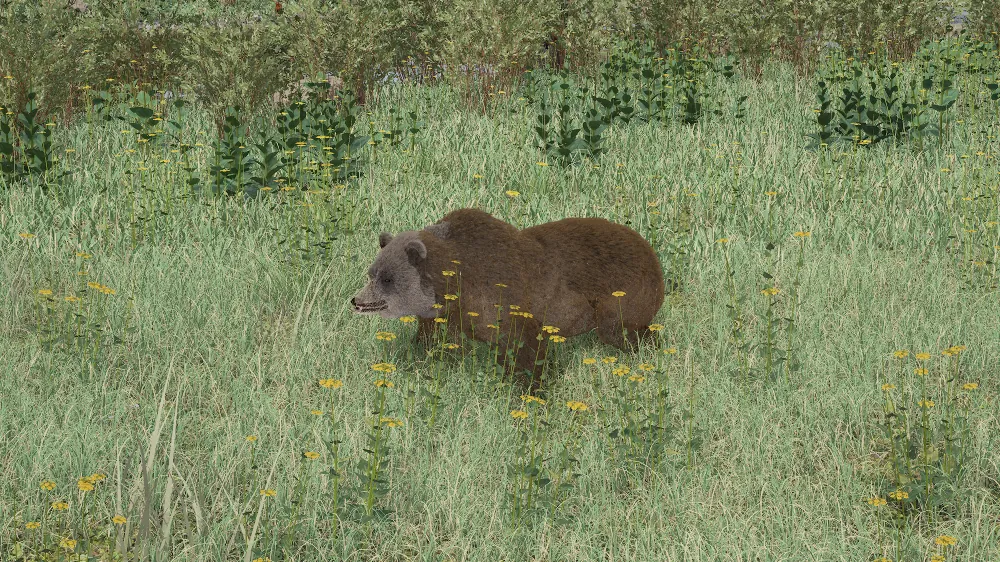
The bears came into the build on October 29 as animals that left: a black bear or a California grizzly noticed a player at 40 to 50 m and ambled off at about 20 m. The bluff charge and their sounds were still owed.
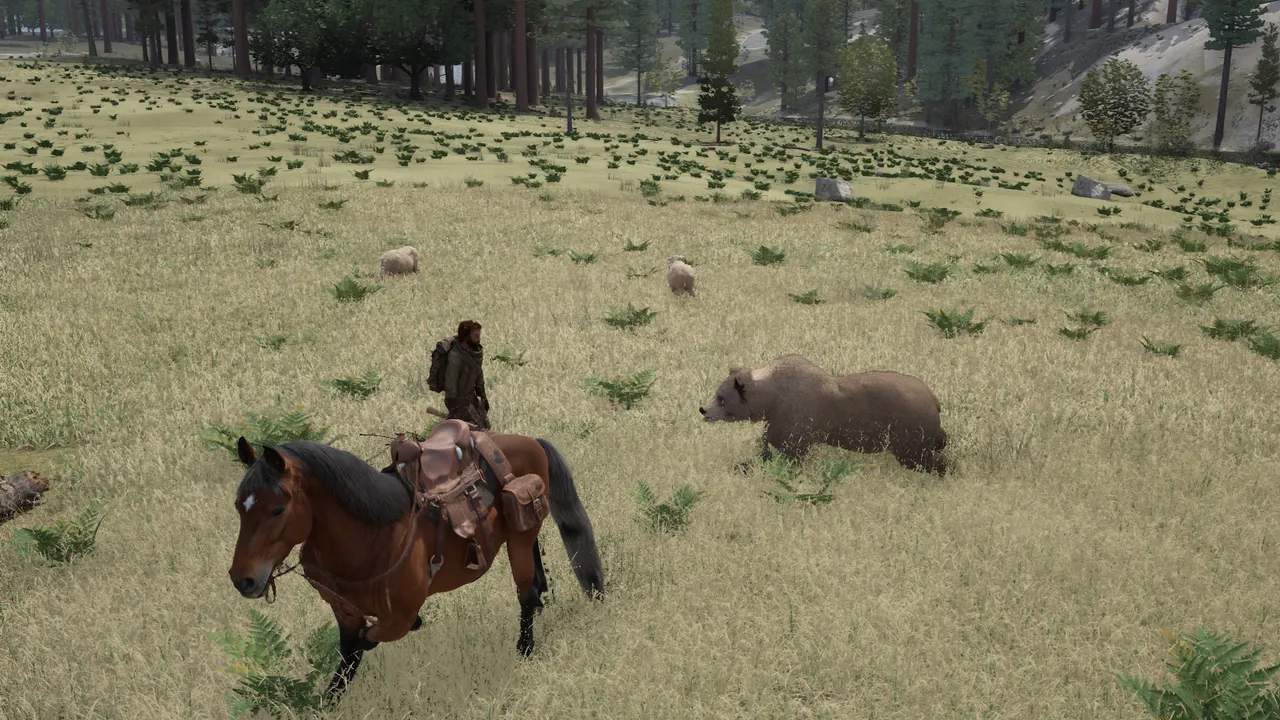
On November 3 the grizzly stopped running away. It turned on a player with its head low and its ears back, popping its jaws, and what happened next depended on the player. Stand still or back away slowly and it walked off. Walk at it and it bluff-charged, pulling up a few meters short. Turn and run and it chased the runner down, swatted them over and bit. Lying still under it made it let go. From farther off it had to notice a player first, and an unsure grizzly stood up to smell the air.
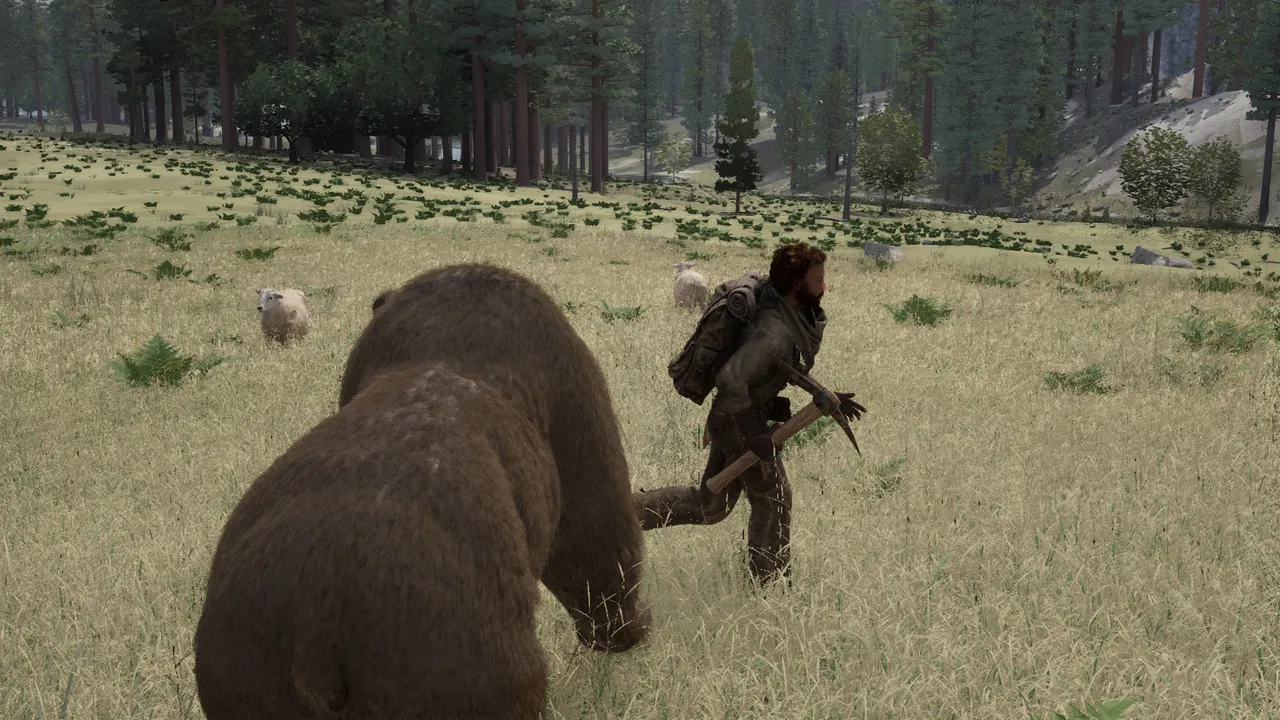
That first version was silent and had a fault: every swat was refused, so only the bites landed. On November 4 the first swat began to knock a player down, the grizzly got a voice of generated huffs, jaw pops, roars and growls, and its head stayed on a downed player where it had stood off about 2 m. The same day gave the player answers: a burning fire or a lit torch turns a charge into a display and a walk away, unless the bear has been hit, and a dog nearer the bear than its owner often draws it off. On November 5 came covering up, so bites hurt half as much, and fighting back, a gamble against a grizzly.
On November 7 bears began to act more like real ones. A black bear usually huffs, pops its jaws and walks off. A grizzly usually stands up to look a player over, then bluff-charges and stops a few meters short. Every bear huffs before it touches anyone, and a real attack has a cause: the bear was surprised up close, the player ran, kept walking at it, hit it, or came near its kill. In the first 10 minutes of a life a bear bluffs more often, though not always.
Within the hour came a fix for a bear that a playtest had caught attacking without a sound. A landing paw now gives a heavy thud and rake, and teeth a bite through cloth. The black bear had kept 3 to 8 s of quiet between calls, enough to swallow every attack call. It now waits 0.5 to 1.2 s and always gives the huff and jaw pop that open its warning.
Then a playtest watched a black bear hit a dog without touching it, then leave too slowly. On November 11 the cause turned out to be where the distance was measured. The blow landed when the bear’s middle came within 1.6 m of the dog’s middle, and the bear stopped dead there: its half-body of 0.8 m and the dog’s 0.22 m left about 0.5 m of air. Now a bear drives in during the strike, and the blow lands only within the paw’s reach, 1.12 m for the grizzly and 0.85 m for the black bear. A swing that falls short is a miss, and the same rule covers blows on a player. The turn on the spot before the bear walks off went from 2.13 s to 0.72 s in the check. Late that night a grizzly’s blow on a person was retimed too: in its check the paw’s distance from the target at the blow went from 0.90 m to 0.13 m.
Turn on the spot before the bear walks off
- Before2.13 s
- After0.72 s
Paw’s distance from the target at the blow
- Before0.9 m
- After0.13 m
A playtest also asked for the grizzly to open its mouth when it attacks. The attack had been turning the jaw by 30 degrees, but each bear’s body, a generated model, was one sealed surface at the lips, so the jaw only bent the muzzle. On November 11 both bears got real mouths, with lips that part, teeth, a tongue and a jaw that opens to 40 degrees. That uncovered one more fault: the grizzly’s skin had been drawn inside out, hidden by the fur until teeth showed through the closed snout. It was turned right side out that evening.
Some of it is still approximate. On November 4 the charge, the skid stop, the ground slap and the swat were keyed from written accounts, with only the standing up and the bite checked against public-domain park footage. The open mouth’s teeth read as a crowded pale row, and the voices are generated takes, unheard in play when they landed.