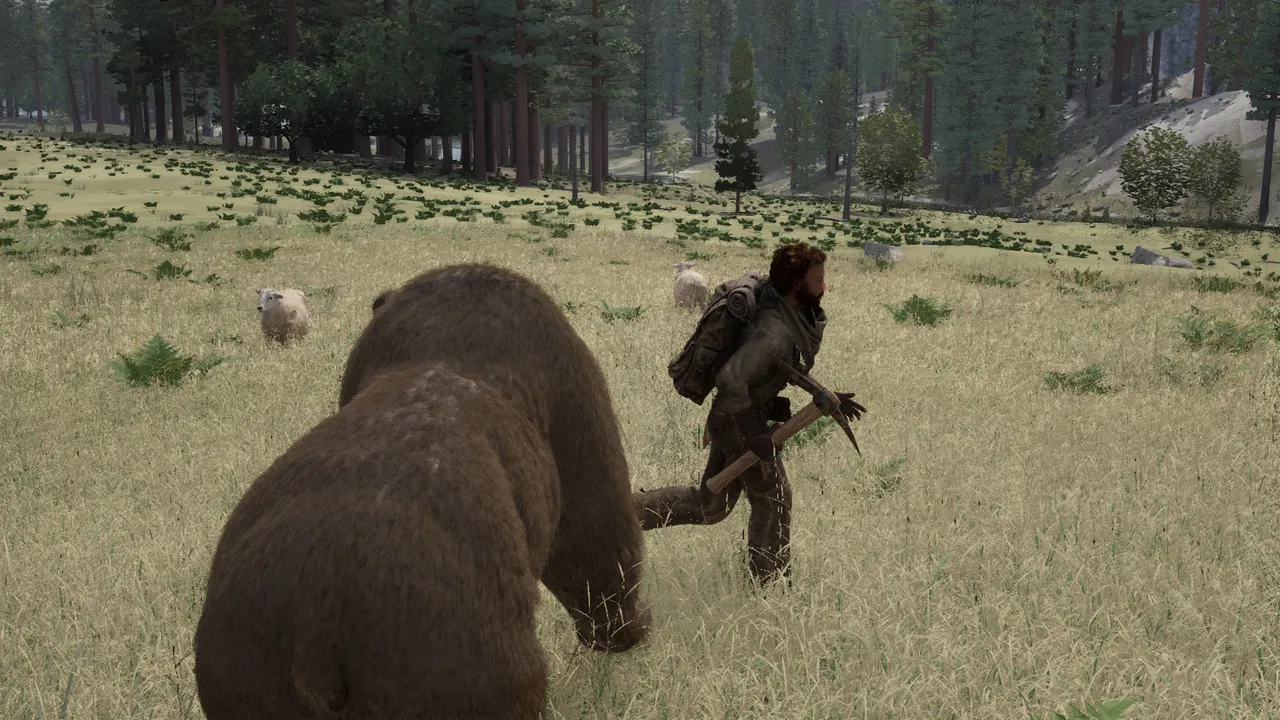
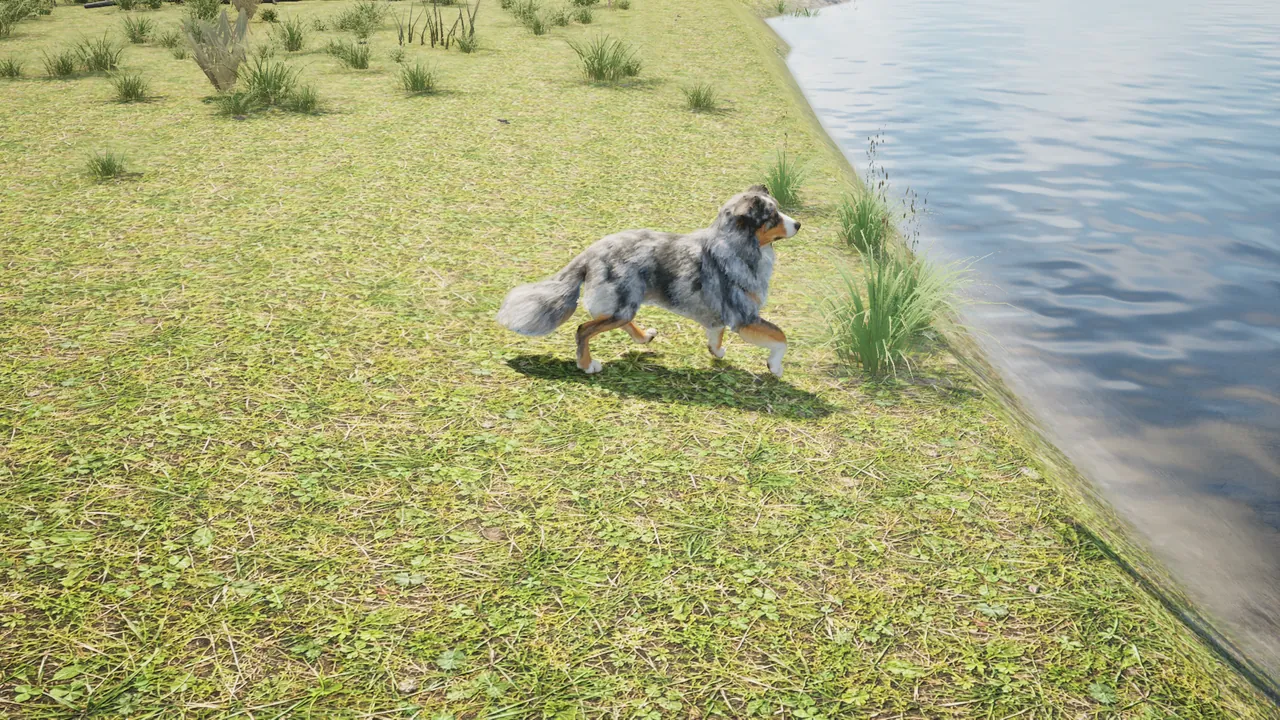
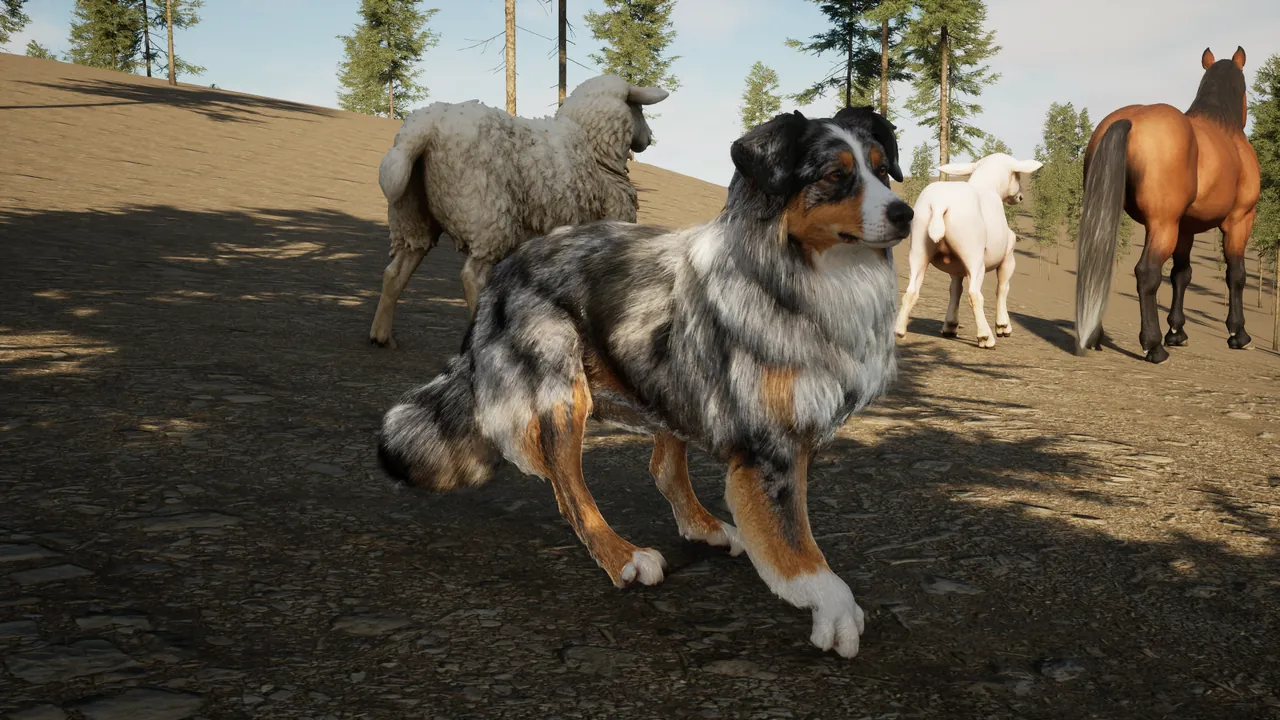
Early in November the bear sometimes looked glitched in a playtest, and the reason was missing. Finding it took from November 4 to November 13, and there was not one. There was a stack of separate faults, and two only showed once something else had changed.
The first were found on November 4. When a grizzly stood over a downed player, its head turned see-through under a sheet of fur: wherever the head or neck bent, the fur stood off the body in stiff straight strands. It was made to bend with the body on every furred animal. Up close an animal wears a coat of separate strands, and farther off only its painted body is drawn. The swap happened in a single frame at about 12 m. That evening the fur began to fade in between 14 and 11 m.
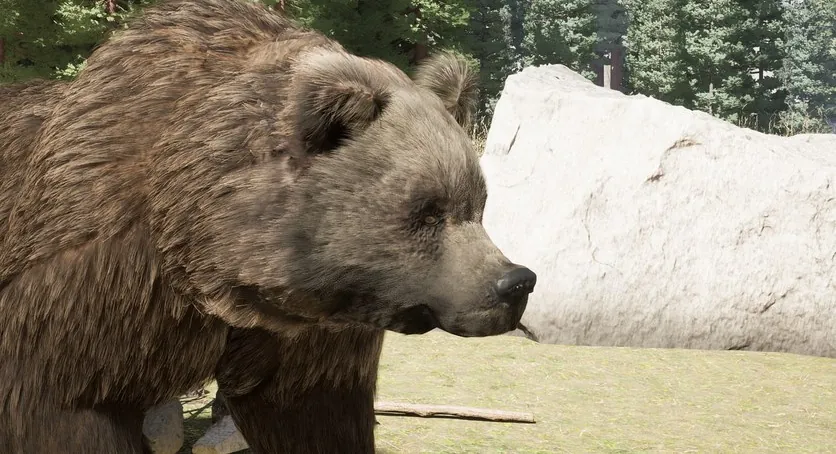
November 5 found another. Pale spikes on the grizzly’s hump were cones of fur sculpted into the body itself, poking through the fur, so the body was smoothed. Coat rounds against photos of real bears ran through November 5 and 6. On November 7 bears stopped going flat black at 10 to 35 m: the bare body drawn past 14 m had been shaded like a matte plastic shell, and was made to wrap light round it the way a pelt does.
A later playtest saw a grizzly look wrong at 13 m and a mule deer look see-through at mid distance. Early on November 11 the cause was traced to the two ways an animal is drawn, which did not match. The deer’s strands drew pale cream all over, while its body was reddish tan with a white rump. The grizzly’s body drew its belly and legs about 2.3 times brighter and grayer than its coat. The fade itself worked by thinning the strands, and strands thinner than a pixel drew a pale see-through veil at 11 to 14 m. The fade was changed to shorten them, and past them the body took the coat’s tint. A smaller step remained on the grizzly until a second round that evening, when it read as one chocolate brown bear in check frames from 4 to 25 m.
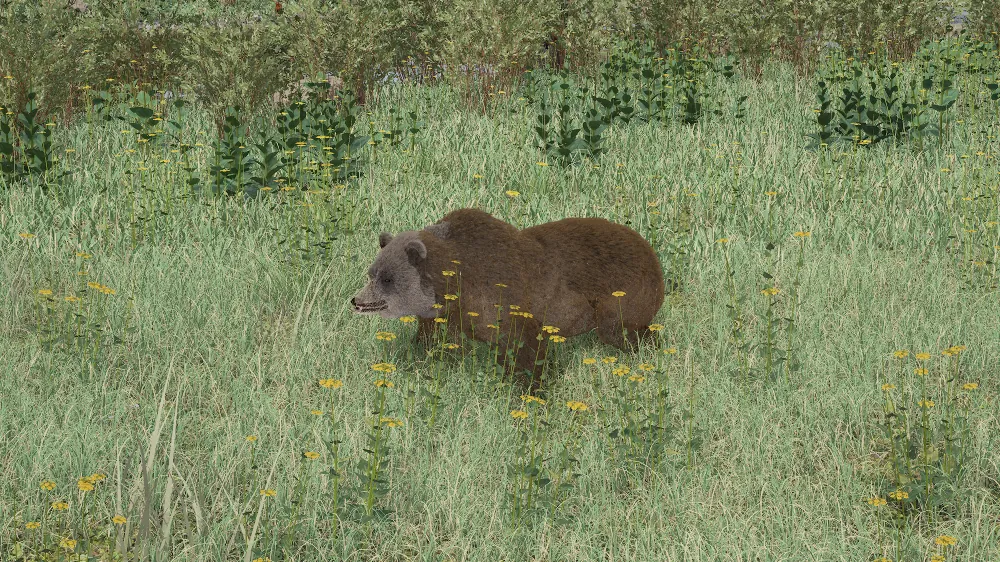
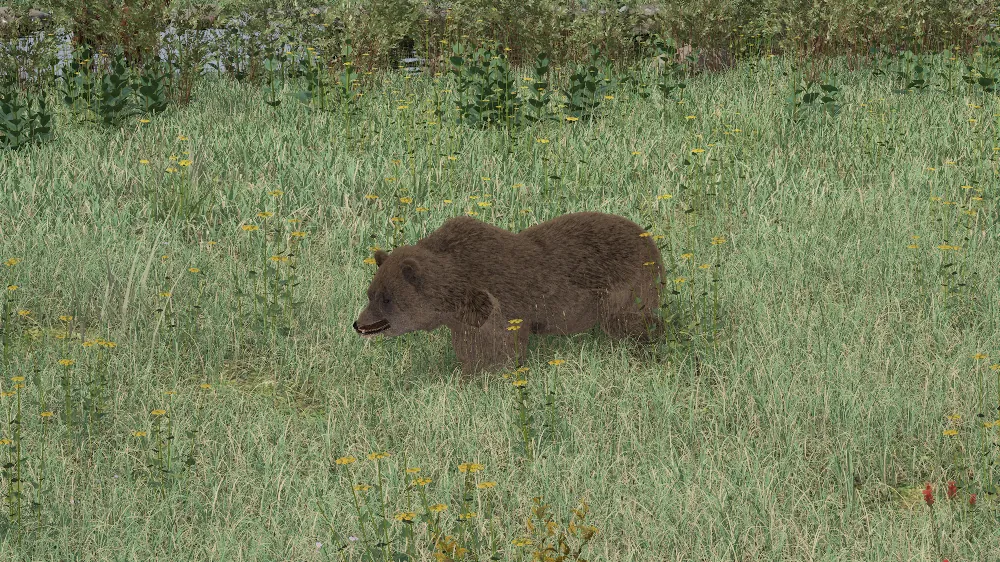
The same day produced the strangest cause. Both bears’ bodies began as generated models, sealed at the lips, and were now given real mouths, with teeth, a tongue and a jaw hinge. With the grizzly’s jaw closed, a row of teeth and a red cavity showed through its snout. The skeleton, the animation clips and the lower-detail models were ruled out. The grizzly was being drawn inside out. Its skin faced inward, and because a surface is drawn from its outer side only, the game had been skipping the near skin and drawing the far wall of the head. The fur hid this until there was something inside the head to see. Every face of its skin was turned round. The black bear’s skin had been the right way out all along.
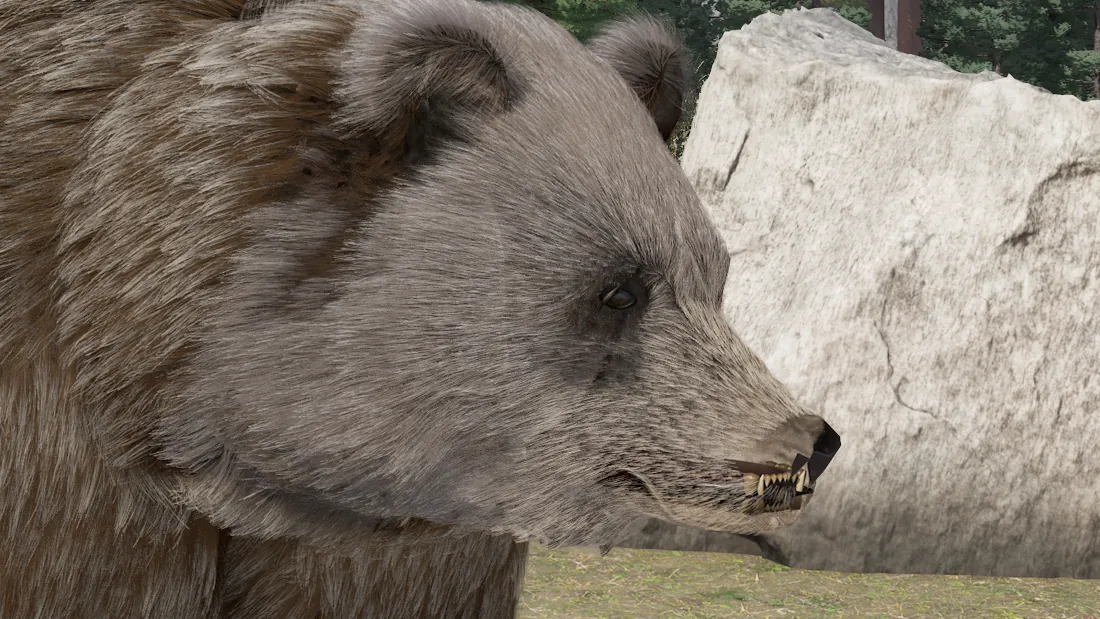
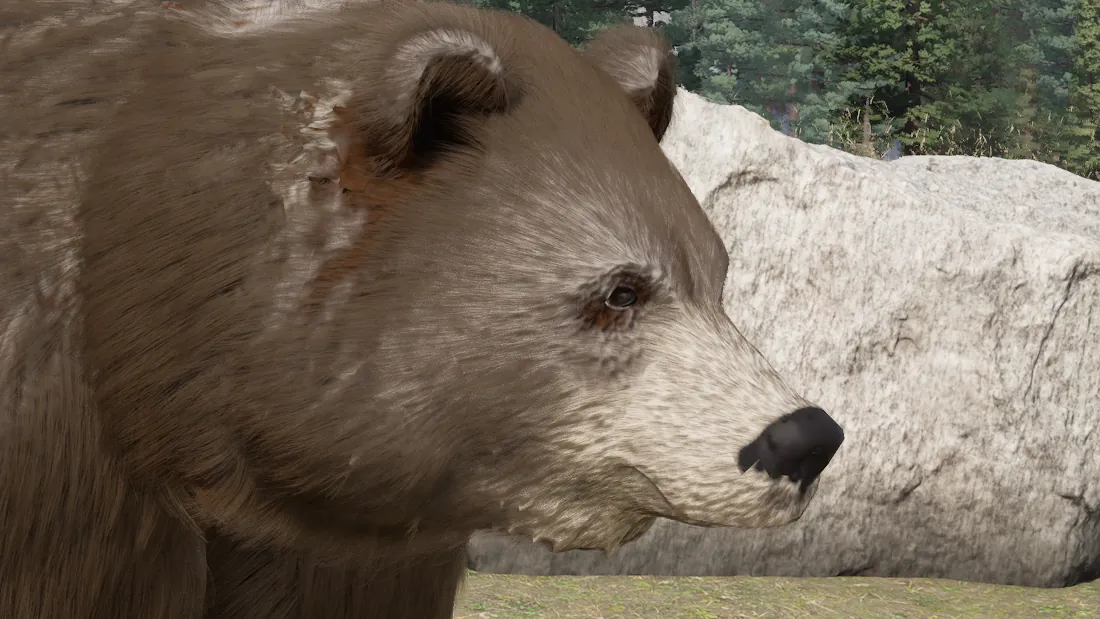
Turning it round exposed the next fault: the face now showed its real outer skin, with a pale cream muzzle, and the coat had been tuned on the inside-out one. On November 12 the muzzle became brown fur. The same day answered a playtest that said the bear looked like clay next to its reference photos. Strand colors were stored as square roots and read back without being squared again, which pinned the coat’s tint at its limit: every body strand drew the same flat chocolate, no lighter or darker hairs, no dark partings. The colors were then set strand by strand, on the black bear too.
Two more came out that day. Pale bald patches on the grizzly’s hump were partings showing an undercoat painted at about twice the strands’ brightness. A pale net of lines over black bears at 16 to 25 m was the bright padding between patches of the undercoat’s texture, bleeding into every patch border when the texture is drawn small. Both were corrected in the undercoat.
The deer was last. On November 13 a playtest saw it see-through at mid distance again, and this time the cause was its lighting. Its body used the shading meant for leaves, which passes sunlight through the whole shape as if it had no thickness, so a deer at 20 to 60 m read as a thin, glowing shape. It was given the bears’ pelt shading, but the fix went in without a valid frame of the result.