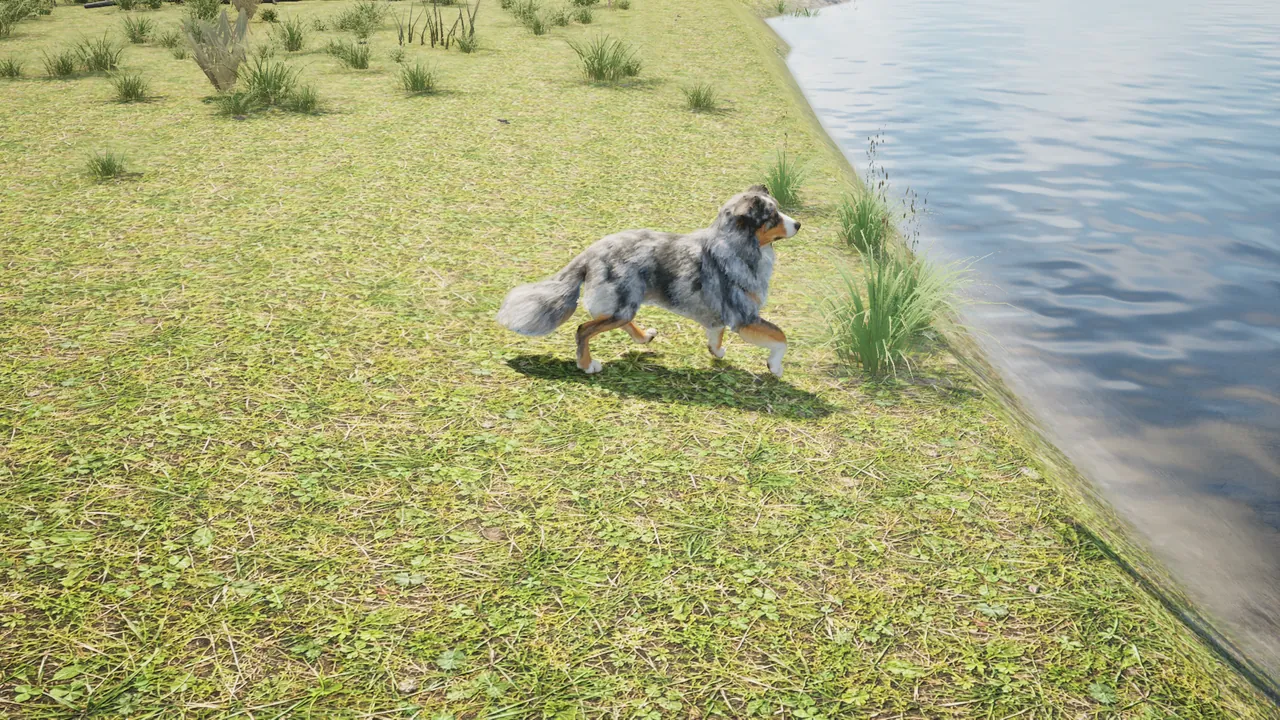
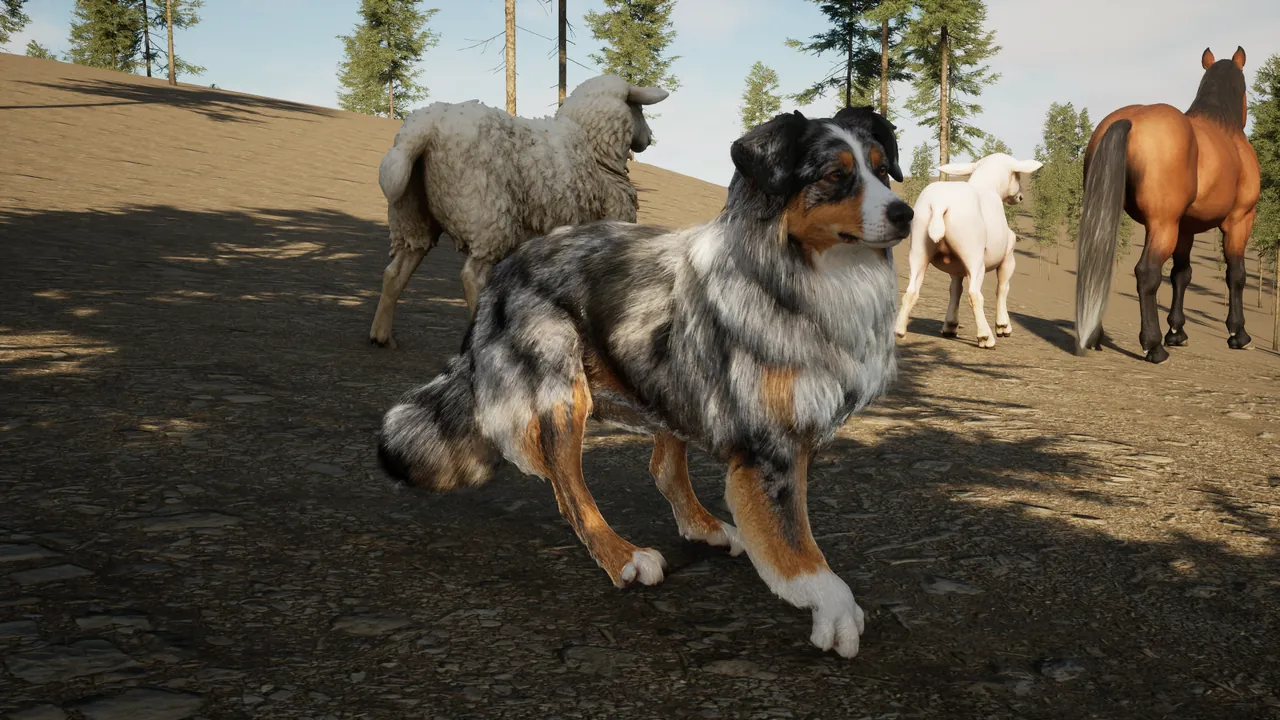
Coyotes arrived in the meadows early on October 28, on a canine skeleton with their feet planted. The mule deer were held back that morning: their old body carried a white-tailed deer’s antlers. Less than three hours later they returned as antlerless does, with a head that nods at each front footfall while the eyes stay level (about 4 cm) and a stot when spooked, all four feet leaving the ground together.
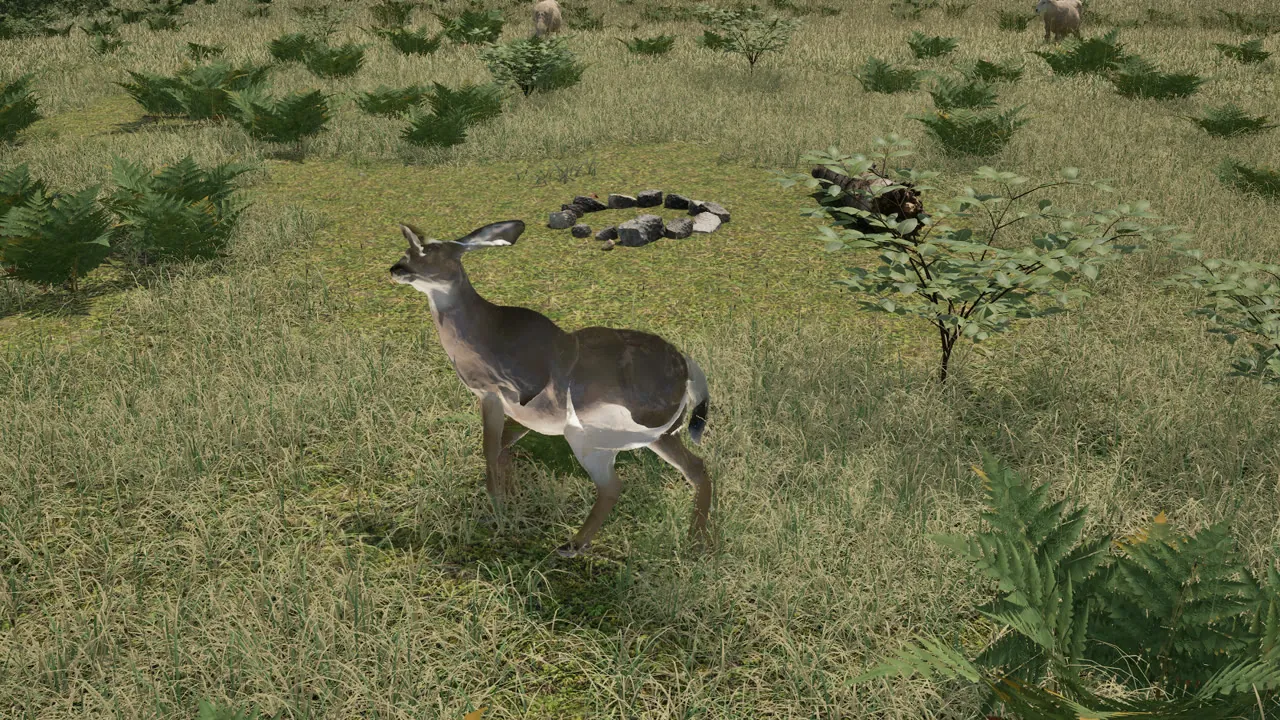
The next two days went into the skin. Bucks returned on October 29, and the torn flaps on their necks turned out to be the buck’s body drawn inside out. On October 30 every deer got a coat of about half a million strands, and a buck got his own body, about 1.85 m long to her 1.6 m.
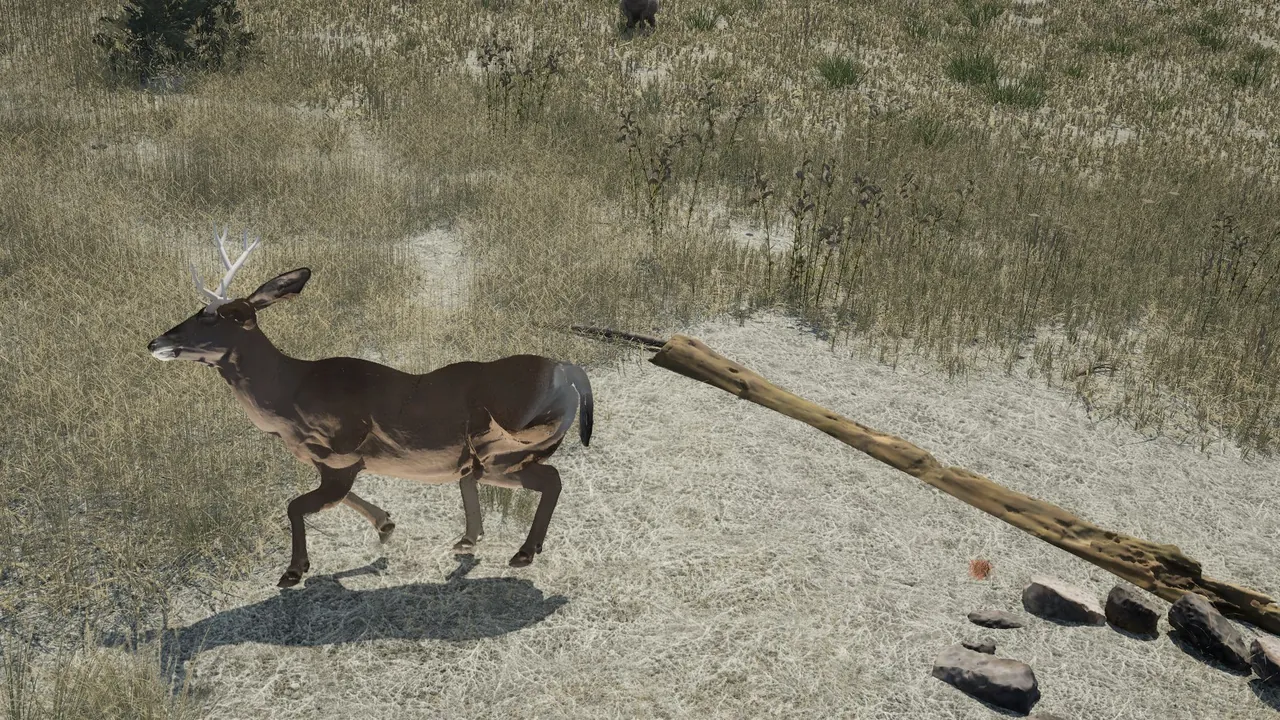
None of that changed how a deer walked or ran. A playtest ahead of November 11 found the animation poor and found deer at a distance see-through.
Walk, trot and run were computed gaits in which each leg was solved as two bones, with the long bone of the lower leg held rigid. That capped the reach, so the body sank and the stride was short: the hips rode at 91 percent of standing height in the walk and 86 percent in the trot. Standing, grazing and dying were horse motions moved onto the deer, and the death slid a fore hoof 63 cm.
The replacement, on the evening of November 11, solved a hoofed leg as three long segments that turn together, the middle bone closing the triangle, and set the hoof down flat at the ground’s own speed. Idle, alert, graze and death were keyed on the doe’s own skeleton from footage of real does. On the clips the hips rose to 96 percent in the walk and 98.5 percent in the trot, and the worst slide of a planted hoof in the walk fell from 3.8 to 0.3 cm. The first film of it in the game showed only the graze, from far off: the doe grazed throughout and never took fright.
Hips as a share of standing height, walk
- Before91%
- After96%
Hips as a share of standing height, trot
- Before86%
- After98.5%
Worst slide of a planted hoof, walk
- Before3.8 cm
- After0.3 cm
The hind legs still stayed gathered under the rump at the end of each step. The skeleton’s thigh bone was 13 cm long; a real doe’s is about 21 to 24 cm. So the skeleton was refit to a deer’s proportions, and in the game the deer came out worse. The new bones were not the cause. The game still held the old skeleton’s resting pose and corrected every motion for the gap between that pose and the body. The new motions already carried the new lengths, so the correction landed on top of them, on 29 bones by the third round. That was what crouched the hind legs and pinched the thigh.
Late on November 11 the resting pose was replaced for real and the correction fell to nothing. Filmed in the game beside the deer the build had before, the walk, trot, stot and gallop were each judged better. A thigh crease at full flexion, a stiff neck and a stiff tail were still visible.
The see-through deer had been taken up first, early on November 11, and were not settled that day. Close up, a deer is drawn with its coat of strands; past about 14 m the strands are not drawn and the body underneath draws the deer alone. That morning the fault was put down to that hand-over: thinning strands drew a pale veil at 11 to 14 m, and cream strands did not match a reddish tan body with a white rump. Both were changed that day. On November 12 the strand colors were worked out again: each strand had been picking its shade alone, which left 28 percent of them as pale flecks.
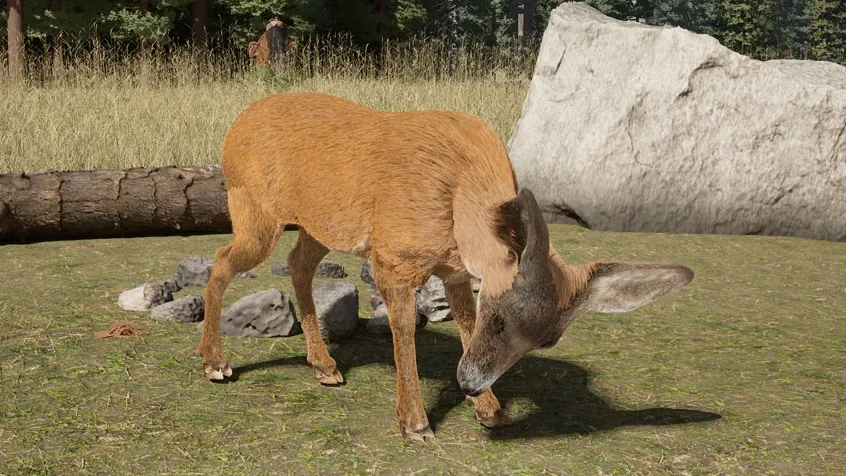
A playtest on November 13 still found deer see-through at mid distance, and this time the cause was not the coat. Both deer bodies were lit by the rule meant for leaves, which lets sunlight pass through as if the thing had no thickness. With the strands gone, a deer at 20 to 60 m read as a thin, glowing shape. No other animal was lit that way. Late that day both bodies were moved to the pelt shading the bears use, and the change reached the build without a frame to show for it: four attempts to film it were refused because the new shading had not finished building. The animation half of that playtest’s report was not answered that day.