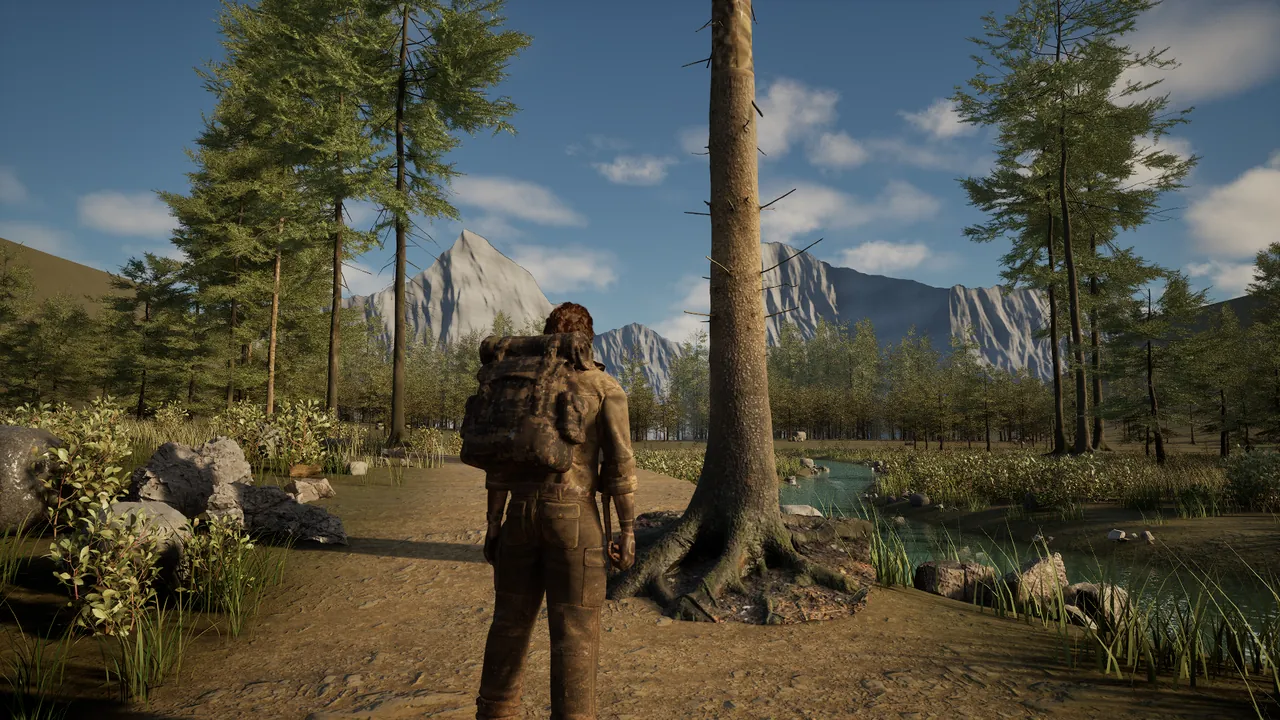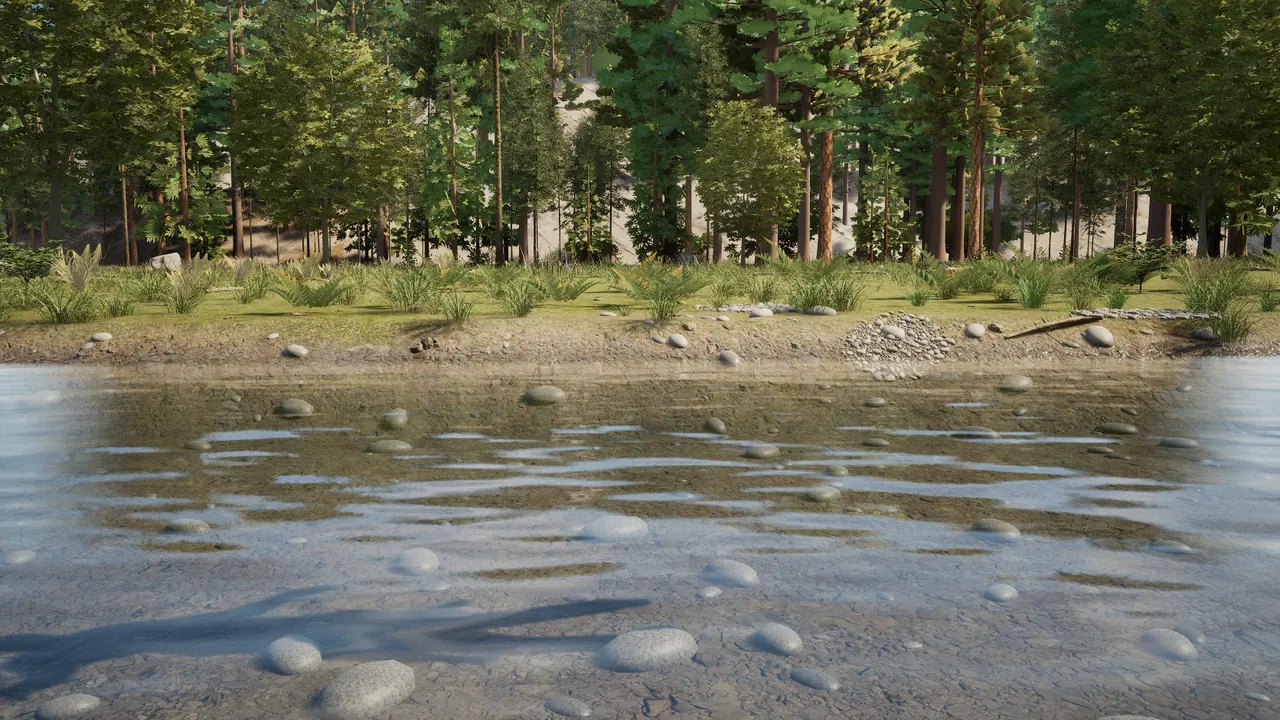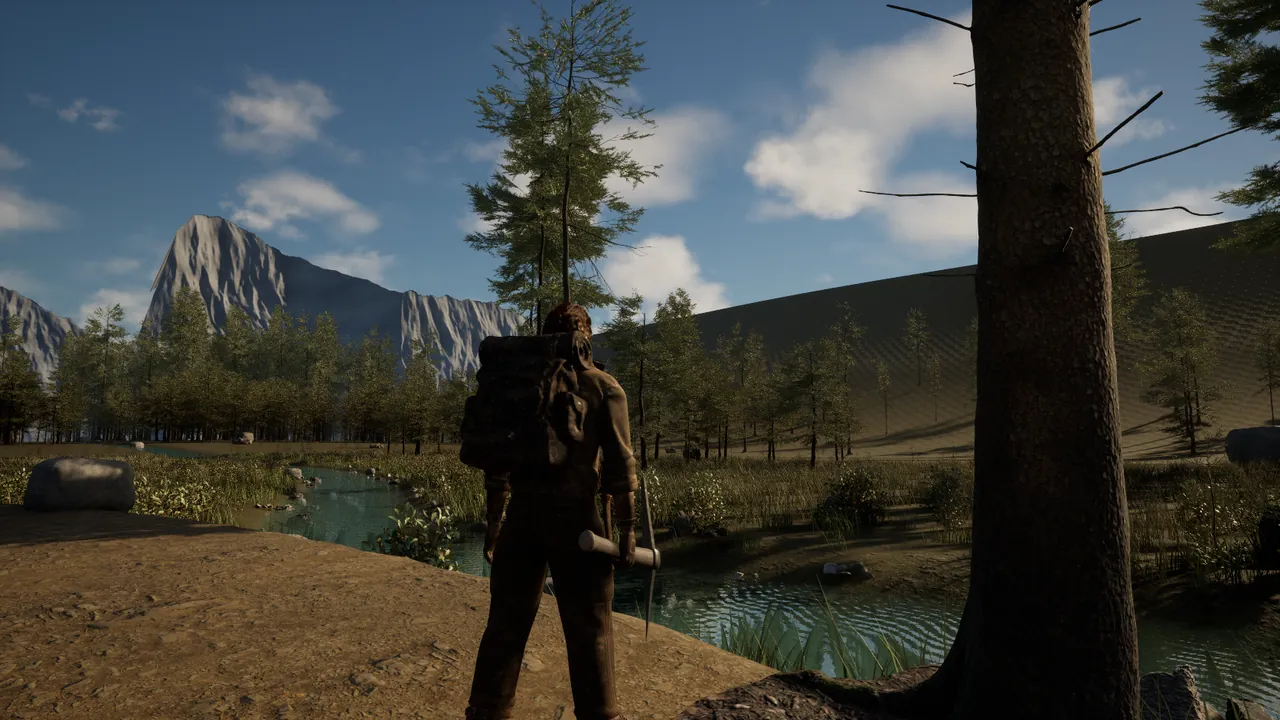
A small creek used to cut a valley and draw almost no water: the old rule needed a whole four-meter square of ground to be inside the creek, which a two-and-a-half-meter creek never is. Water is now a real surface that lies level across the channel and is cut exactly where it meets the bank, so creeks, rivers and lake shores read as water meeting ground instead of steps. Measured on three seeds, a creek’s middle is wet along 98.6% of its length; the smallest creeks were dry along all of it. Where you can see water, you can drink it: the edge you see is now exactly the edge the game uses.
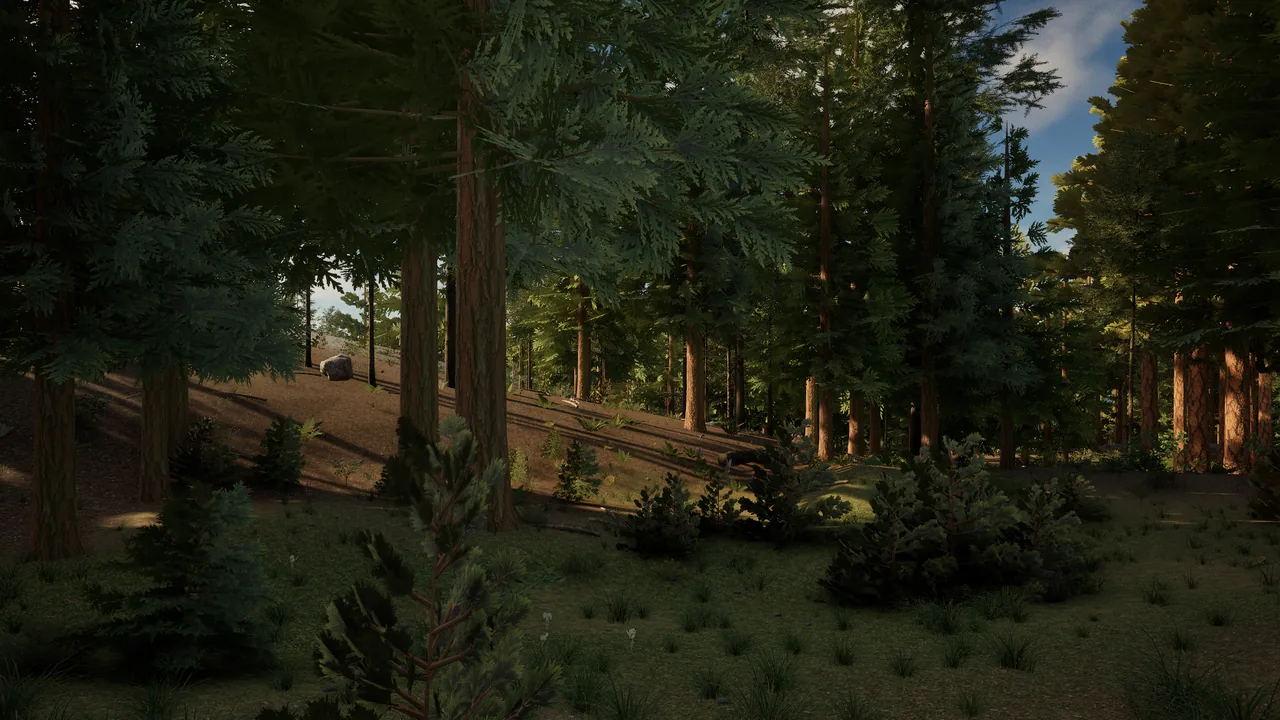
The trees are the size they are supposed to be. The world had been drawing each plant at whatever size its mesh was authored at, so the tall pines stood a meter high and the forest was ankle deep. Every plant is now scaled to its species: pines and firs stand 40 to 45 meters, oaks up to 7, junipers 4 and grass 1 (since November 8 the junipers are scanned trees built 2.5, 3.3 or 5 meters tall). The pine borrows the fir’s shape until it is modeled at its own size. Meadow grass is no longer treated as a tree you cannot walk through.
A day’s walk now changes the country you are in. Temperature and moisture vary over 48 and 32 kilometers with a finer layer on top, so a 25-kilometer circle around the start holds five to ten different environments where it held three to seven. That is still short of the eight to fourteen it should hold, and the limit now is how many environment types exist. Your saved worlds keep their ground and your things; the forests and plants around a camp can differ, because the climate that decides them changed.