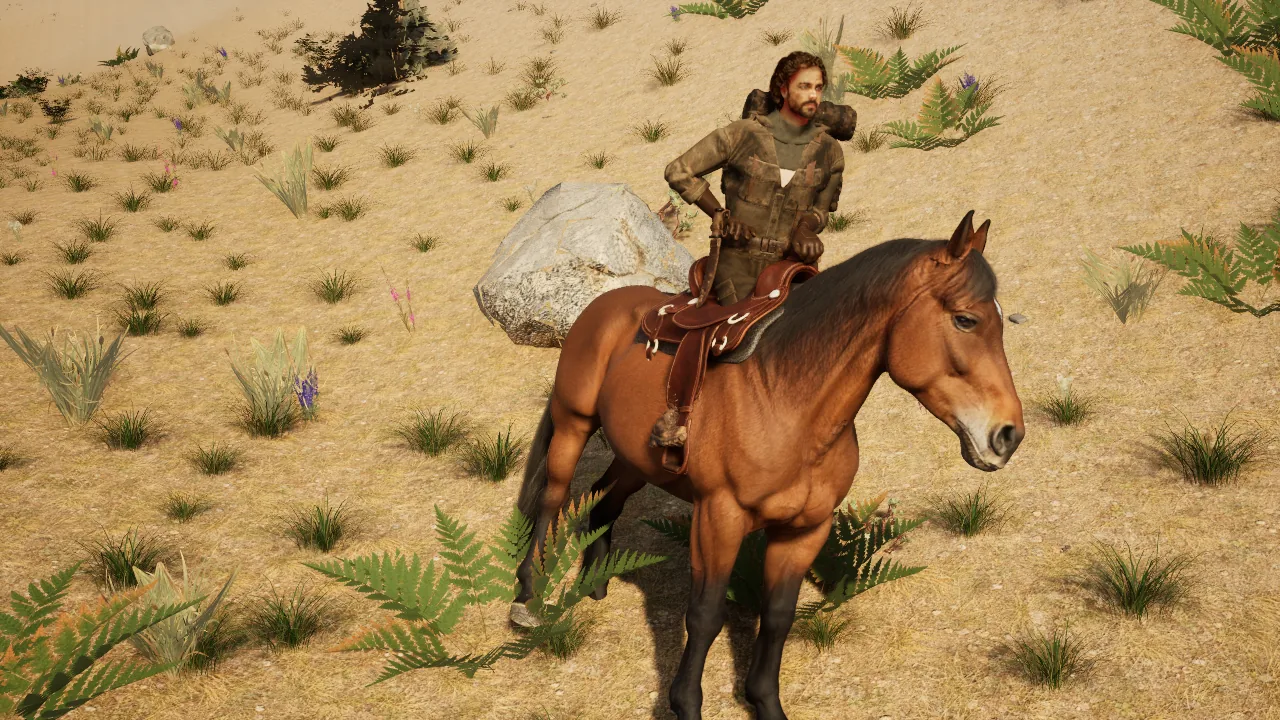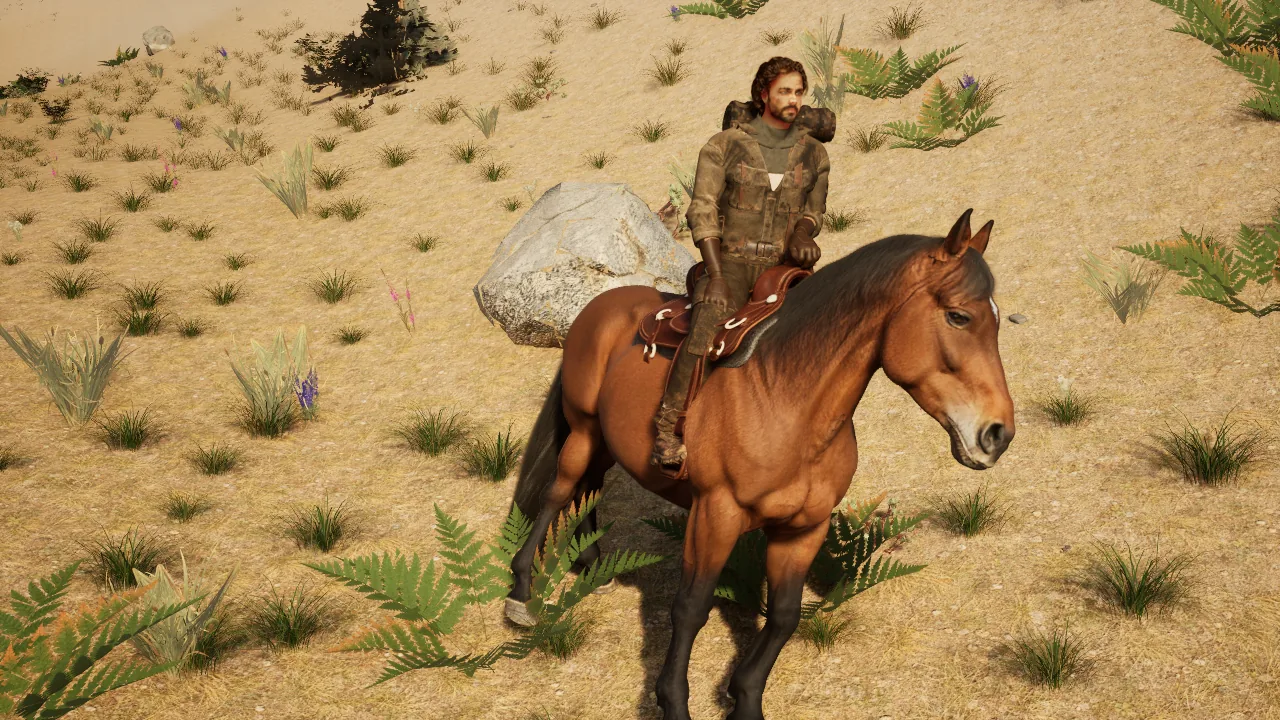
Gallop and then pull up hard, or turn sharply, on grass or soil, and the horse tears the ground out and throws it back: clods that turn over in the air and land, a sheet of grit thrown low, and the dust trailing behind you. Riding straight across firm ground does not tear it; working the horse does. Dry sand throws grains and no clods, damp soil comes away in lumps, snow throws powder and chunks, gravel skitters, rock throws nothing at all. The clods are real lumps, no two alike, turf green on the side that faced up and raw earth everywhere else.
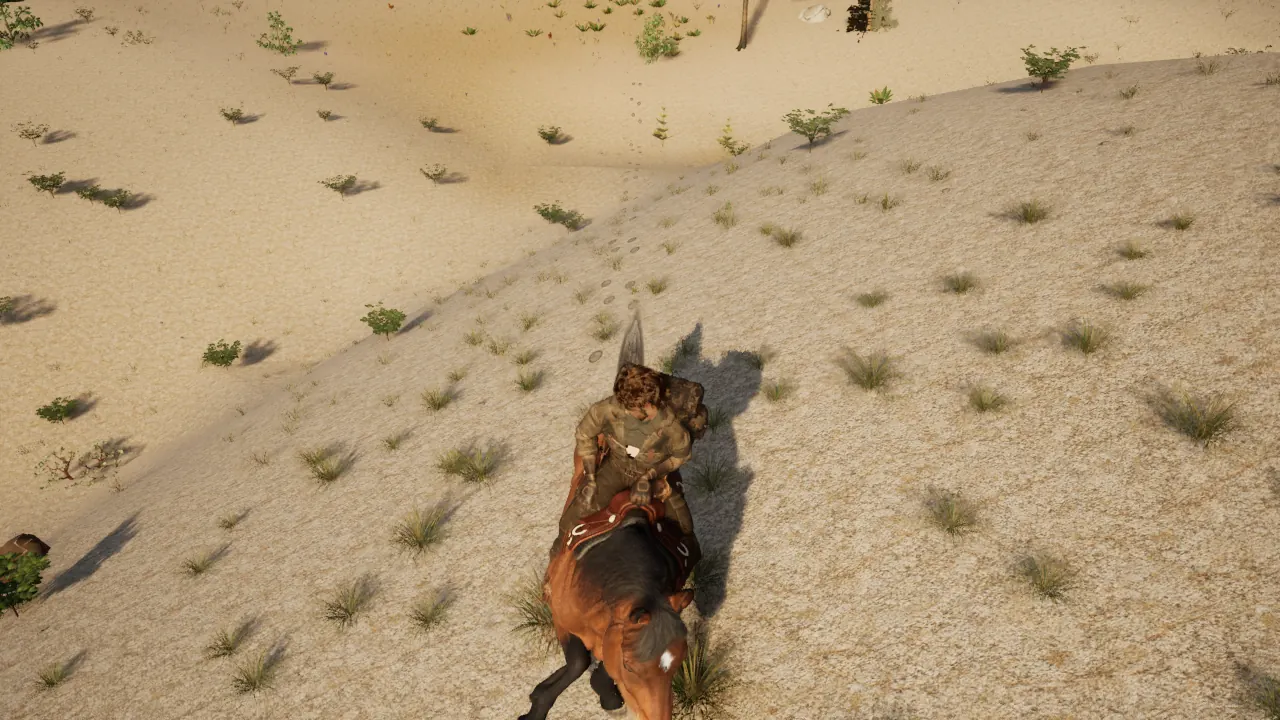
Look behind you after riding over soft ground and the horse leaves a trail you can actually see, a line of hoof marks pair by pair; before, they were pressed but far too faint to find. Each ground keeps a mark as long as it would: minutes in snow and soil, less on grass, never on gravel or rock.
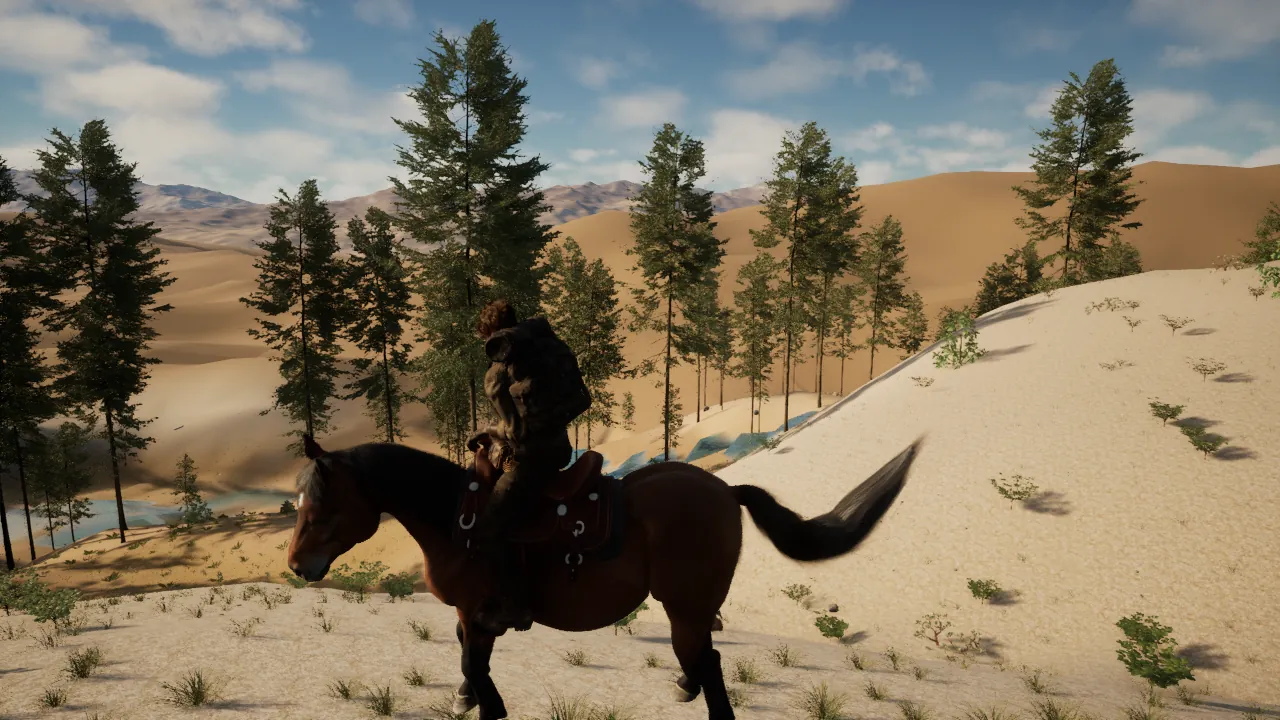
The horse takes a steeper pitch than you can climb on foot, which is the way round it should have been; on a slope each hoof tilts by exactly as much as the ground under it; and the walk, trot and run no longer catch with a jump at the end of every stride.