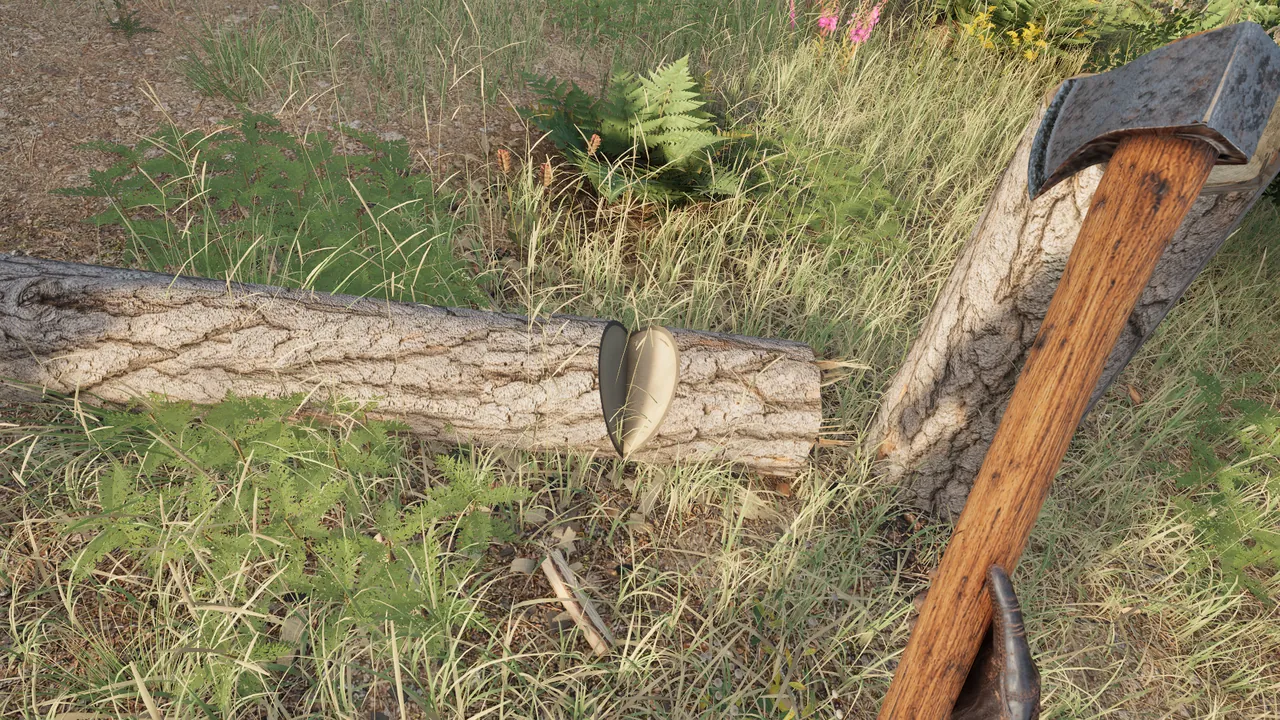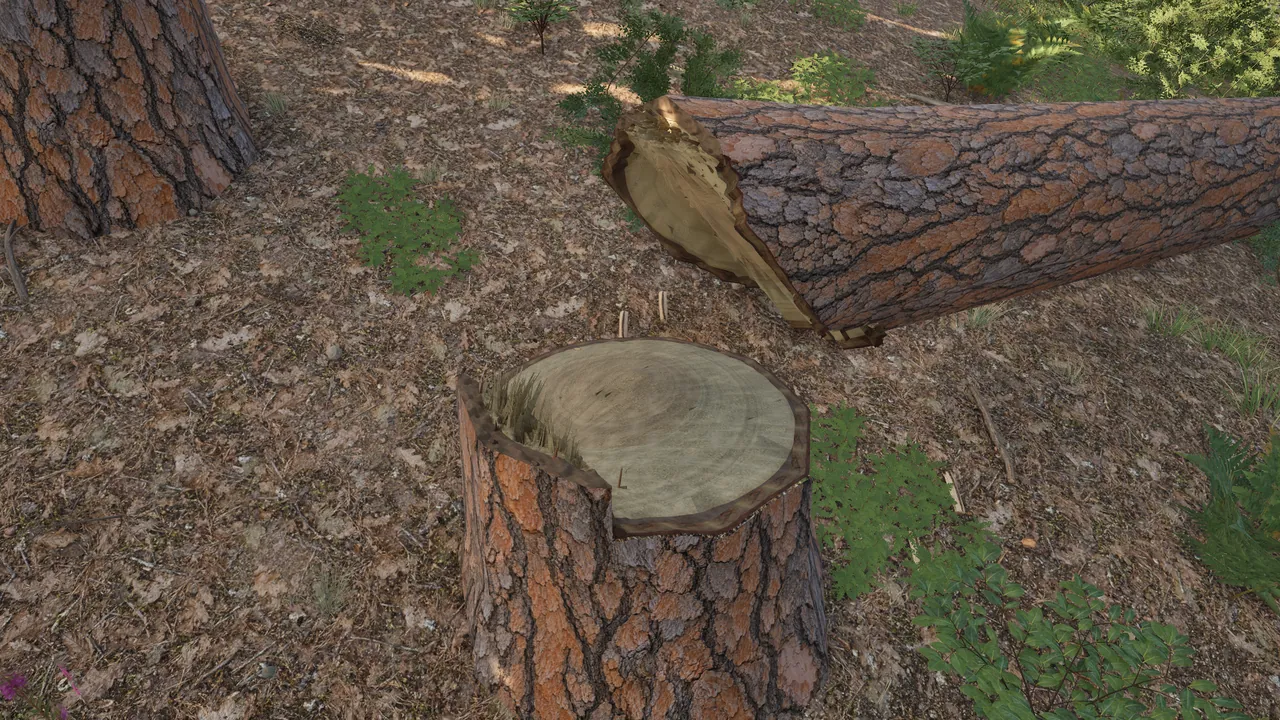
Cut a round off a felled tree and split it, and the pieces now look split: torn, wavy faces along the grain and chopped ends, where they had looked like flat sawn planks. Logs and split pieces wear their own tree’s bark at the right size, and rounds and split pieces land beside the stump, never inside it.
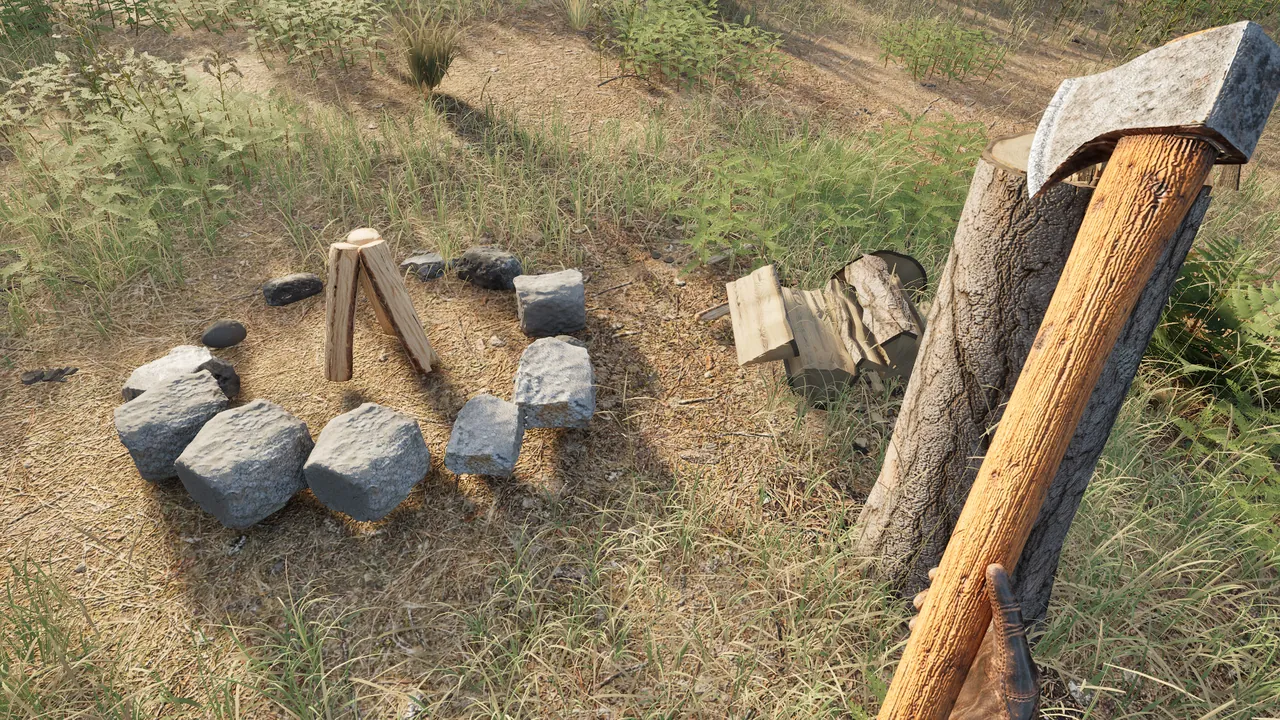
Put split wood on a fire and you see split wood on it, a stove length long and as thick as the billets you split, not small kindling. One billet is one billet in the fire, a few lengths stay a few pieces, and four stand together as a small teepee in the ring with more leaning around them. A fire ring now holds four billets, where it held fewer than three, and only a big banked fire runs out sooner, after about a day instead of two. Press E on the piece you are looking at and you pick up that piece, not the one beside it.
A felled white fir falls flat beside its stump again. After a new white fir model arrived it had been weighed as three times its wood, so it fell slowly and hung on its neighbors. The bark on the ponderosa and the white fir also lost the faint rings that ran round the trunk every meter or so, where the photographed pieces of bark joined. The joins are now staggered and blended, as the sugar pine’s were earlier that day.