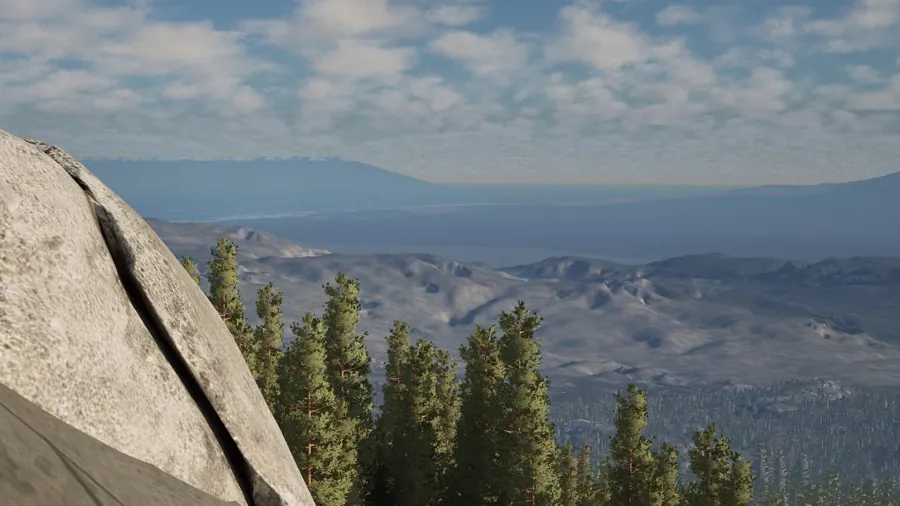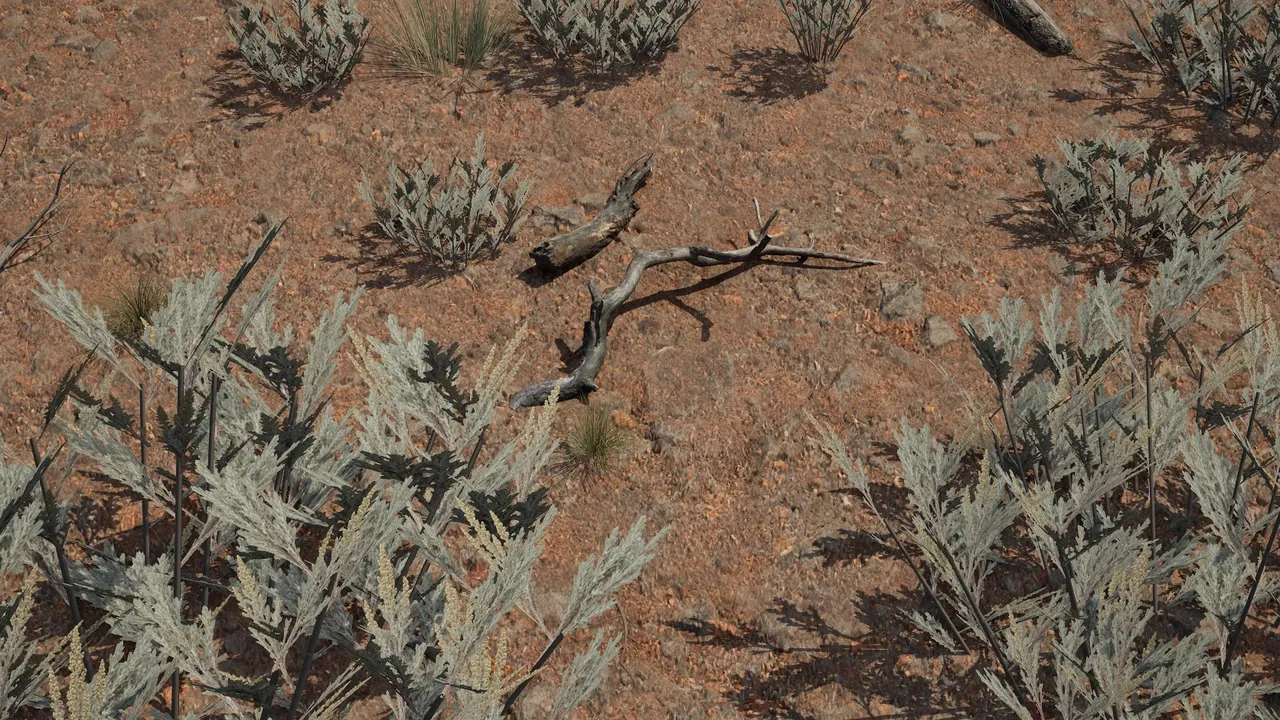
Climb above the forest in a new world and the granite basins hold water. Glaciers leave closed rock hollows behind, and in the game those stayed dry, because the only standing water came from where rivers end. Each one now holds a small lake, called a tarn, full to its rim, and a creek leaves at the low point. A count on October 28 over high ground between 2,700 and 3,700 m went from 0.47 lakes and ponds per square kilometer to 0.98, against 1.1 on the USGS map of the real Sierra.
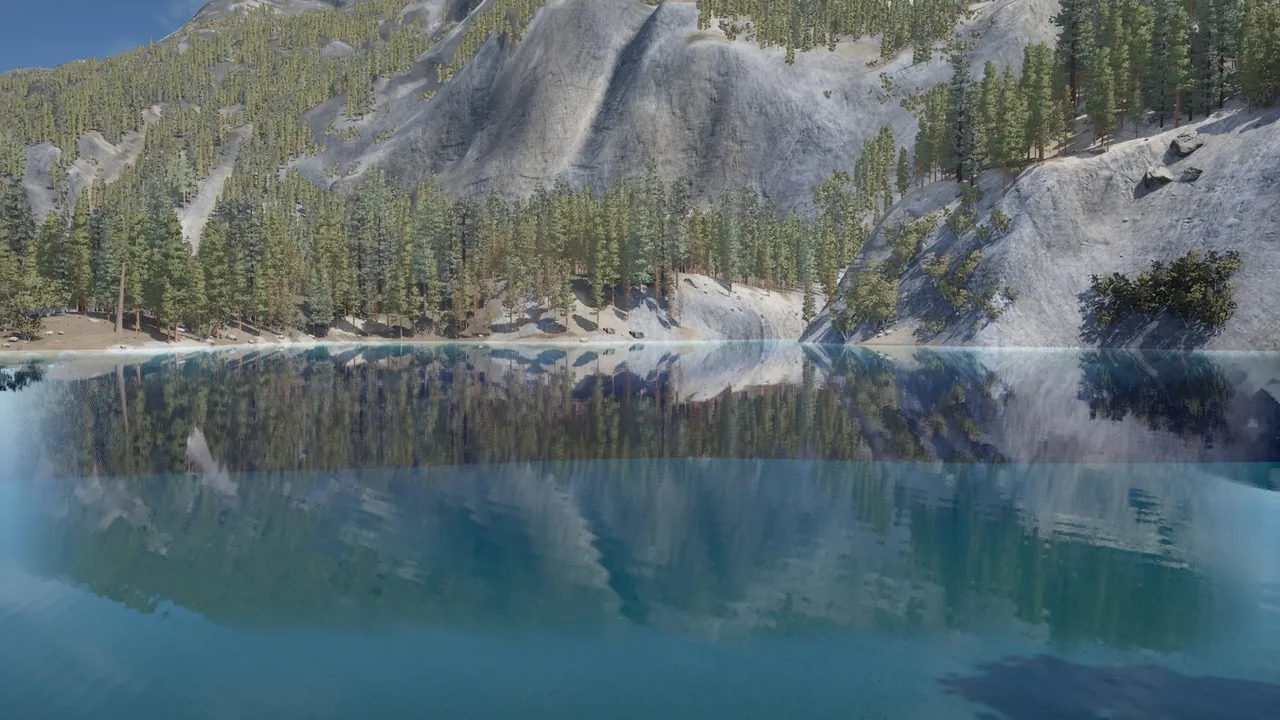
A lake’s waves depend on its size, as real ones do: wind can only build waves over the open water it crosses. On a 5.5 hectare tarn in a 2 m/s breeze that means 1.6 cm ripples about 0.4 m long, so the far shore’s trees and granite are mirrored. Big lakes keep their wind waves, and from the air those no longer form a regular grid.
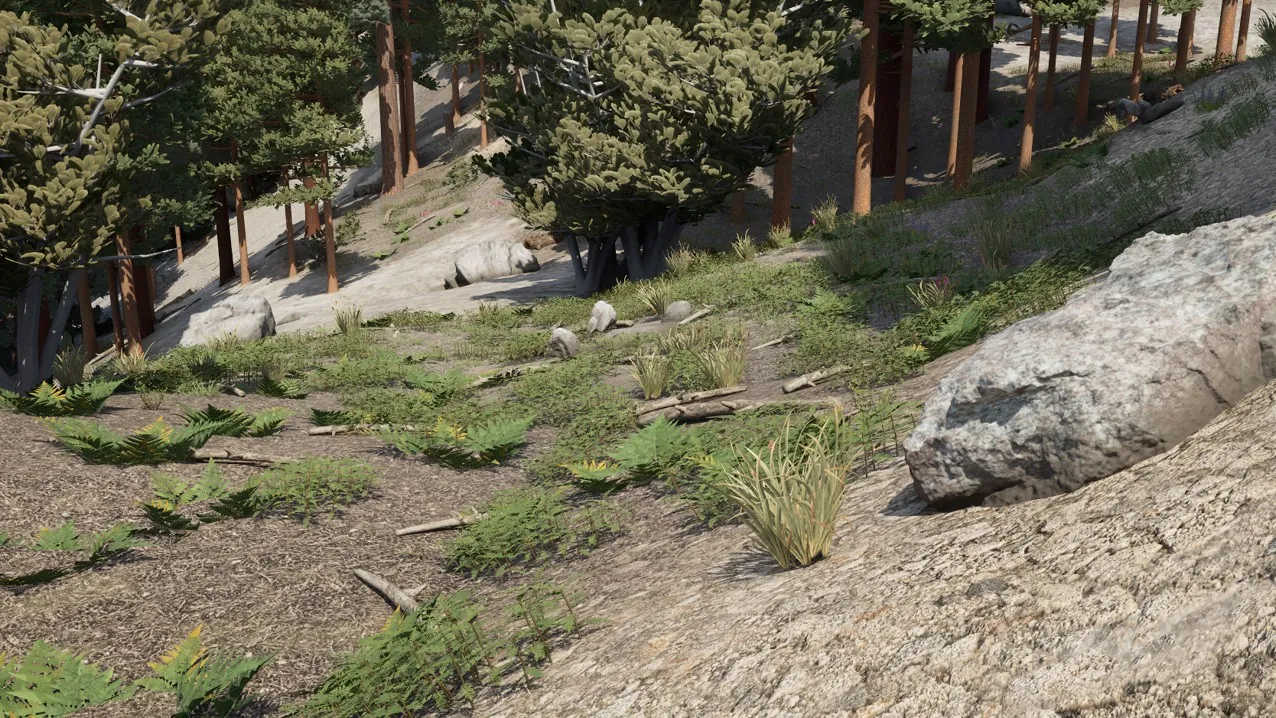
A tarn’s bank rises gradually from the water (one that stood as a pale 12 m wall climbs about 15 m over 48 m), and granite boulders are placed along lake banks. High tarns sit in rock basins with rims, and a deep hollow stays closed or keeps its tarn instead of a creek cutting a canyon through the ridge to get out.
Still wrong when this was filmed: a hard line crosses the mirrored image partway down the water, which shows in the picture. No lakes dammed by moraines exist yet, only rock basins.