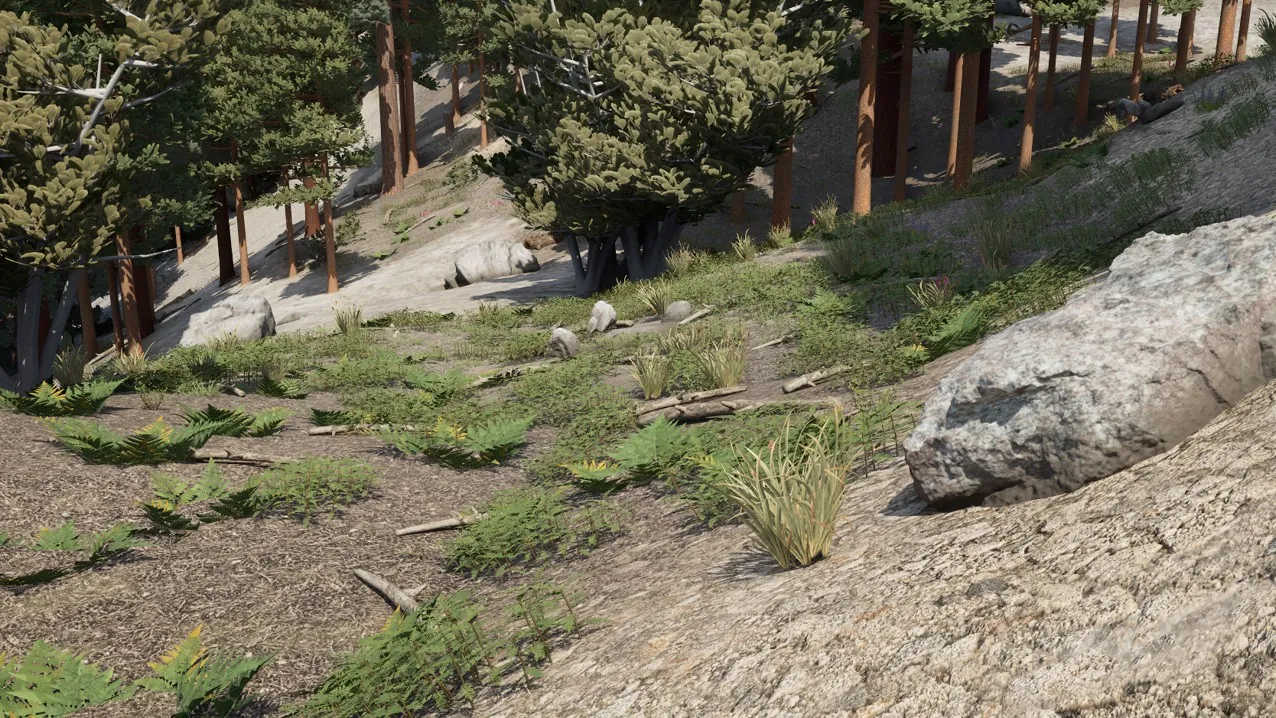
Loose rock used to look pasted onto the ground. Every boulder, talus block and stone now knows the real ground under it: the exact ground line, the ground’s own color at that spot (forest litter, meadow sod, granite soil, scree or snow) and how wet the site is. At its foot a rock takes the ground’s color in a ragged band, with a damp dark line where it meets the soil and darker shading low down. On wet sites by creeks and meadows dark moss grows at the foot, and grit and needles settle more on the faces that point up.
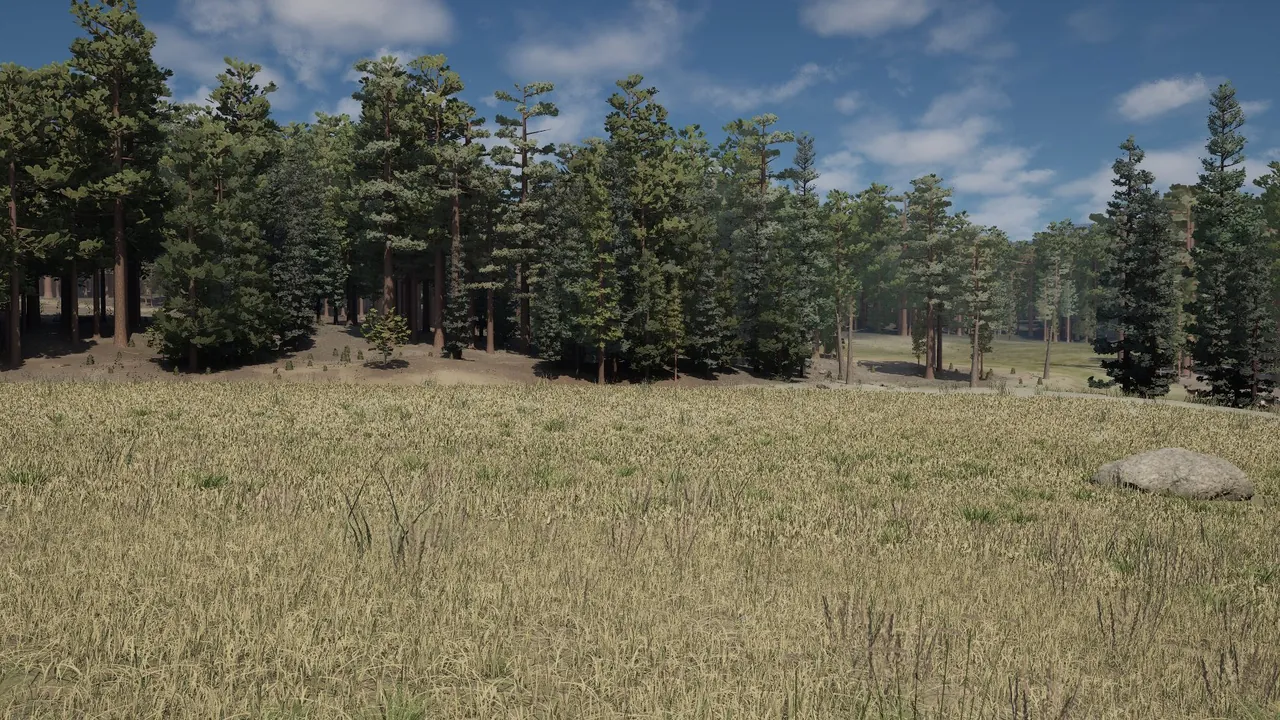
The rocks repeat less. Four more rocks scanned from real stone joined the set: a jagged lichen-streaked boulder, a big faceted boulder, a low cluster of broken rubble and a weathered loose stone. Kinds of rock that lie side by side on one slope or apron draw different scans, so the same rock no longer repeats across a talus field. A big rock also keeps its whole footprint clear of tree and tall shrub trunks, where a pine could grow out of a boulder before. That places about 3 percent fewer rocks.
Still wrong: distant small rocks read smooth and pale, and soil and debris banked against each rock’s foot are not built yet.