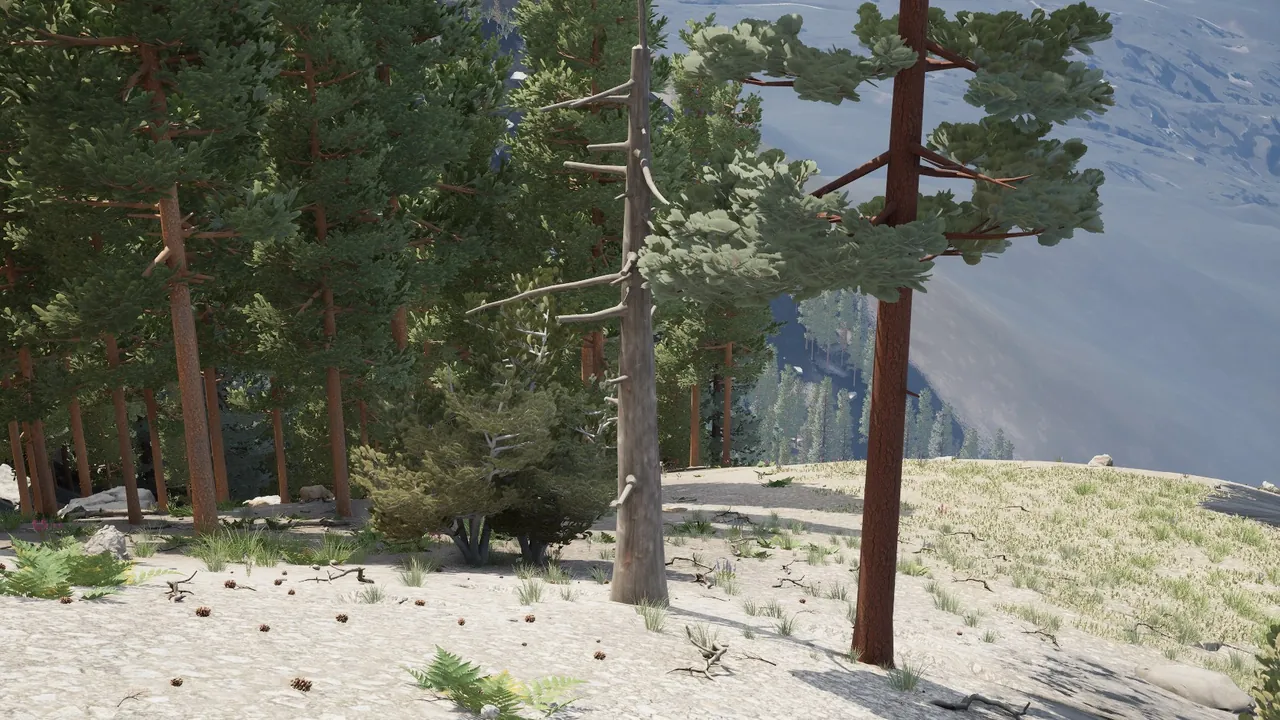
The standing dead firs at meadow and forest edges were smooth poles with flat tops. Each now ends in a torn spike where the stem broke, narrows through its old crown and carries 16 to 26 thin branch stubs and a few broken limbs, and it keeps that outline from far away. Where the bark is gone, the bare wood is a scan of real rough wood, with its checks, splits and grain.
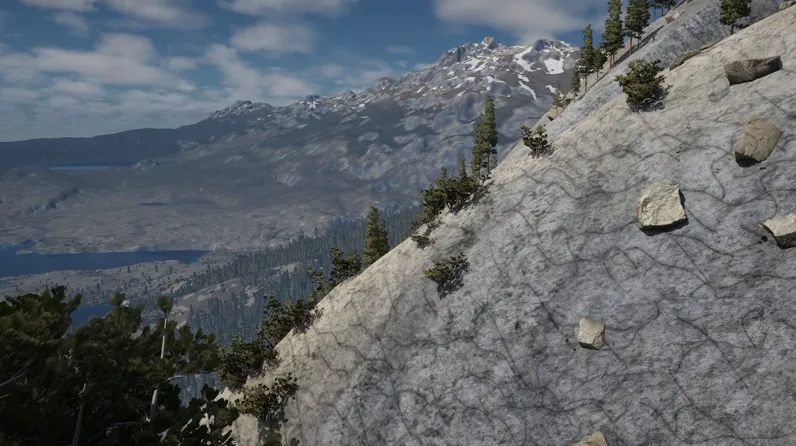
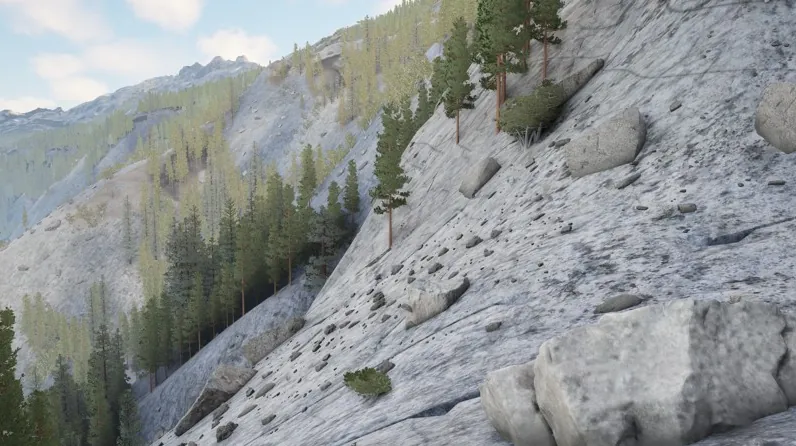
The high country has a second kind. On granite knobs near whitebark and lodgepole pines stand bare, sun-bleached silver snags, 6 to 9 m tall with broken tops and short dead stubs, about 8 a hectare in loose patches. Lodgepole stands no longer grow the barked fir snag.
The tall dead firs also stopped flickering and going see-through. The game had treated each one as a speck 8 cm tall at its foot, so the whole trunk stopped drawing whenever the foot was hidden or out of view. You could walk through them, and now they block you.
Still wrong: the silver snag’s stubs look a little evenly cut, and whitebark wood has no spiral grain yet. The dead fir’s bark, which read bleached near-white in full sun beside living trunks when it was rebuilt, may still do so.