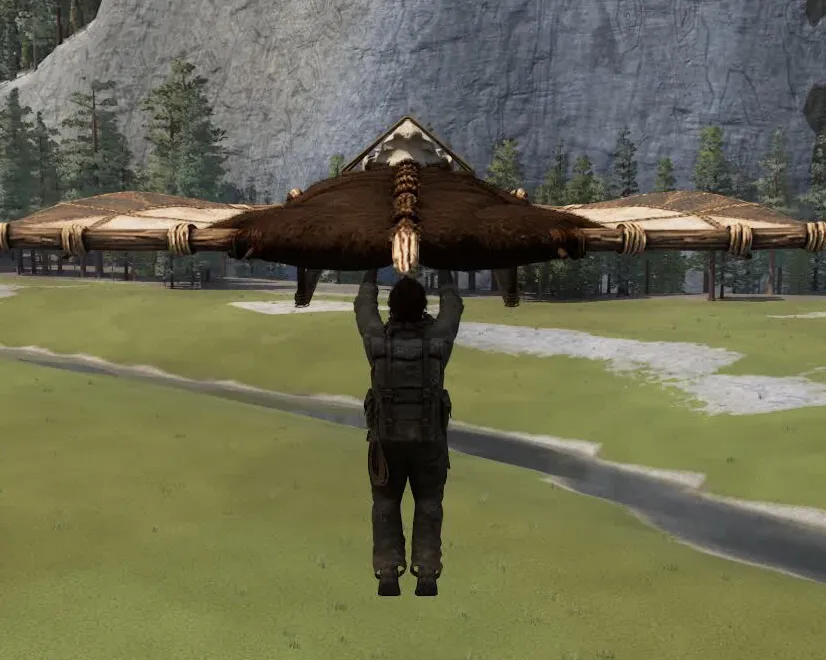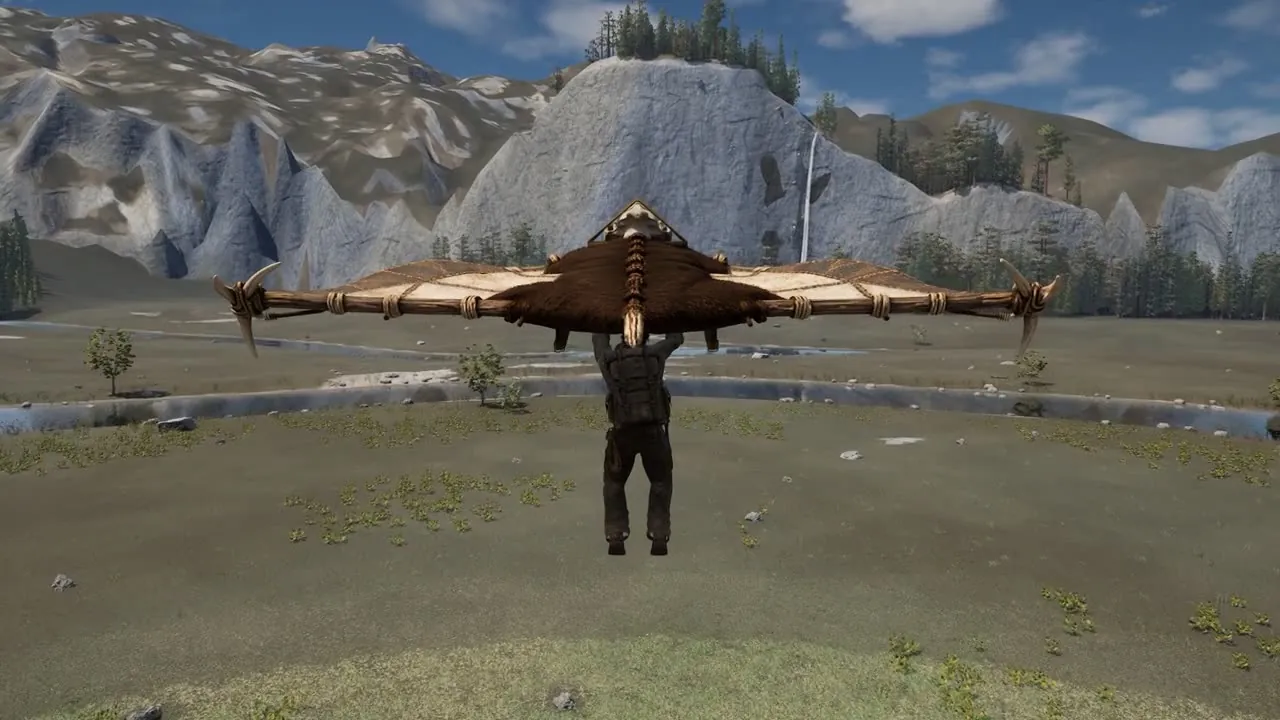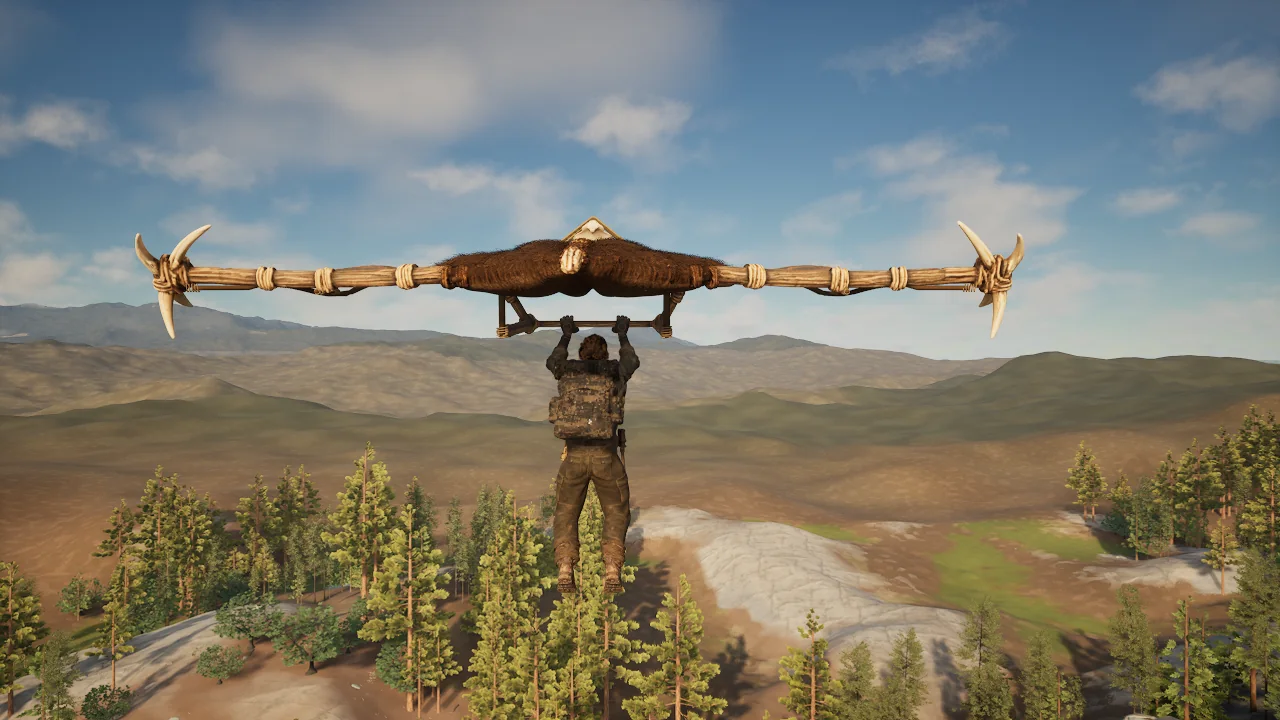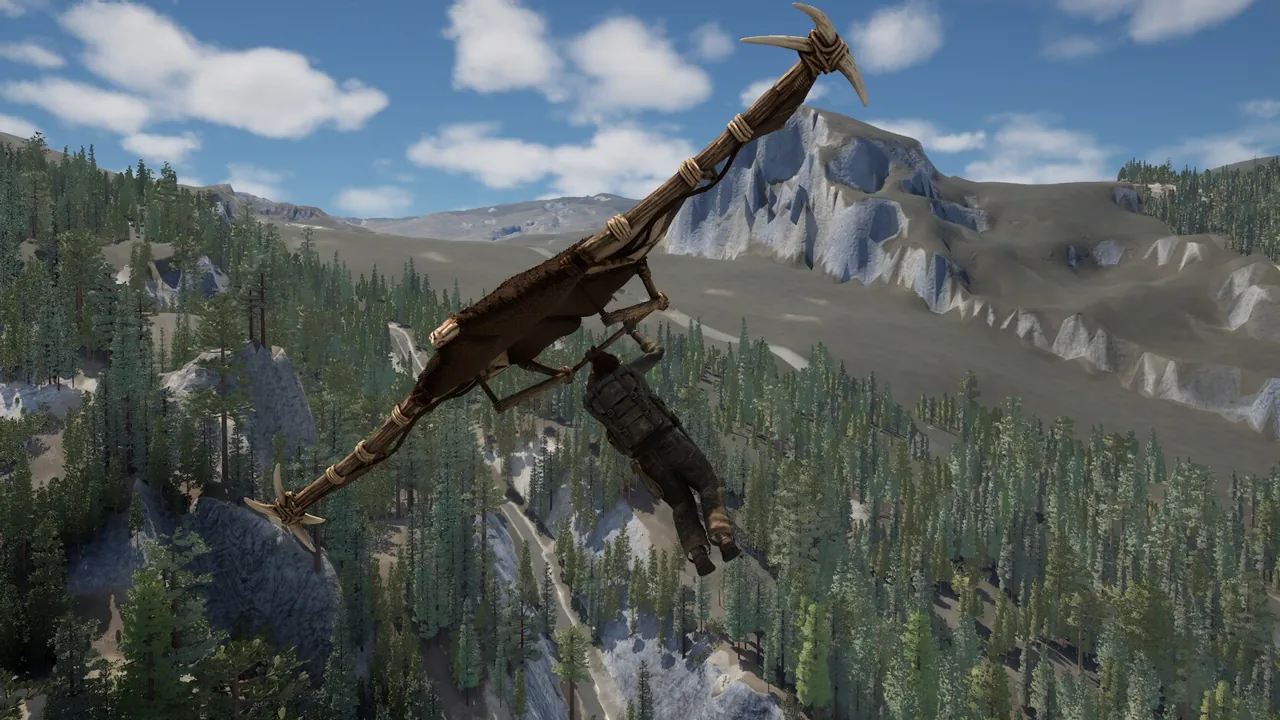
On a sunny afternoon, look over open, flat, bare ground for a thin swirling dust devil a few meters across. It stands at the foot of a strong thermal, climbs a few tens of meters and fades out with height. Fly to it, turn tightly around it and you climb: 48 m in 35 s in the test flight. Close to the lift, small bright specks rise past you, seed fluff and insects carried up in it. Over trees, water or steep slopes there is no dust, and weak thermals show none.
Two faults had kept the lift out of reach. The air measured your height from a rough version of the terrain that sat up to about 190 m above the real ground, so it took the glider to be underground and gave no lift. It also kept a private clock: every session began at midnight for the air, with no thermals for the first five minutes, then a new day every twenty minutes whatever the sky showed. The air uses the ground and the sky you see, so thermals are strong in the early afternoon, weak in the morning and evening and gone at night. At 1 in the afternoon the test film showed 4 to 5 dust devils within 700 m.
Circling holds you in the lift. In a steady turn the wing slows from 18 toward 13 m/s, so the circle tightens to about 37 m across instead of 56 m. Each world has its own thermal map.