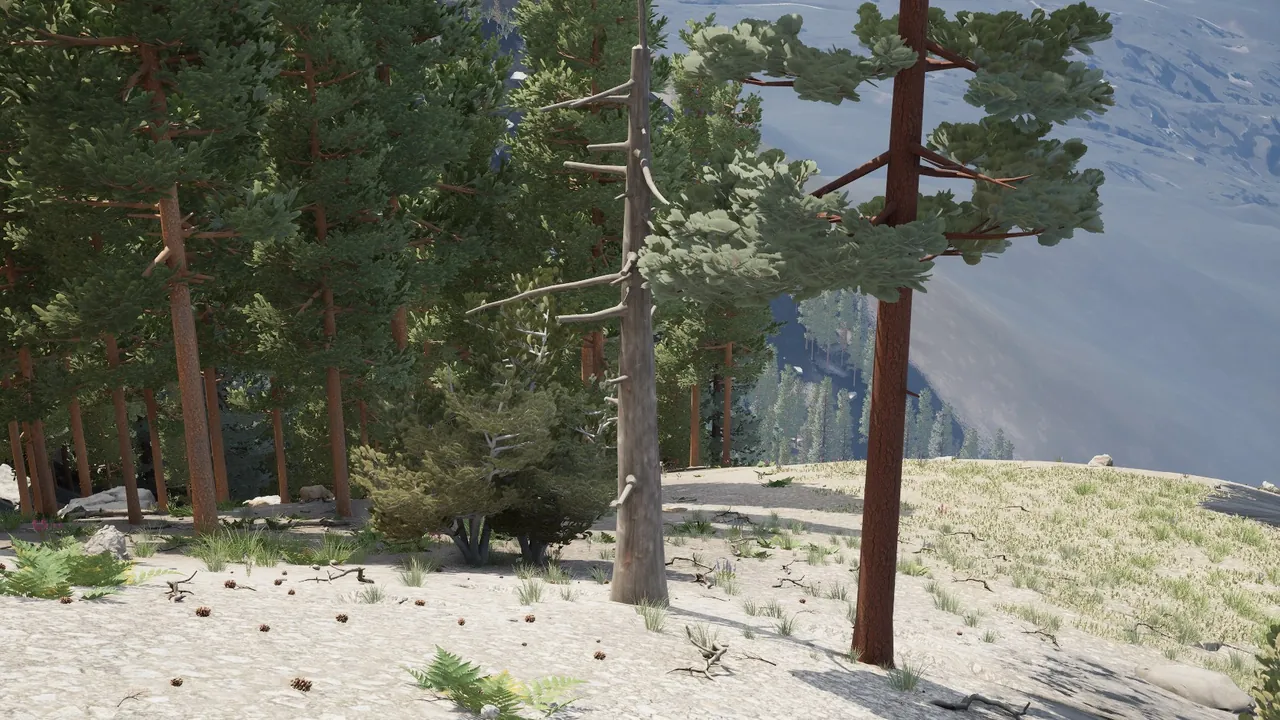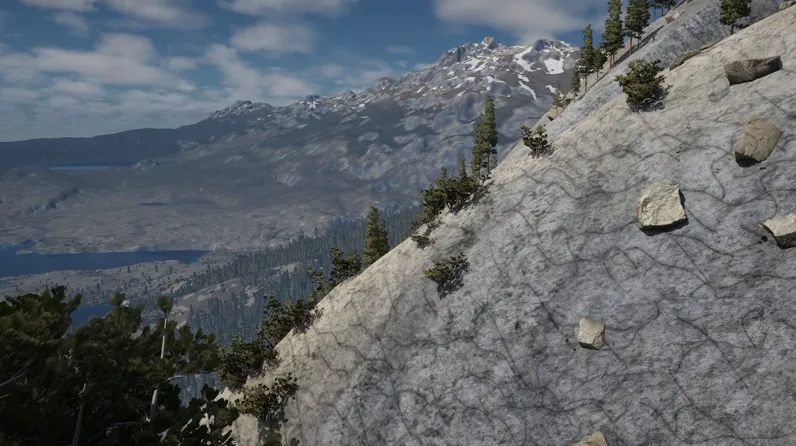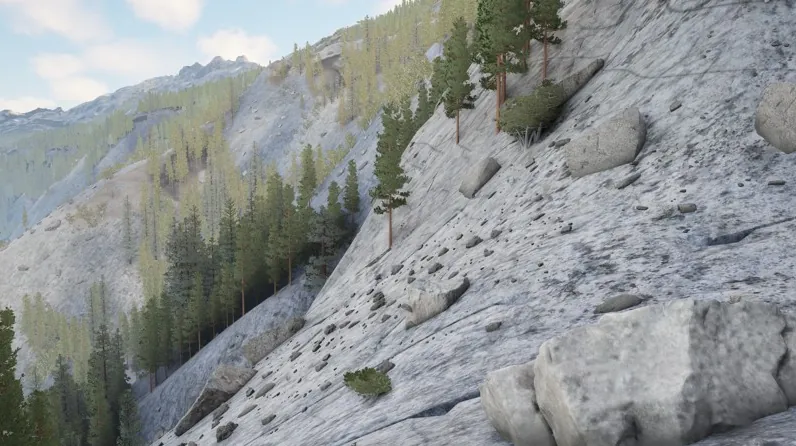
Forest cover follows the surveyed Sierra at more heights. Mountainsides more than about 800 m under the treeline stand as closed as the real ones: slopes of 25 to 45 degrees went from about half the surveyed tree cover to matching it, with gaps and rock showing on the steepest pitches. Steep canyon sides in the conifer belt also grow deer brush rooted in the rock’s cracks, though since November 13 not where a shrub would hang off a near-vertical wall.
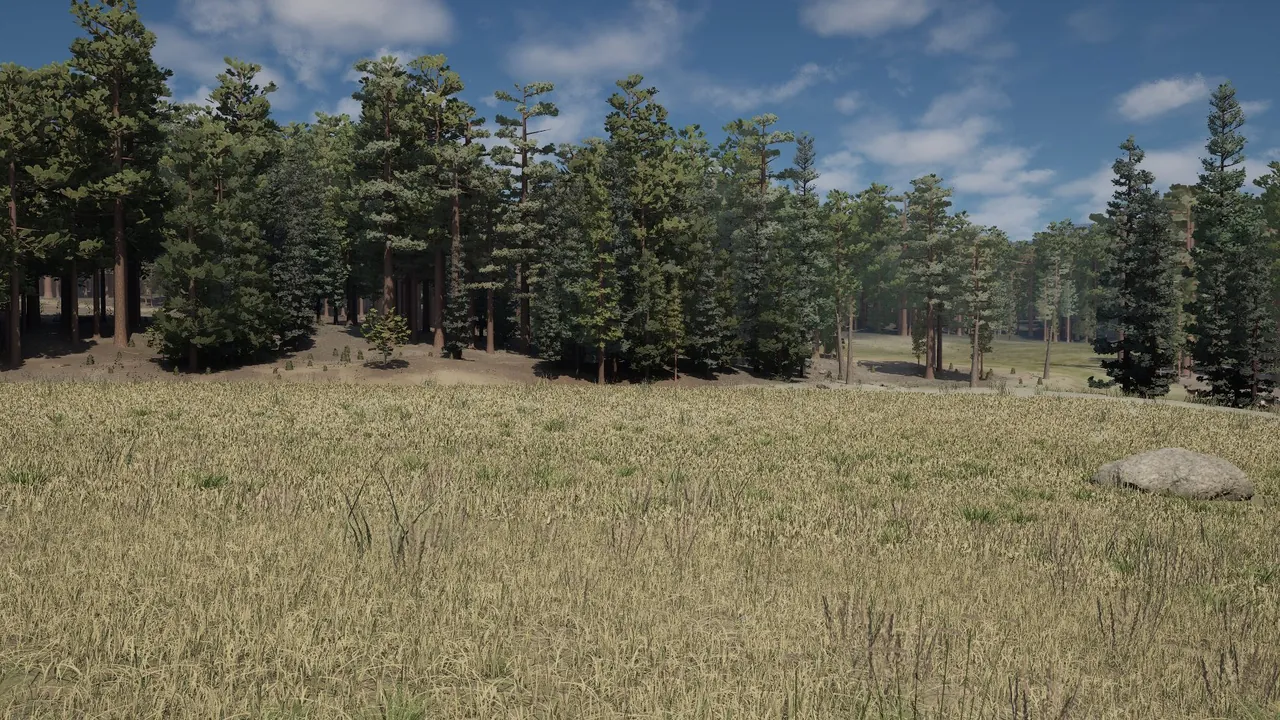
Higher up, lake basins and valley floors hold real lodgepole and red fir stands down to the water, where they had been dry alpine steppe with a thin whitebark scatter. High basins are wet from the snow that melts off the slopes around them, not only from rain. Whitebark stays on the knobs and ridges, and the cracks of the granite knobs hold low, dark, wind-shorn whitebark and tan cured grass in place of bright green bushes and young ponderosa.
From far off, forest well below the treeline draws denser, and since November 6 distant crowns keep the shade they have up close.
Still wrong: high far slopes stay bald, and pale ground and rock show between far crowns, so far forest reads brighter than in photos. The forest changes need a new world.