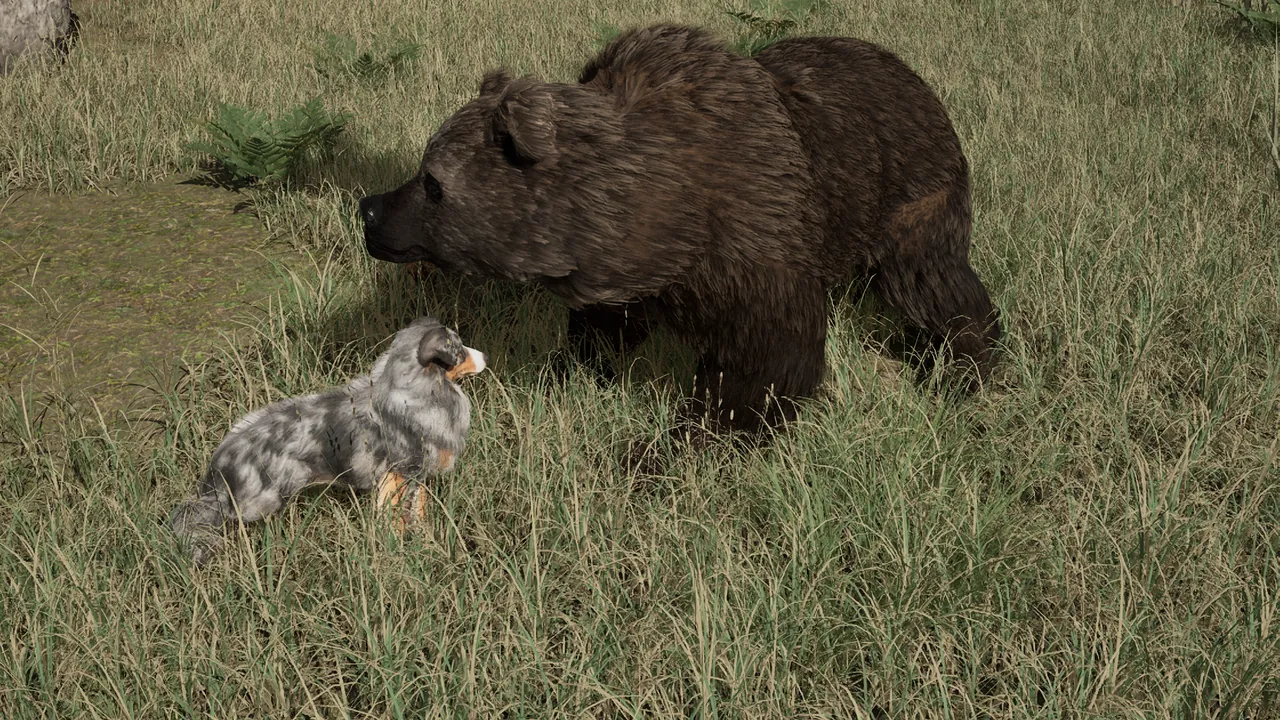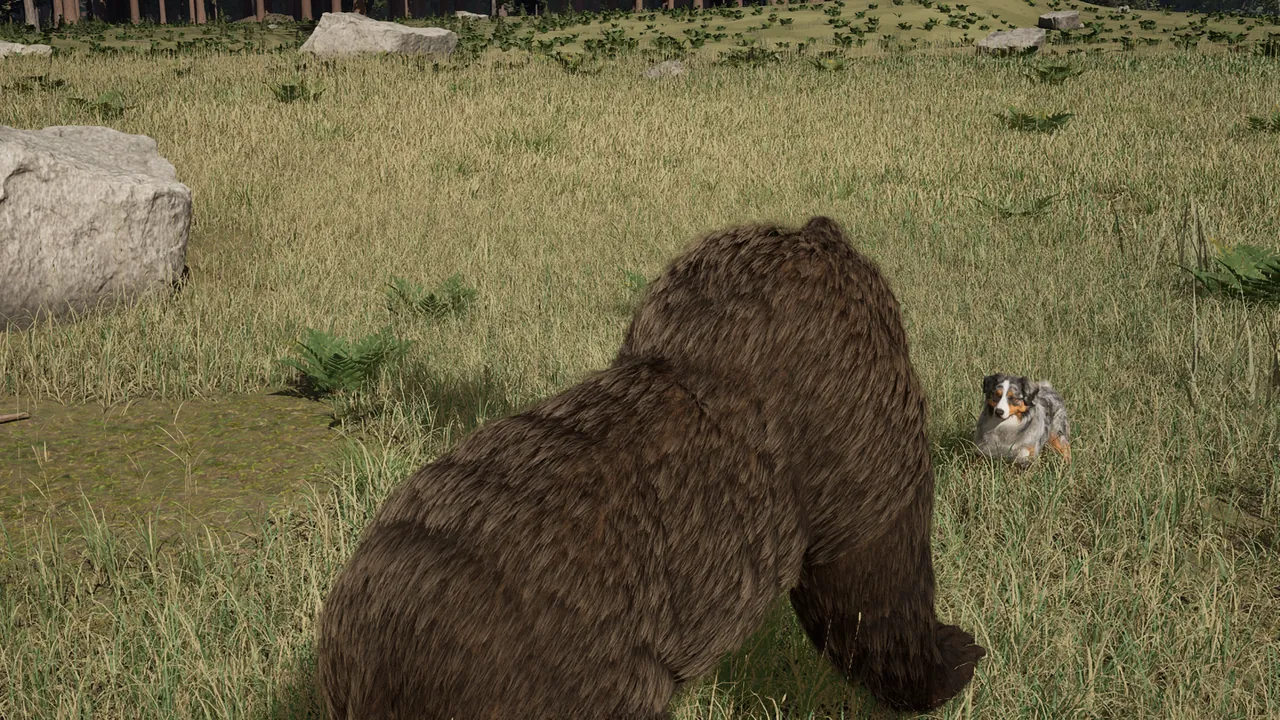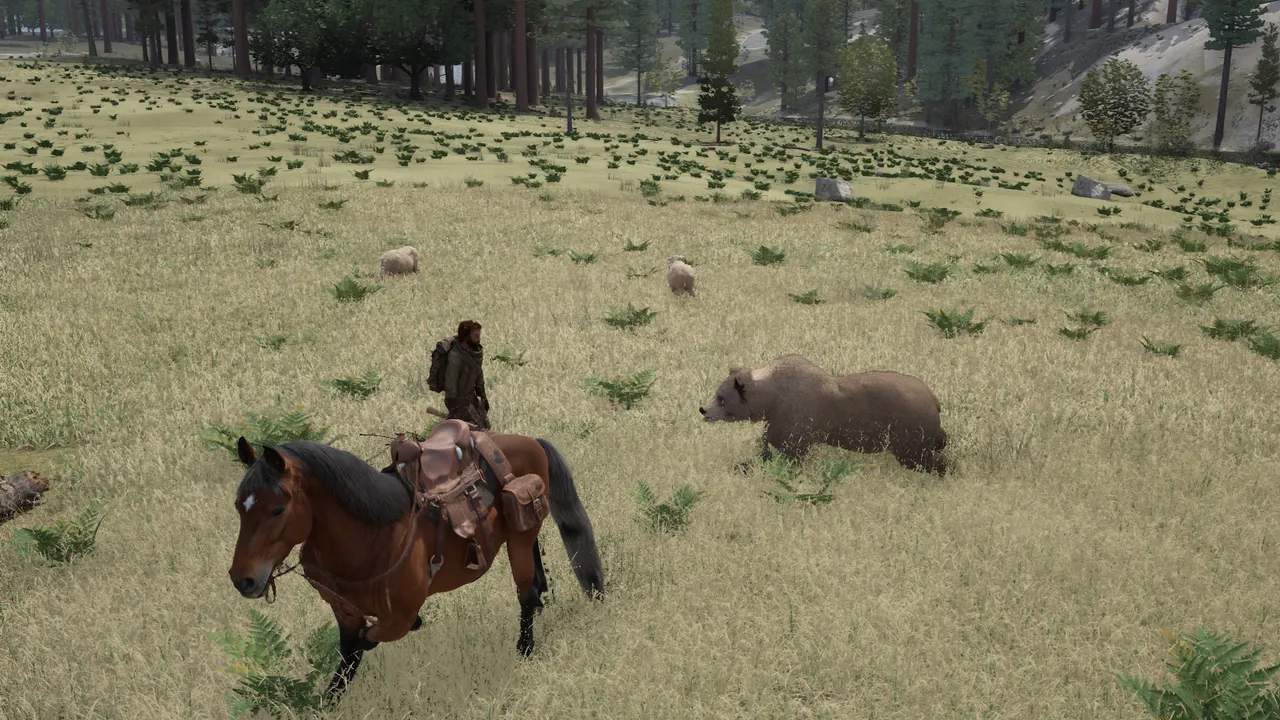
Grizzlies no longer run away. One that notices you turns on you with its head low and its ears back, popping its jaws, huffing and slapping the ground with both forepaws. Stand still or back away slowly and it walks off. Walk at it and it bluff-charges, skidding to a stop a few meters short. Turn and run and it chases you down at a flat-out gallop, swats you over and bites. Since November 7 the outcome is less fixed: a grizzly usually stands up to look you over, then bluff-charges and stops short, and a real attack needs a cause such as running or walking at it.
It has to notice you first. It smells you from far downwind, hears you running and sees you moving, so standing still or crouched you can get much closer. A grizzly that is unsure stands up on its hind legs to smell the air. Hit one and it comes for you; hurt it badly and it runs. Each bear has its own nerve.
You hear it as well: huffs, jaw pops and sniffs up close, a woof and often a roar when it charges, and its paws thumping on the ground as it comes. The calls are generated.
Still approximate: the rearing and the bite were checked against public-domain park footage only at one-second stills, and the charge, the skid stop, the ground slap and the swat are keyed from written accounts of bear attacks.