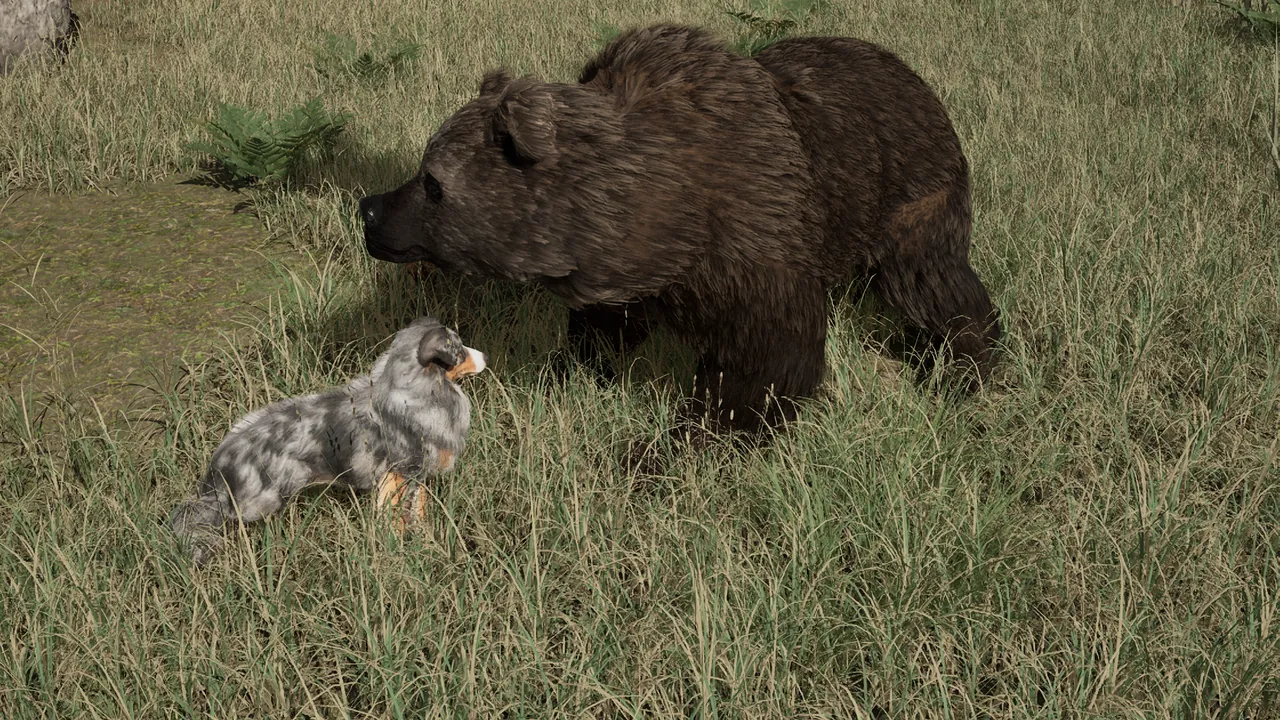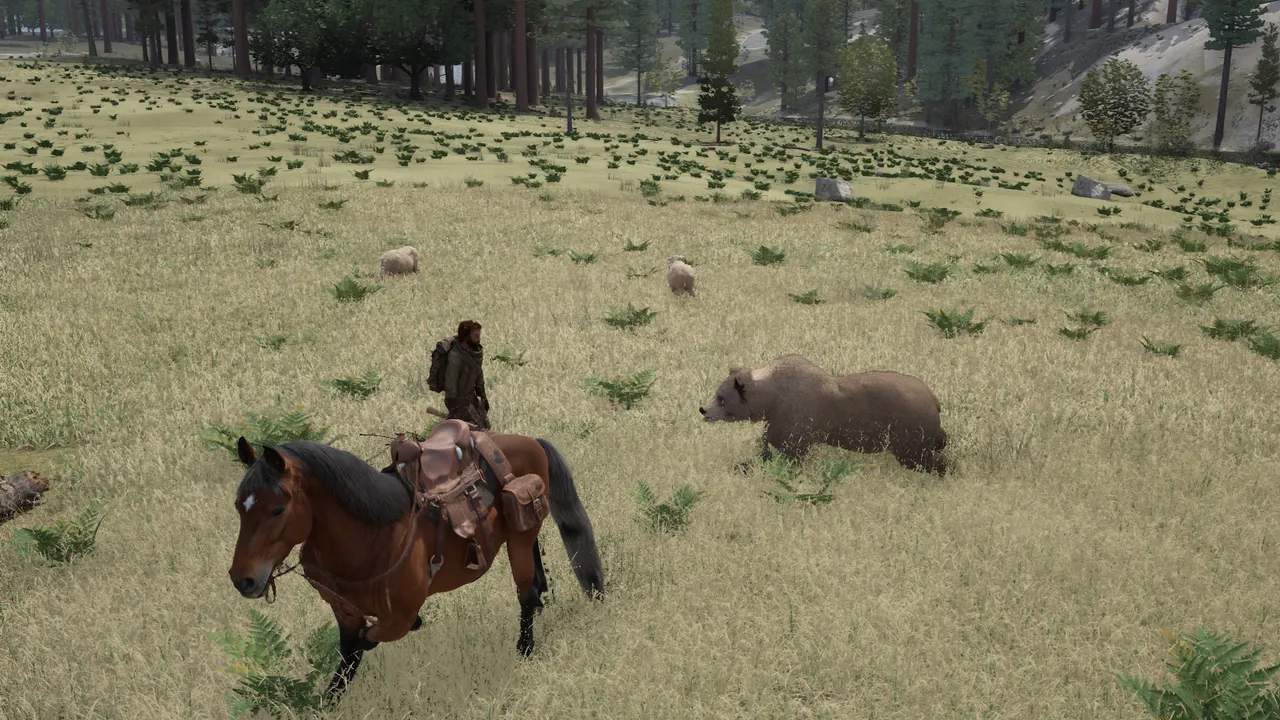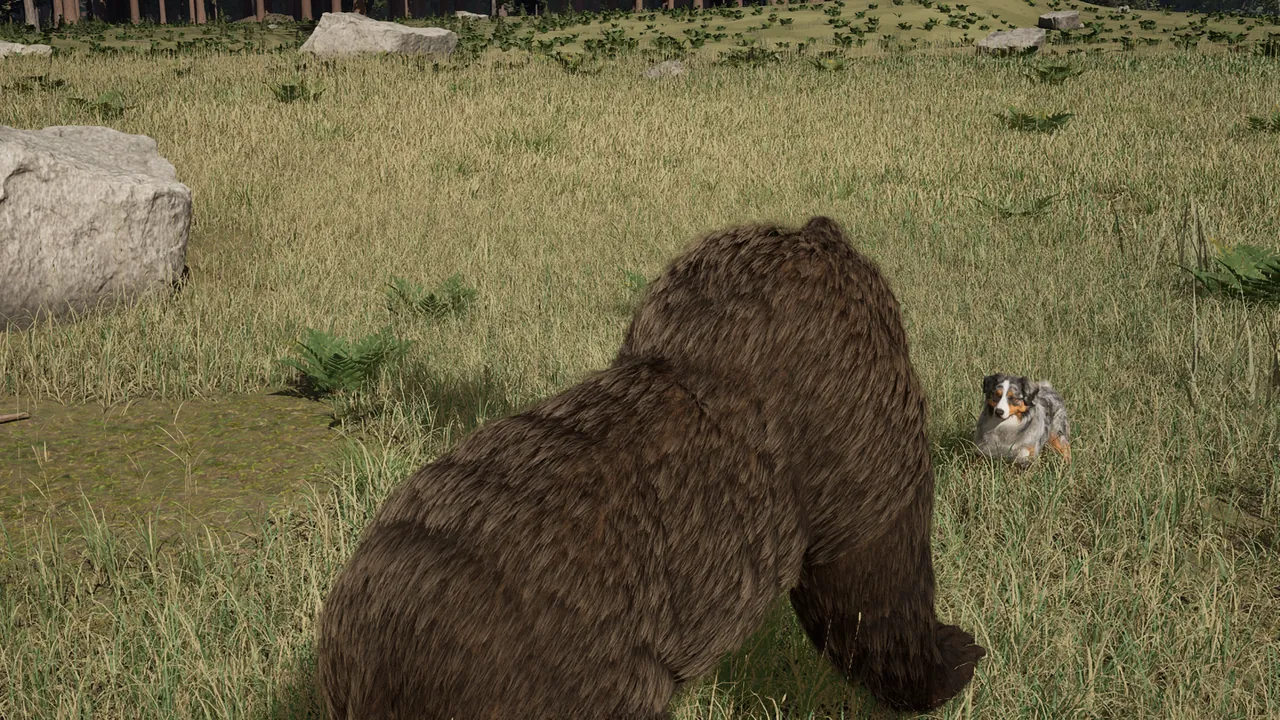
A black bear usually huffs, pops its jaws and walks off. A grizzly usually stands up to look you over, then bluff-charges and stops a few meters short. Every bear huffs before it touches you, and a real attack has a cause: you surprised it close, ran, kept walking at it, hit it, or came near its kill. In the first 10 minutes of a life a bear bluffs more often, but not always.
A blow lands only where the paw reaches. The bear drives in as it strikes, and if you or your dog are out of reach the swing misses, with up to 2 swings. Before, a black bear’s swat counted with the dog 1.69 m away, middle to middle, and air between them. You hear it too: a heavy thud and rake when a paw lands, a bite through cloth when its teeth do.
The black bear has its own rearing, display, bluff stop, swats and maul, and it speaks through the whole encounter as the grizzly does. A bear that breaks off leaves at a brisk walk instead of turning slowly on the spot: in a check with a black bear and the dog, the standing turn before it walks off fell from 2.13 s to 0.72 s. Turning, a bear shuffles its paws round instead of snapping them across, and one movement fades into the next while it is still moving.
Not yet judged in play: whether those fades look smoother. No check filmed the black bear’s calls when they went in.