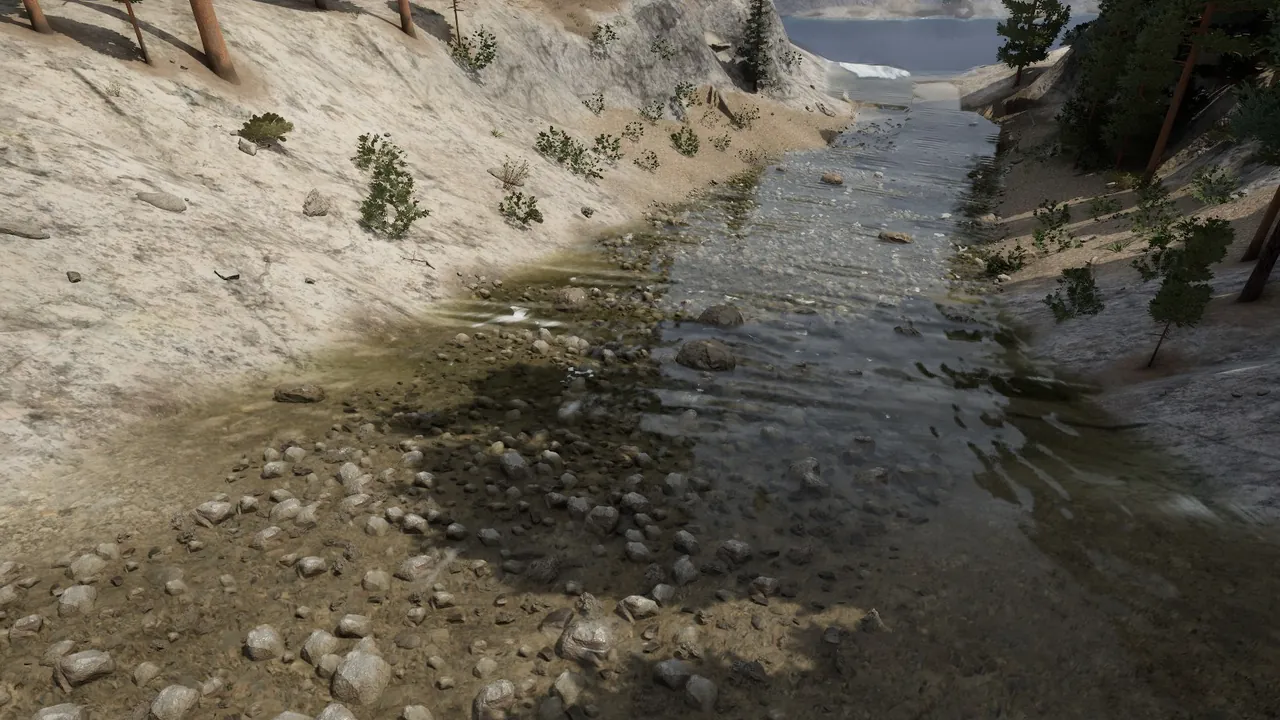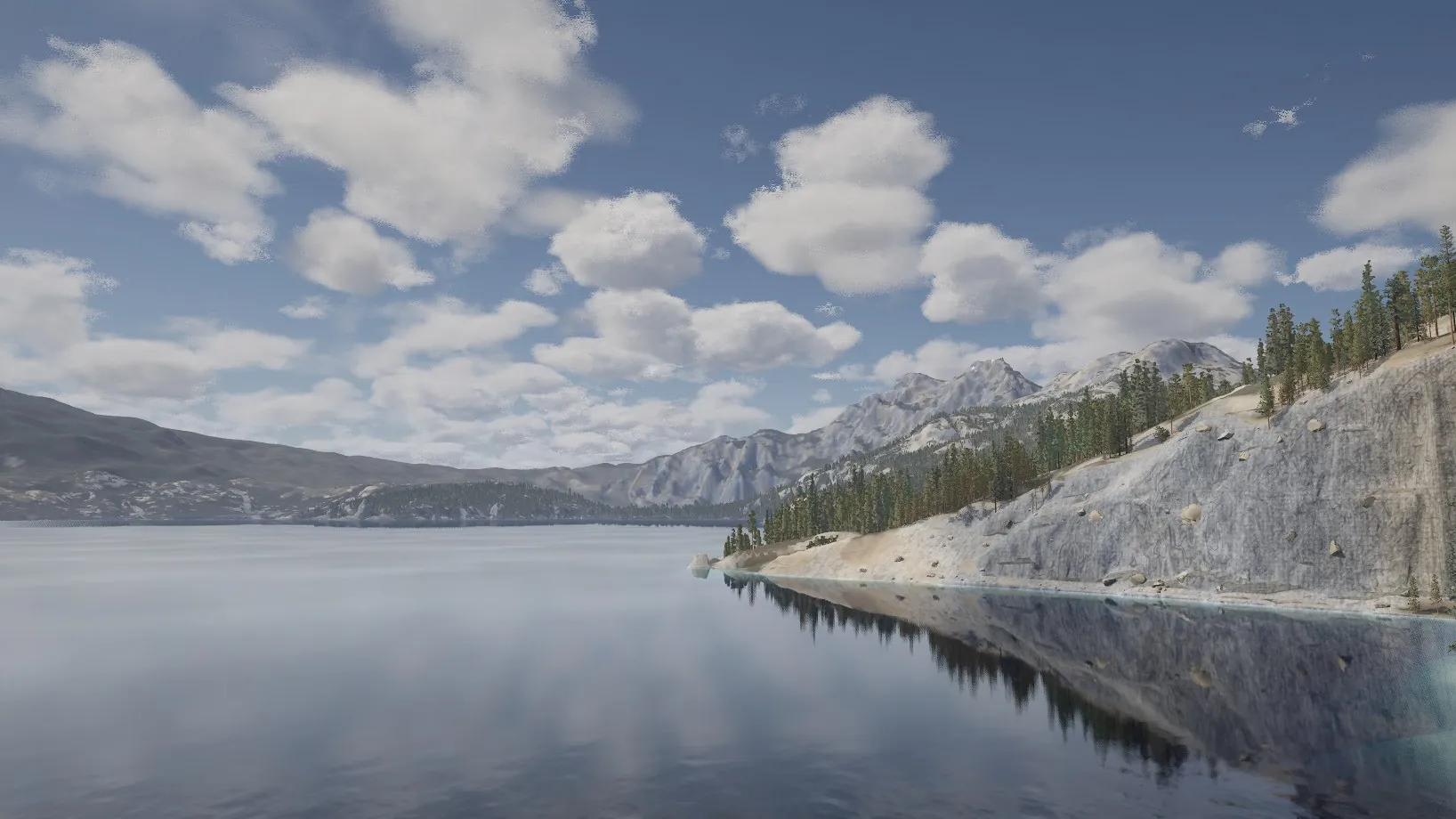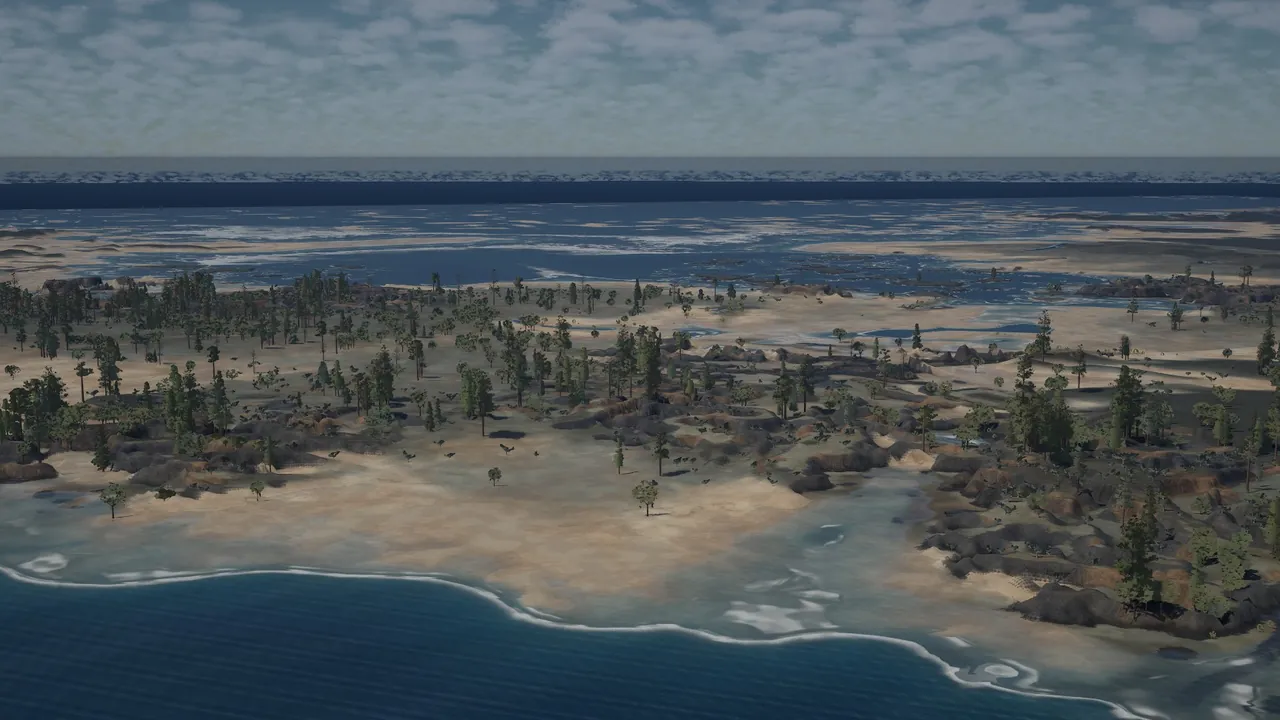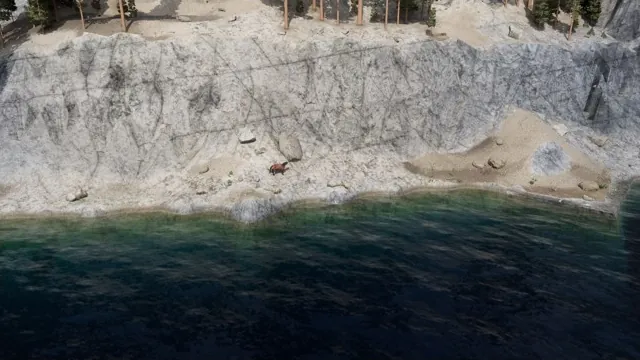
Stand at a lake’s edge and look down the shelf. The wave-washed bed is stone and granite sand coated in an olive film, where it used to read as bright turquoise. The coated stones run down to the depth where a lake of that size lets mud settle (about 1.7 m in a small mountain lake, deeper in a bigger one), and below that the bed is mud, as before. The deep water keeps its dark blue.
The glowing cyan patches on steep drowned rock are gone, and so is the bright turquoise rim that lakes wore from a distance: the shore goes dark into the deep water. Beside all water, lakes and creeks alike, the ground darkens and turns glossy in a ragged wet band about 1 to 2.5 m wide, and river and shore boulders take the same wet line.
Still off: sunlit shallows keep more blue than photographs of the real lake they were measured against, because the surface reflects the sky. Far lake water and the sky it reflects are unchanged.