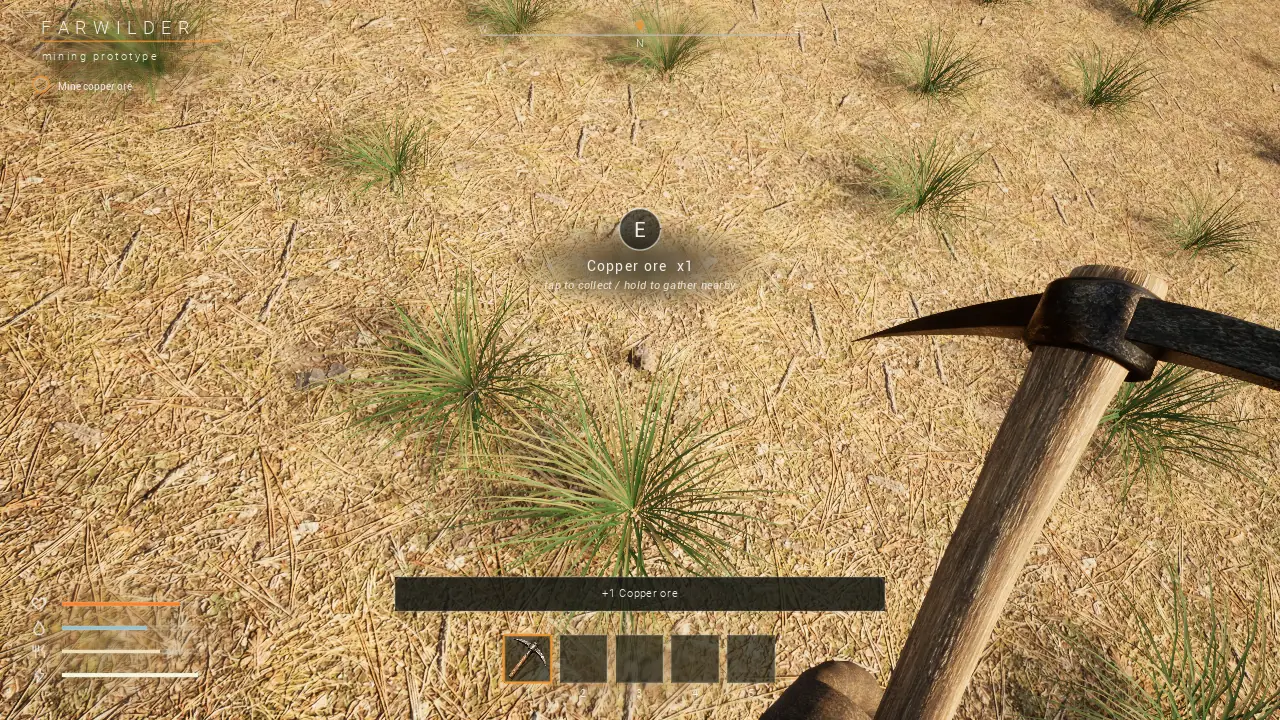
In the first playtest with the new character, the last swing jammed. The pickaxe and arm stayed pinned to the rock, and walking away left them behind. The tool now always returns to the hand: it lets go if it falls 40 cm behind, 0.2 seconds after the swing ends or one second after a strike.
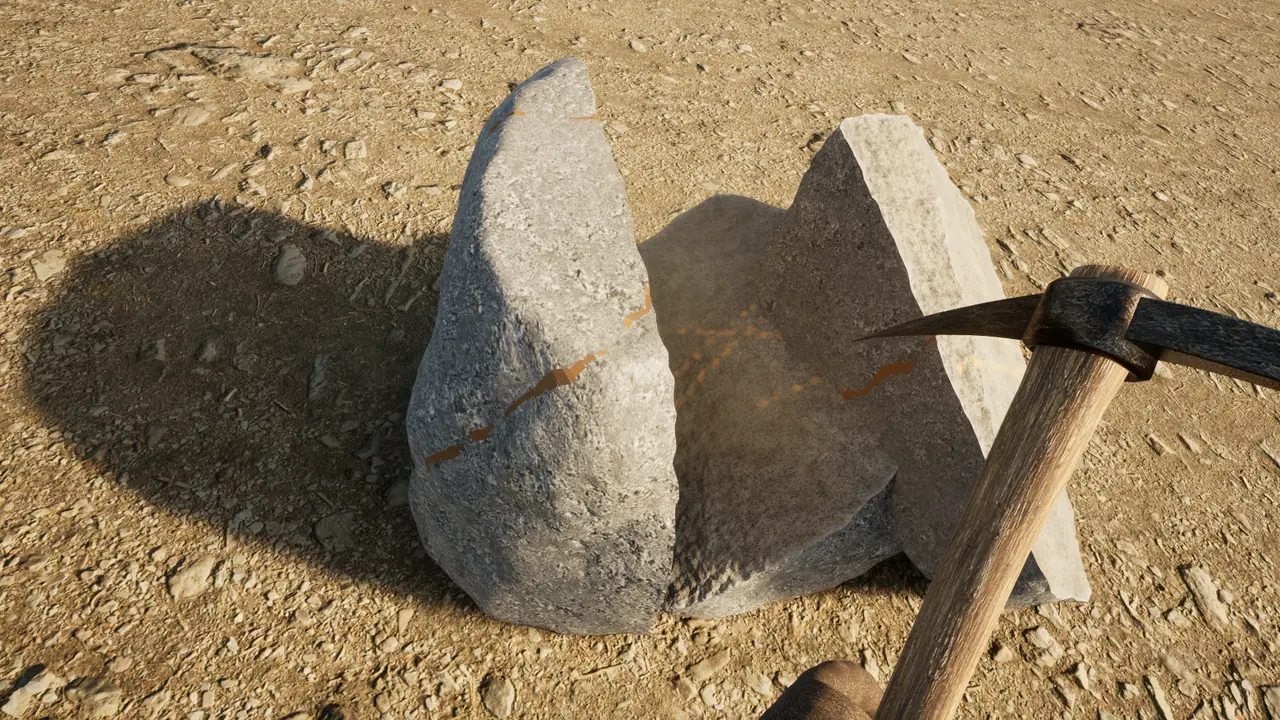
The same playtest asked for something more physical: dents and chips like a pickaxe would make, with the split near the end. Rocks now stay whole for two hits, and each hit leaves a mark about 16 cm across where the pick landed. The third hit splits the rock into 2, 3, 5 or 7 pieces. The pattern comes from the rock’s identity, so a given rock breaks the same way every time. The pieces topple along the swing, rest for 20 to 40 seconds and then sink away rather than popping out of existence.
Each step had its own failure first. The first marks looked like pale smudges, so they became two layers: one darkens the rock and one adds the dent’s shape. The copper vein reflected the sky like blue-white tape until it was roughened and given oxide. Freshly broken faces briefly showed the engine’s gray placeholder pattern until their materials were prepared before the break.
The break patterns are prepared in advance rather than simulated, the marks disappear after a reload, and the broken pieces give no reward.