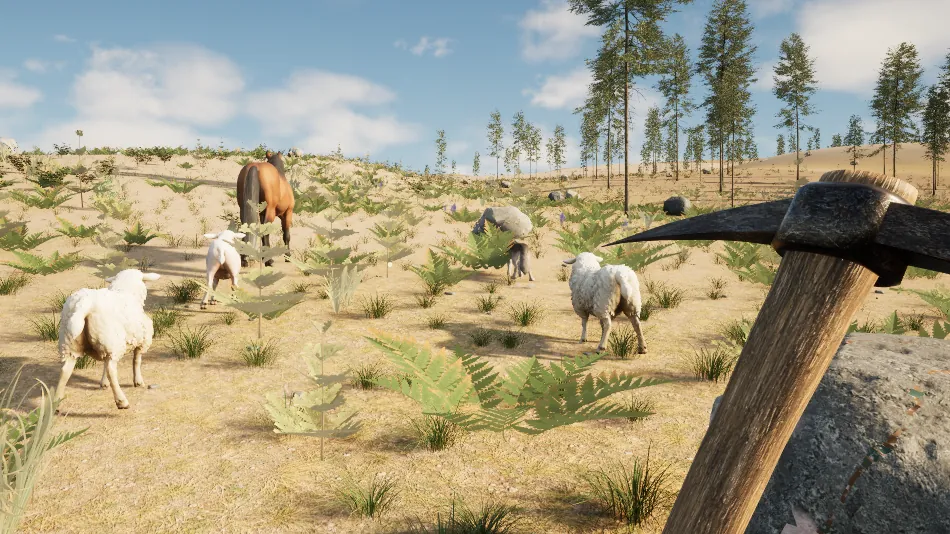
Until late October, seeing how a change looked meant starting the game. Each check picture came from a 25-minute fresh start, and one check, ten fixed views filmed and set beside real photographs, held the project’s second computer for about 2.5 hours every 4 hours.
On October 28 that check became one batch filmed in a single world that stays loaded and that every line of work shares. Each request carries its own settings, applied for its frames and then put back. A day later an ordinary check picture could be answered by the loaded world in about 20 seconds.
A world left running is not a fresh one. The first difference was fixed within hours: each reload of the lighting had made the picture about one stop brighter. Next, cameras placed at old coordinates, without the clearance check a fresh start runs, sat inside the ground and filmed black, or faced a tree trunk; both kinds of run now share one check. Then a mountain basin came back as a flat blue void with its ridges floating like cut-outs. The frame had been taken 47 s after the camera jumped there, before the far ground was drawn. The loaded world now waits for the far ground and forest.
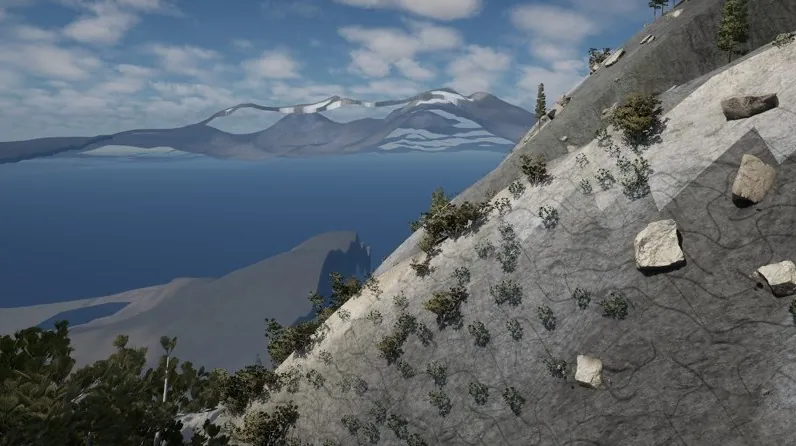
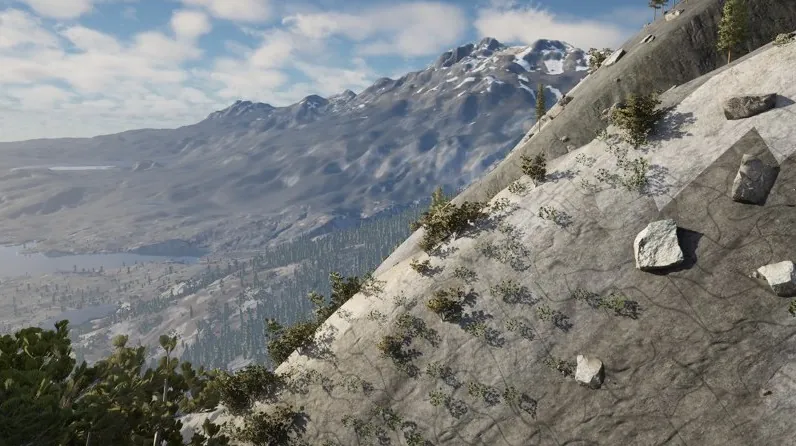
On October 29 a frame from the long-running world still did not show a fresh one’s sky: clouds and exposure differed. The next day’s change was to the game itself. Clouds had drifted with the time since the game started; they began to follow the world’s clock, so the same moment always shows the same sky to every player in a world. By then a frame from the loaded world matched a fresh one as closely as two fresh ones match each other.
On October 29 checks whose results are only numbers began to run with no graphics card at all: two took 57 s side by side against 183 s on the card, with identical values. Films stayed, because in one the downed character stood up a second later when nothing was drawn. Since November 6 a change that is only looks or data gets a ready-to-run game in about 20 seconds instead of waiting 5 to 75 minutes for a compile.
Three times a chased problem turned out to be only a frame shot before the materials were ready, so since November 7 a check picture that shows a stand-in material fails.
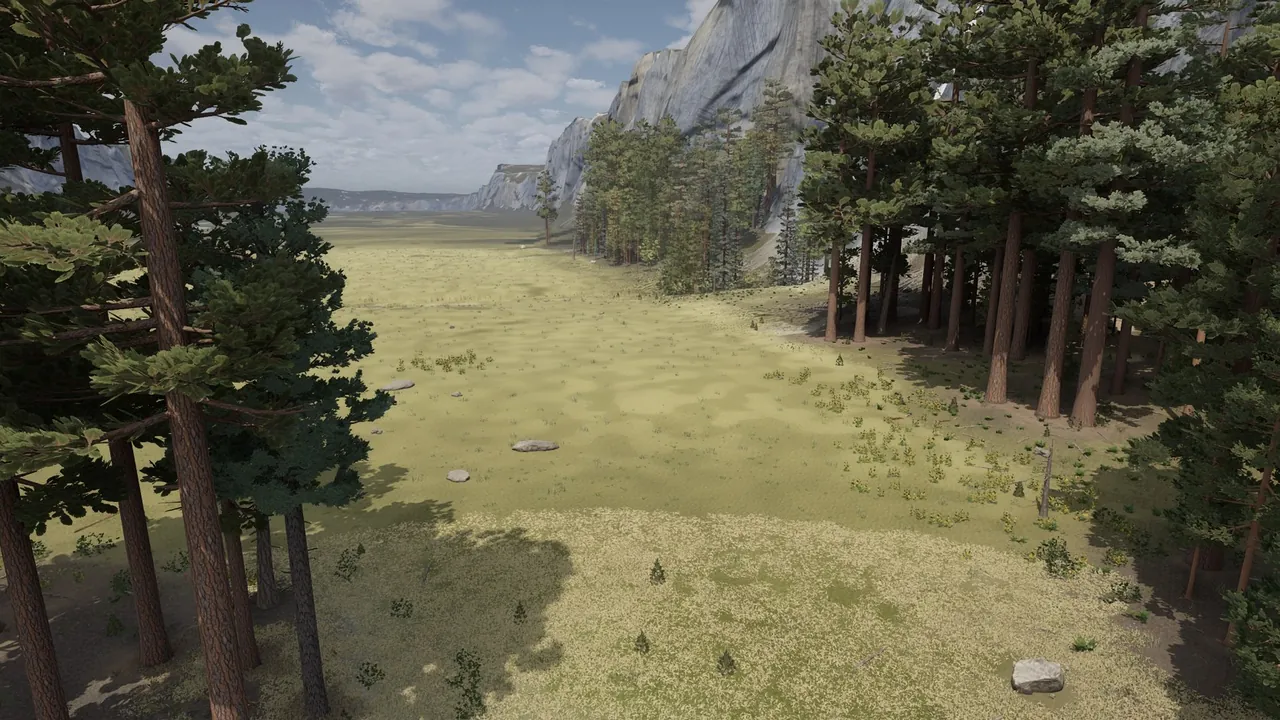
Two changes on November 3 were for the person testing. A Resume button in the development editor drops the tester back into the last world at the spot where they stood. Its loading page first sat at a 32 s cap, mainly because the distant forest was rebuilt on every load; it is now kept on disk. A one-key problem report saves the picture, the place, the view and the world’s seed, so the spot can be reopened without a description.
All of it shared a graphics card with someone who wanted to play. From the first day the shared world gave the card back within seconds when a game was opened, and was ended if still up 20 s later. Since November 6 no automated job can take, overwrite or release the hold a running game puts on the card. On November 13 a closed game’s hold was still read as live, and the card sat idle for 35 min; a hold now names the program that made it.
A later fault came from the game’s own wildlife. On November 13 pictures from the shared world disagreed with fresh ones: one view was darker and another had lost its sky, with identical exposure and framing. The world’s own log held the cause. The shared world keeps an idle player parked among its views, and wolves had dragged, downed and killed that player. What the game lays over the view of someone hurt, downed or dying was being laid over the check pictures. Those effects are now off while a picture is taken, and the parked player is spared all harm, a switch never set in play.
On November 14 the long-running world was declared trusted for changes to settings, material values and textures, and not for new code, changes to world generation, new meshes or loading. Four of its runs had ended without a word the day before, so every end now writes its reason, and the world restarts itself while anyone has asked for it within 2 h.