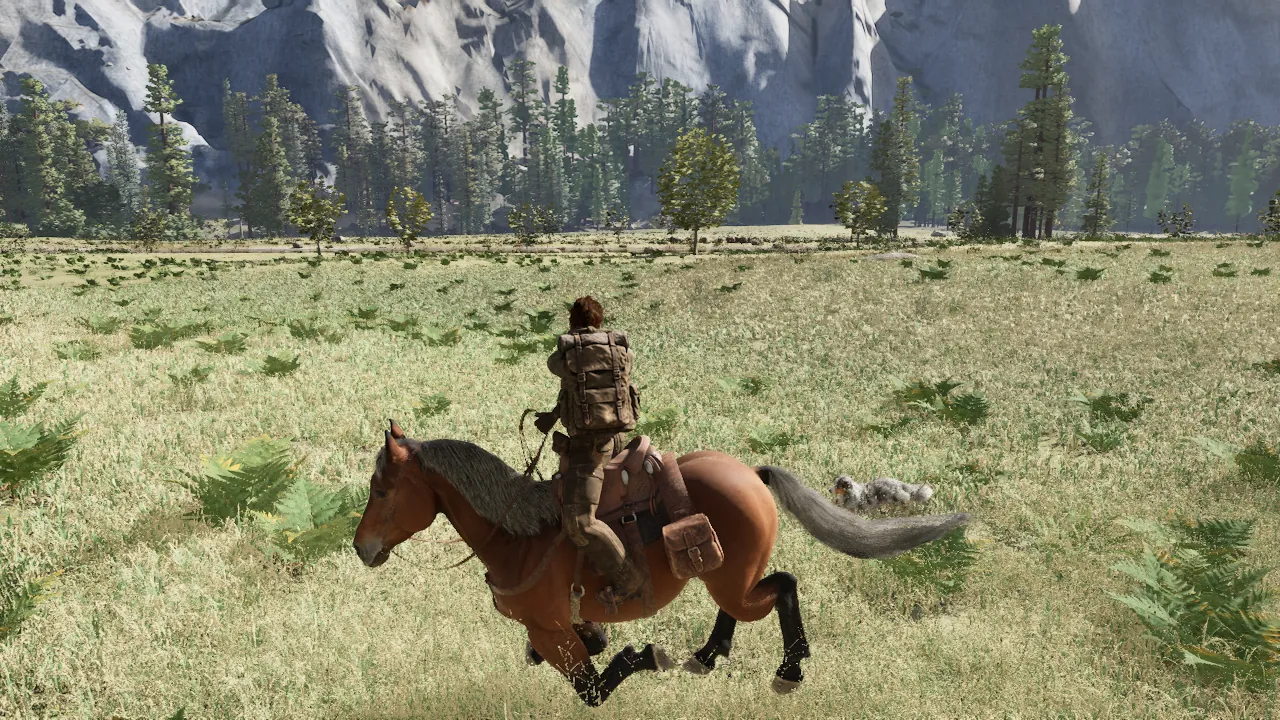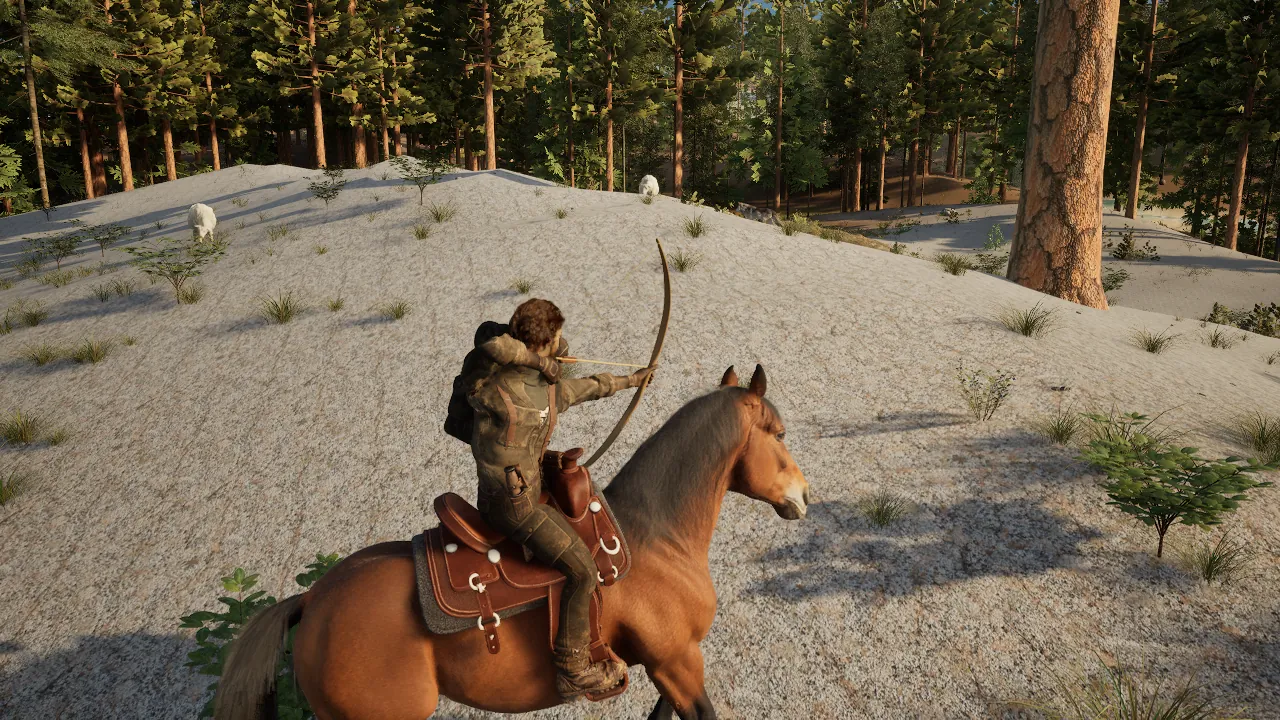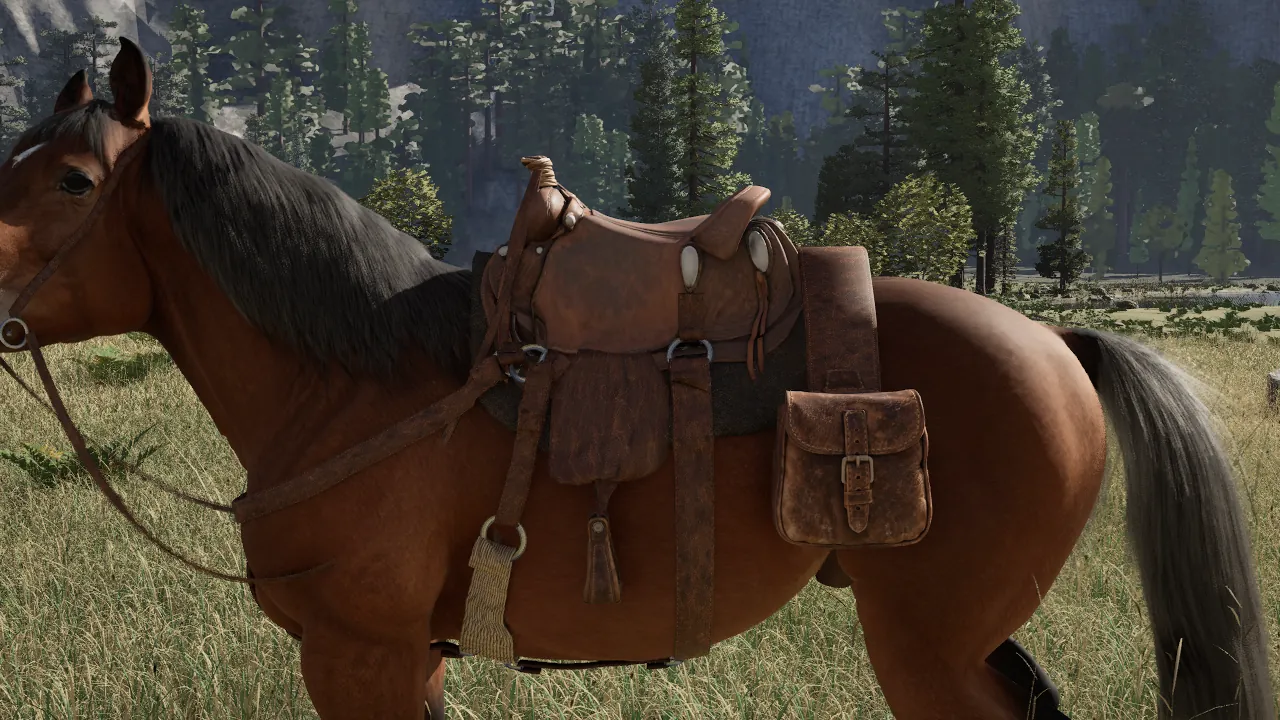
The reins were rebuilt in rounds across November 6 and 7. They keep to their own side of the neck, with no right angles and no crossing through the head, and hang as fixed-length leather with weight, settling and swinging a little as the horse moves. Held, both reins hang alike in a loop that sags about a quarter of the span from bit to hand. Your rein hand rides low, just ahead of the saddle horn, about 18 cm closer to the bit than before.
One round went wrong on the way. The rule that keeps a rein out of the neck took the space under the horse’s jaw for the inside of its chest and pushed the rein there, stretching the far rein to about twice its length (283 cm for a rein of about 120 cm) and pulling it tight over the crest. An unridden saddled horse now carries each rein looped round the horn on its own side, in a loose U.
The bridle’s cheek strap stays on the skin from behind the ear to the bit ring. At a ridden walk the head now sits on the middle of the body; it used to be turned to the near side, so the left rein looked shorter, as if you were steering.
Still visible: a long upper run of rein from the fist at a stop, a short bit of the far rein above the withers on an unridden horse, and a grip that still reads blocky.