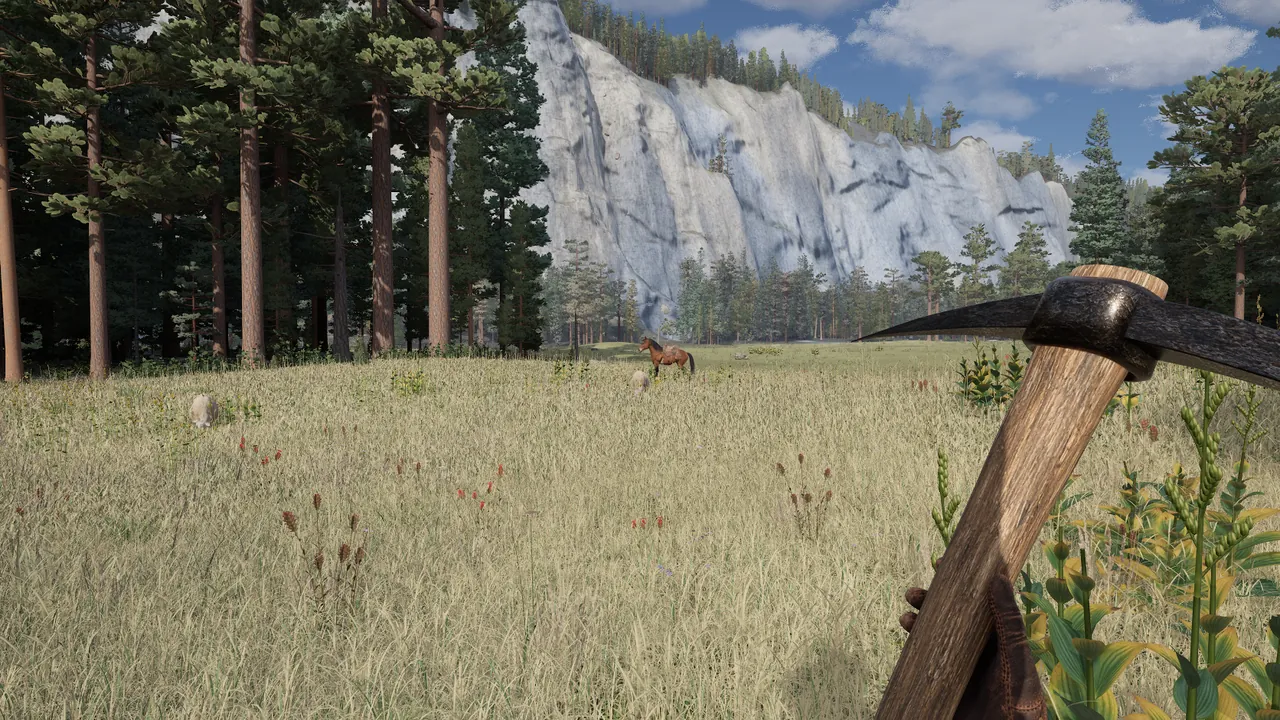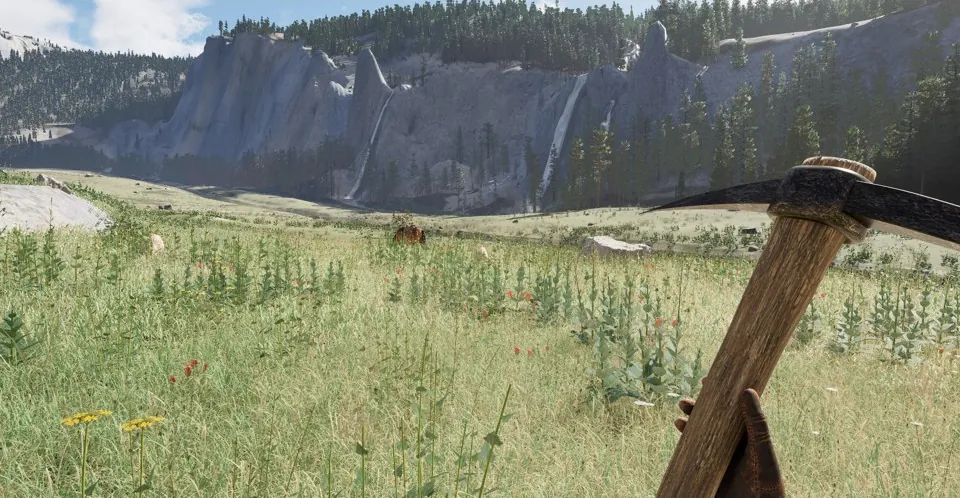
Sit on the main menu for a while, leave the seed field blank and press Create. The search for a starting valley, which took 25 to 40 s, is over in under half a second, because the menu has already done it. Once the menu has been up for 2 s it picks the seed a blank field will use, finds that world’s start, builds the ground around the camp, and then builds the far ridges in view along with their forest.
It is the same world you would have had: same start, same camp, same facing. Type a seed and the menu switches to it once it has stayed unchanged for 1 s. Continuing a world, loading one or choosing another seed cancels the work.
On the test machine, after 20 s on the menu, the time from the click to control fell from 80.5 to 51.7 s on one world and from 103.7 to 80.8 s on another. After 90 s on the menu the far ridges make the difference: without them one world’s loading page timed out with 5 far tiles and 11 blocks of far forest missing, and with them it lifted with all 12 tiles in place.
The gain is smaller than it sounds. That run still took 65.1 s from the click to control, against 69.0 s with nothing prepared, because the loading page itself is now the long part. These are single runs on a shared machine. It only helps a new world: continuing a saved one gets nothing from this.