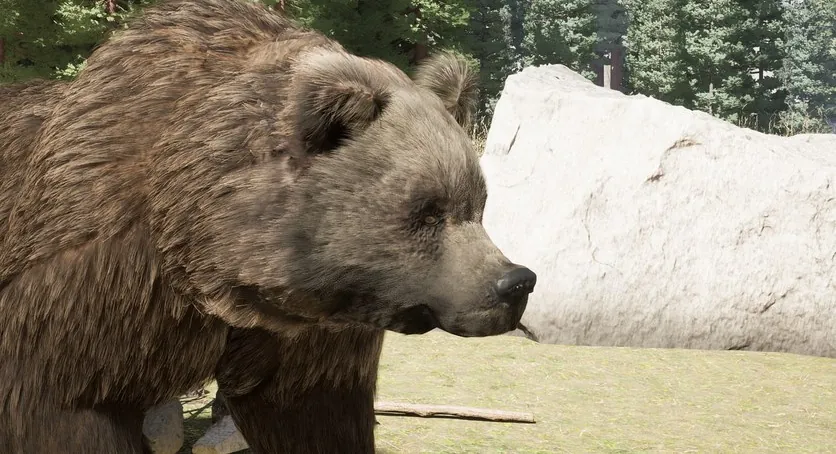
Each of the black bear’s three colors has been matched against photographs of real bears. The black one reads black with a cool sheen and a tan muzzle, where it had read blue-gray in sun and then a warm brown-black. The brown one went from a saturated orange-tan to a darker chocolate, and the cinnamon from bright orange to a reddish brown, matched against public-domain park photos of real brown and cinnamon black bears.
The coat is shorter and denser, in small irregular locks instead of long combed ribbons, and its hairs vary from light to dark instead of drawing one flat color. Walk away from a black one past 15 m and it stays black instead of turning brown, and the pale net of lines that covered a bear’s body at 16 to 25 m is gone.
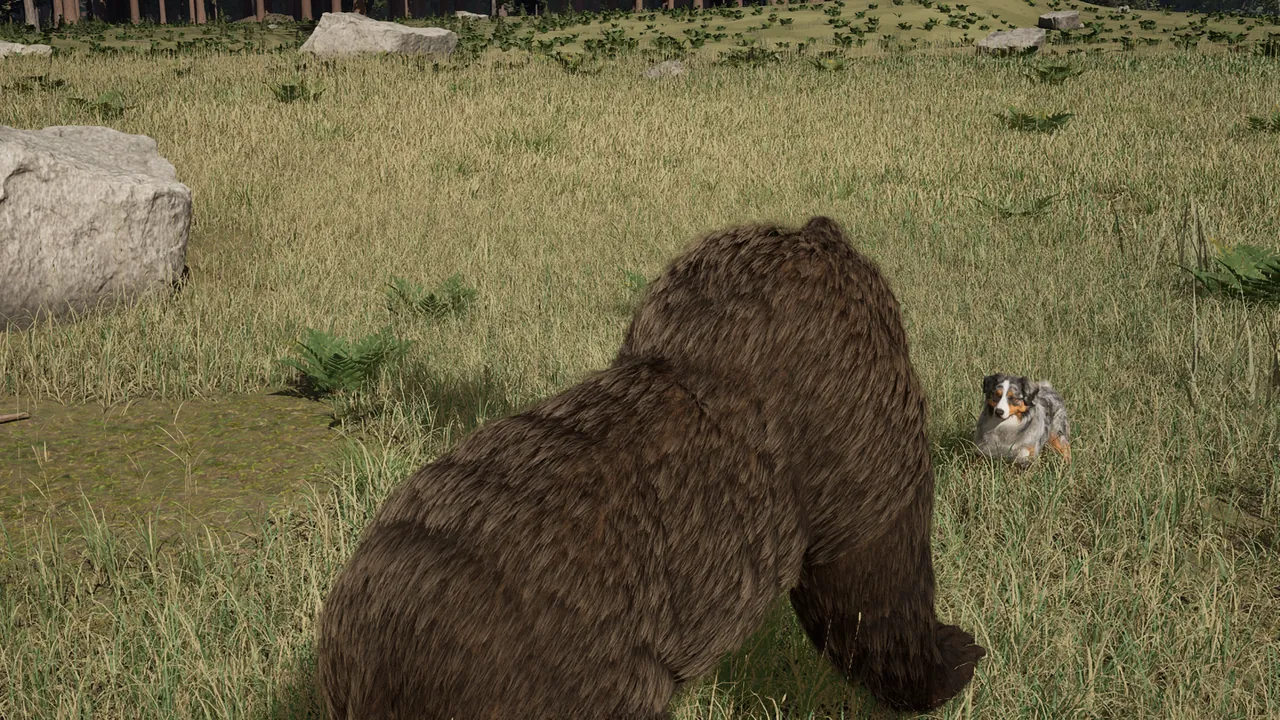
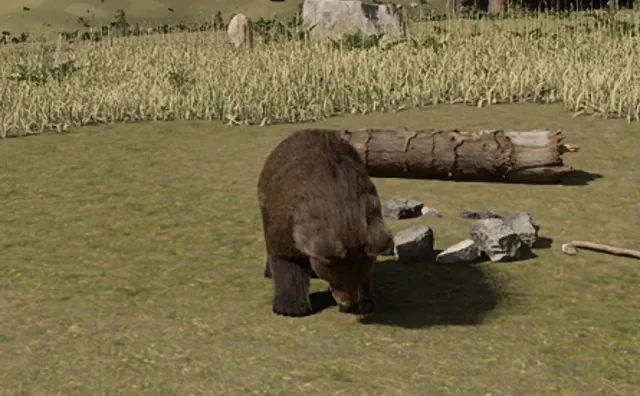
The body changed too. The head had read as a teddy bear’s: the ears now stand 3 cm taller and clear of the fur, the muzzle is 2.5 cm longer and narrower at the tip, and the line from forehead to nose runs straight. The back no longer rises at the withers, and the dark fin that stood 13 to 14 cm above the back when a bear lowered its head to graze is gone. A black bear walking away from you walks where it used to trot.
Still visible when last compared: the brown is a little grayer than the photo’s warm chocolate, and the cinnamon’s blond back hardly shows.