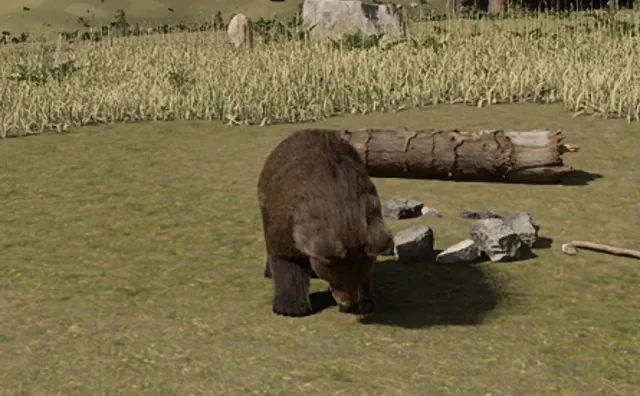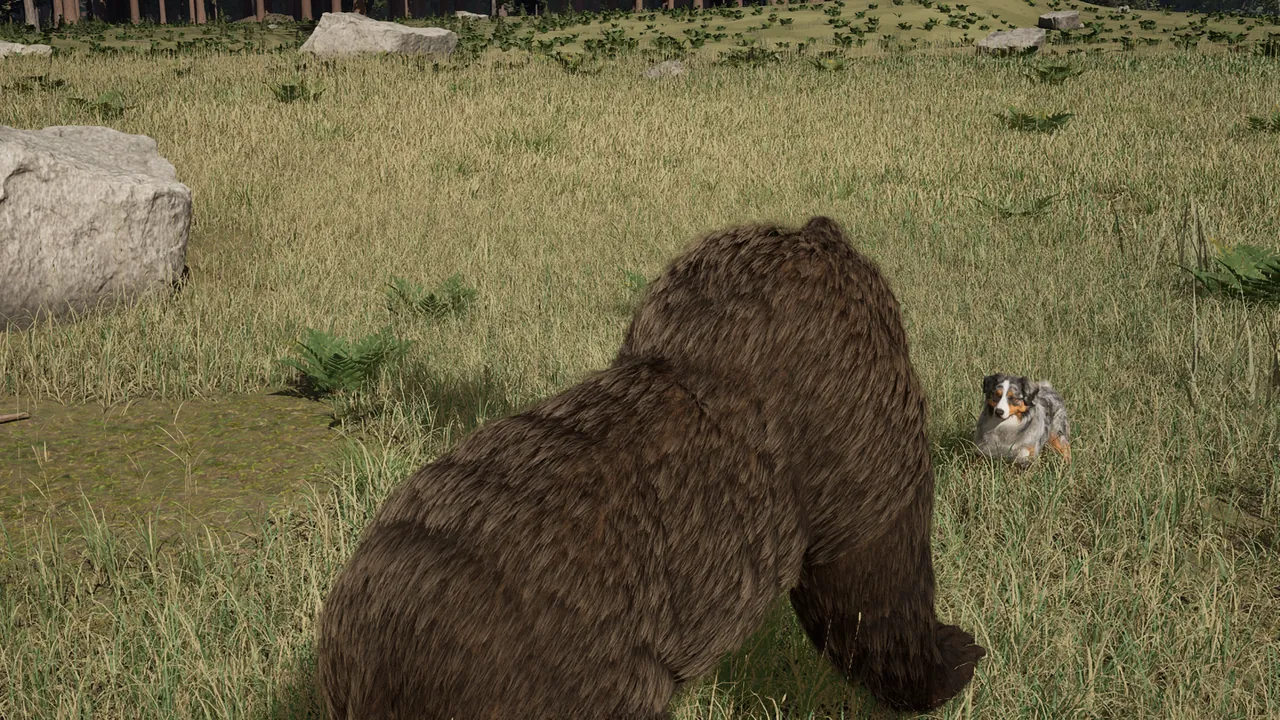
In sun a grizzly’s coat is shaggy brown with darker partings and a grayer face, and it stays one brown bear as you walk away past 15 m. Up close a bear wears a coat of single hairs, and farther off only its body is drawn; the far body takes the coat’s color, and the fur fades in between 14 and 11 m instead of swapping in a single frame. The fur bends with the body instead of standing off it in stiff strands.
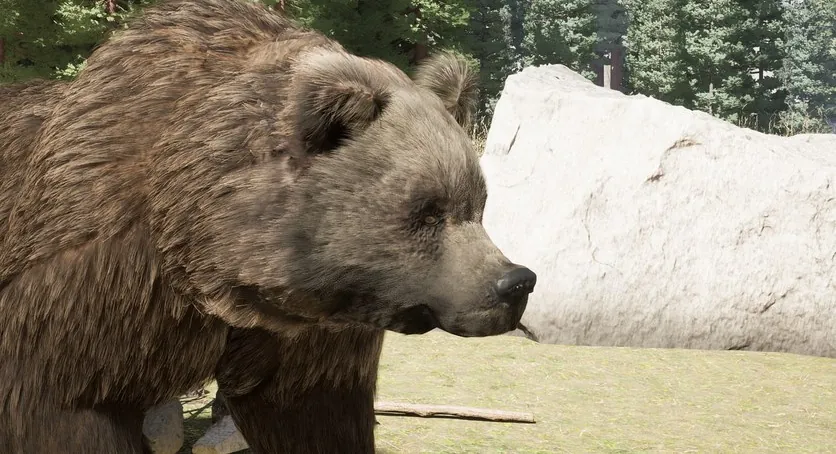
Look it in the face from about 3 m. The eyes are open and dark where only a sliver showed, the muzzle is shorter, blunter and furred, the forehead rises over the eyes, the ears stand clear of the coat with furred bowls, and the nose is dark charcoal with carved nostrils. The long hair that hung under the chin is now short, close fur. The face’s light and dark pattern comes from public-domain photographs of grizzlies.
When it lunges, the mouth opens. Both bears’ bodies began as generated models sealed at the lips, so the jaw only bent the muzzle. They now have lips that part, gums, a tongue and teeth, with 5 cm canines on the grizzly.
Still open: the open mouth’s teeth last read as a crowded pale row, and no check has filmed the open jaw since the muzzle was reshaped. At three-quarter view the nostrils are only a small dark opening. The underside read near-black at 13 to 25 m when far and near were last compared, on November 11.