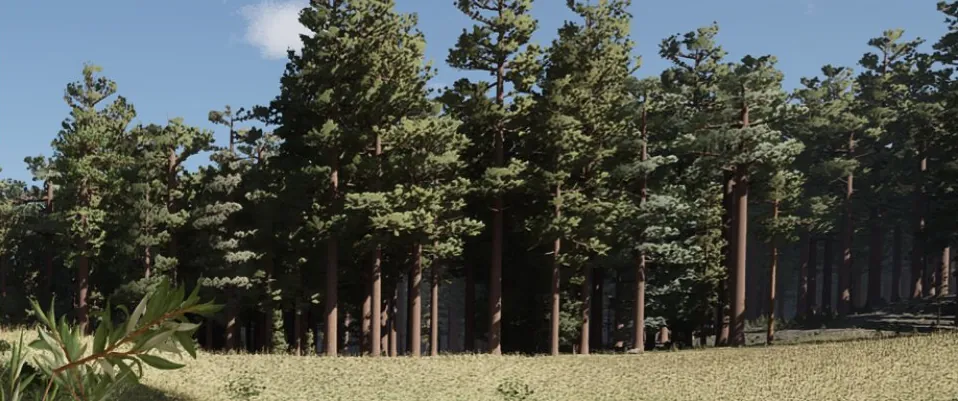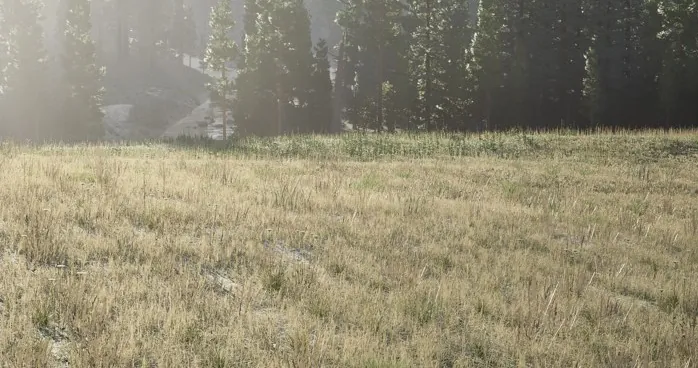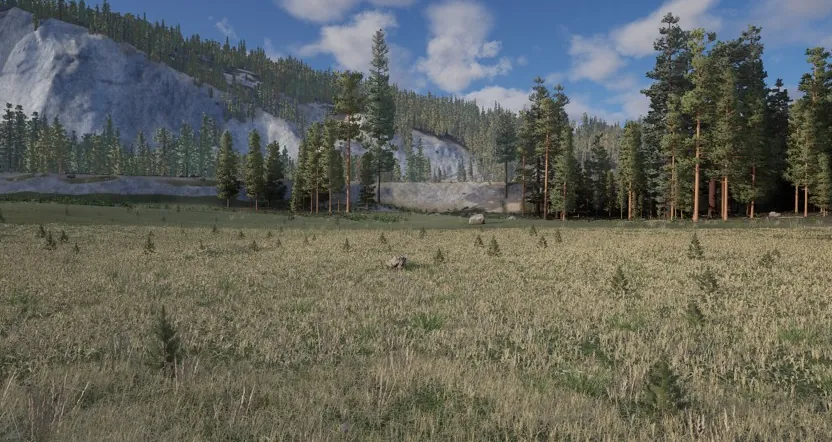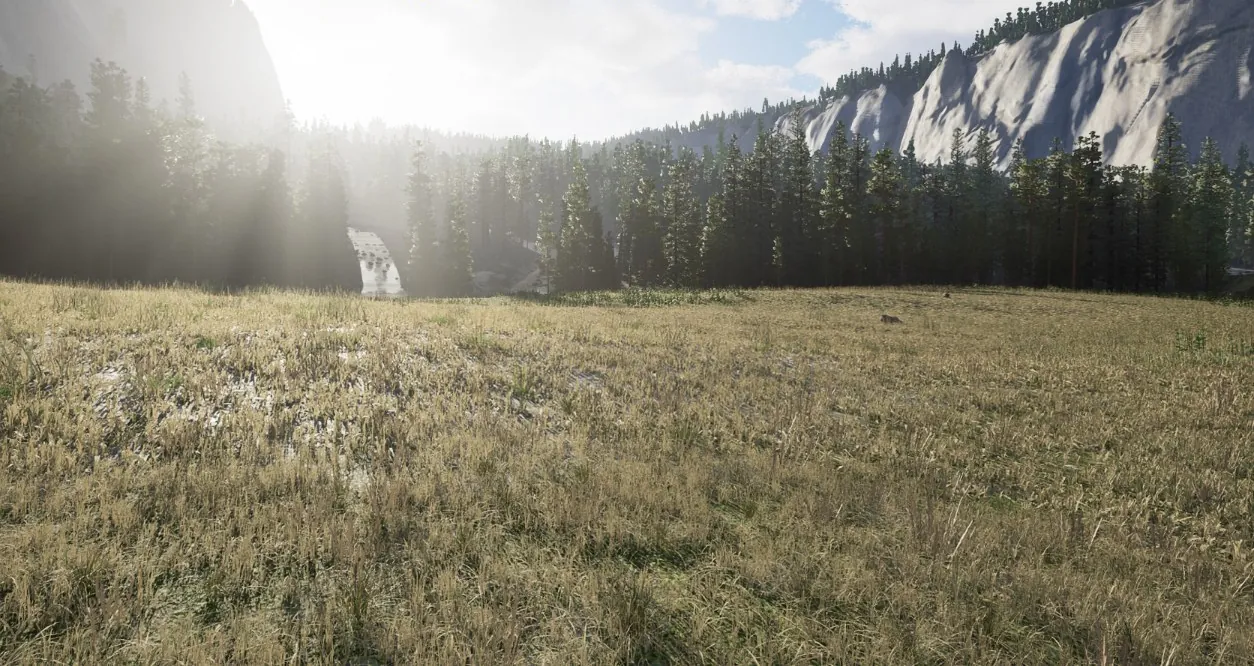
The meadow’s grass carpet used to end in a hard line about 60 m ahead. Past it the ground was a pale, smooth band with sparse blades up to the forest edge, and the line moved with you, which read as the world loading in as you walked. A filmed walk found almost no single pops: the ring was the fault. The carpet now reaches about 120 m, so the grass should run up to the trees with no flat band following you.
Where the grass does end, each piece lies down into the ground instead of vanishing, and the ground beyond is matte and takes the meadow’s own cured straw color for the date and height. Gliding over a late-summer meadow no longer drags a pale disc along under you. Measured 25 m up, the step in brightness at the edge of the grass fell from 2.2 times to between 1.1 and 1.2 times, with the hue matched.
Still visible: from the air a softer edge in grass density, and on foot grass blades that go soft and streaky while you move with the DLSS upscaler on. The cost of the longer range measured within noise on a busy graphics card, and a clean measurement is still owed.