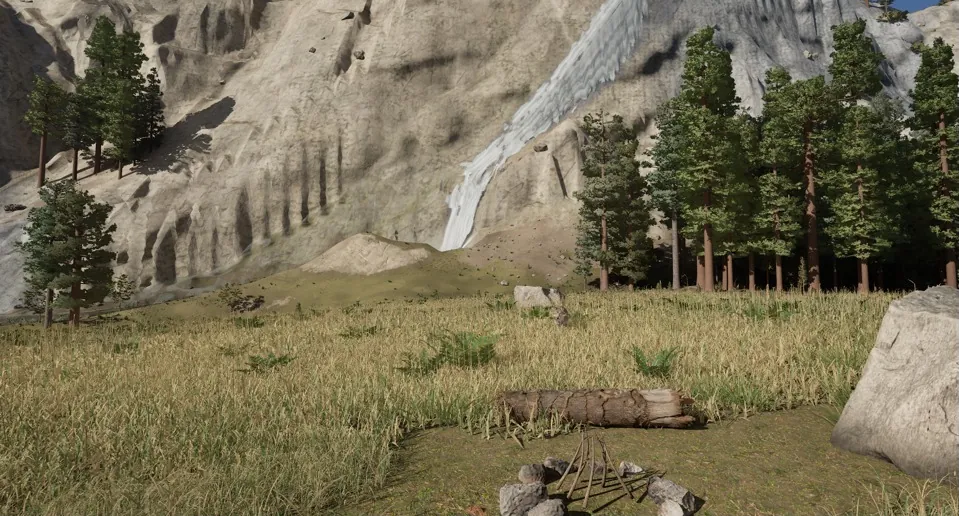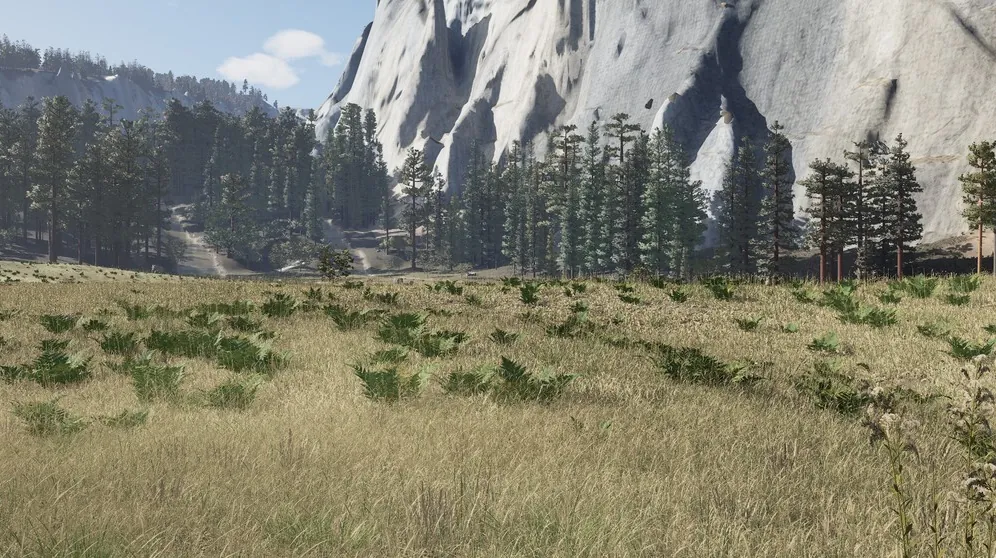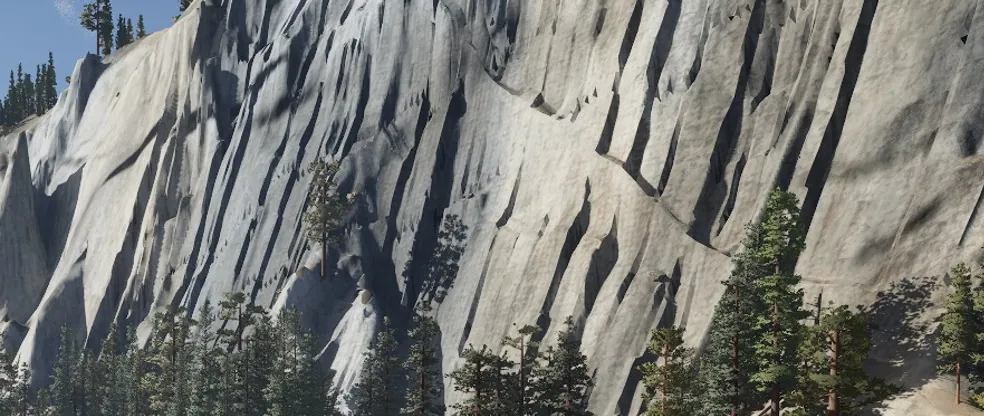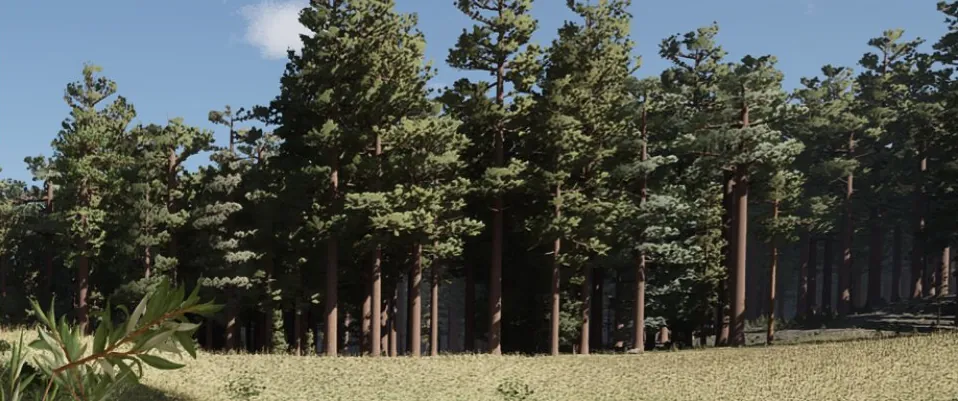
Ponderosa pines and incense cedars, the two commonest big trees, used to drop to simpler versions at 46 to 54 m and again at 62 to 72 m, right in the middle of every forest walk, and each change was a change of shape in one frame. They now keep full detail to 116 m, with the first step at 116 to 136 m and the second at 349 to 407 m, in line with every other mature species. A forest wall 50 to 80 m away shows full needle sprays where it had been blobby cards.
Shrubs had the same fault. Sagebrush, creosote, bursage and the coastal shrubs no longer rearrange as you walk toward them: the far step keeps the near step’s sprays, drops only the twigs and happens about twice as far out, at about 45 m for a sagebrush. Pushing through a willow or deer brush bends the leaves away without a brown flash.
It is not free and not finished. The trees cost about 3 ms more a frame on one test machine, a noisy figure, and that is still to be won back elsewhere. The swap at 116 m is still a swap: measured offline, 21 to 27 percent of crown pixels change when it happens, wherever the swap is put. Sagebrush still swaps at about 8 m.