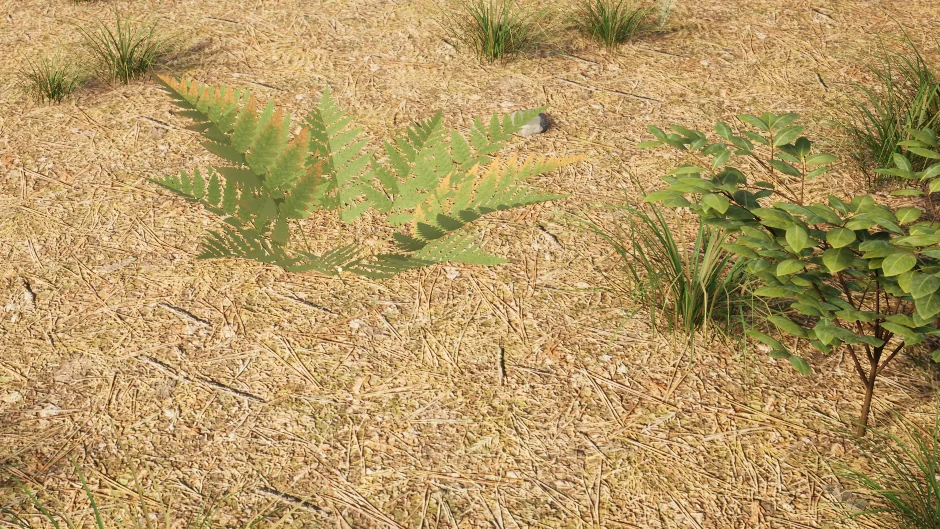
A playtest noted odd black shading on the ferns. The checks said the plants were fine, and the shading was twice put down to the plants shadowing themselves. It was not.
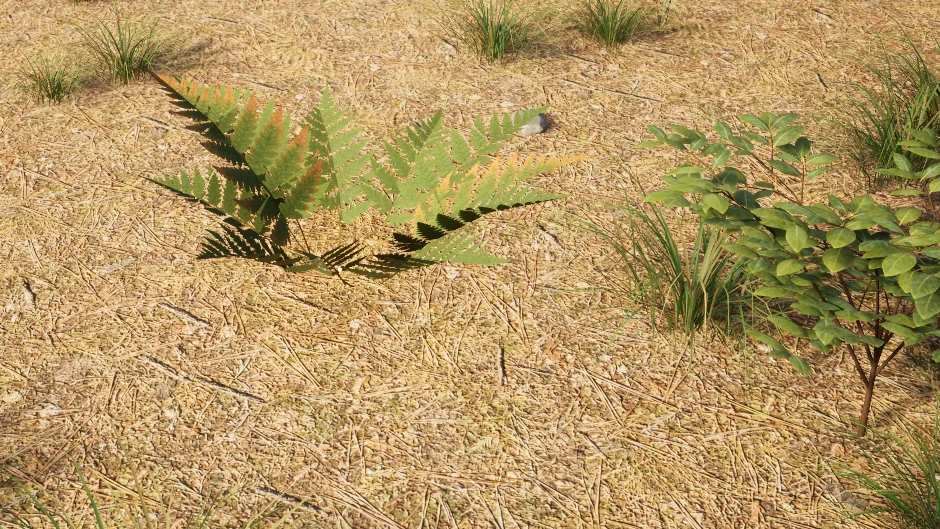
There were three separate causes. Half of every flat leaf had been built facing the ground, so it was lit as if the sun were underneath. The transparent parts of the leaf texture were black, 87 percent of the fern’s texture sheet, and from a distance the smaller versions of that texture blended the black into the leaves. And leaf undersides were shaded as if they faced away from the sky; they now let light through in each plant’s own color.
After each fix the frame was still dark, which is the useful lesson: when a problem survives a fix, look for another cause instead of doubting the fix. Ten plants were rebuilt.
The same evening plants started swaying in the wind. Shrubs that had been scaled up to 1.6 m had grown leaves 15 to 20 cm long, where real huckleberry leaves are 2 to 3 cm, so they were rebuilt with more parts at their natural size. A few hours later a huckleberry spotted growing out of a granite slab led to rocks claiming their real footprint, so plants no longer grow in or on them.