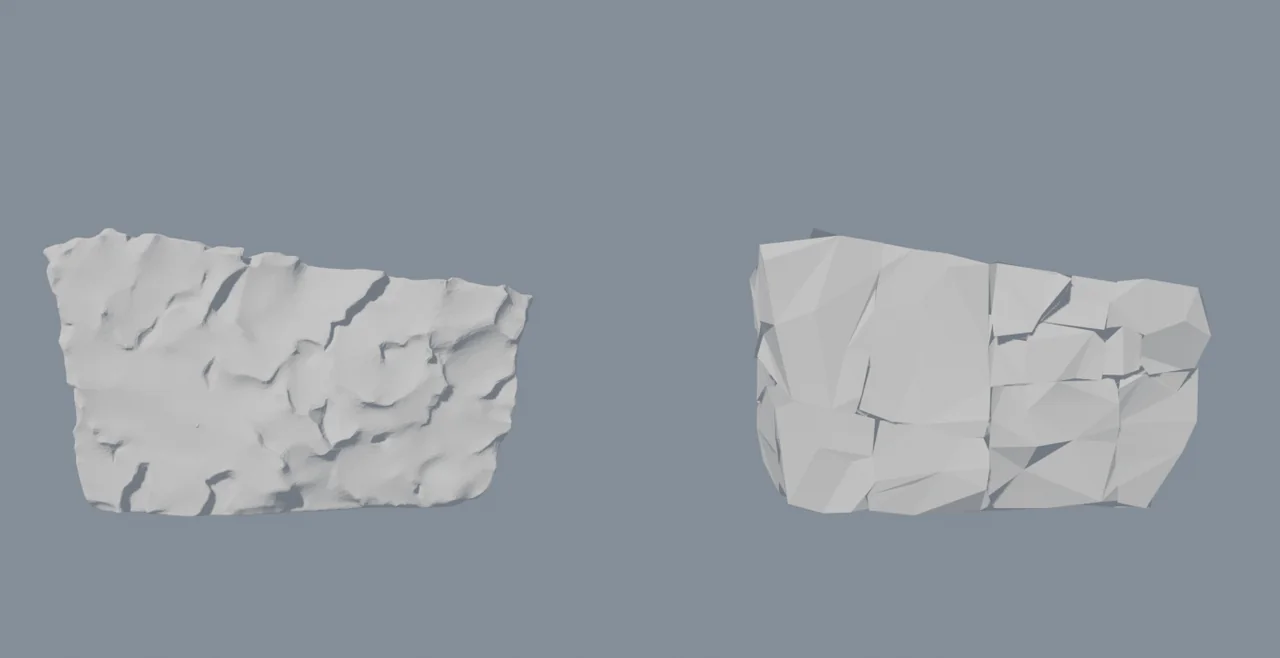
Rocks need to be cheap to draw, because a hillside can hold thousands of them. One detailed boulder started at about 29,000 triangles and was cut down to 780. A check then compared the two at 40,000 sample points and found an average difference of 0.51 cm on a rock 1.3 m across. That is less than half a percent of its size. The check passed.
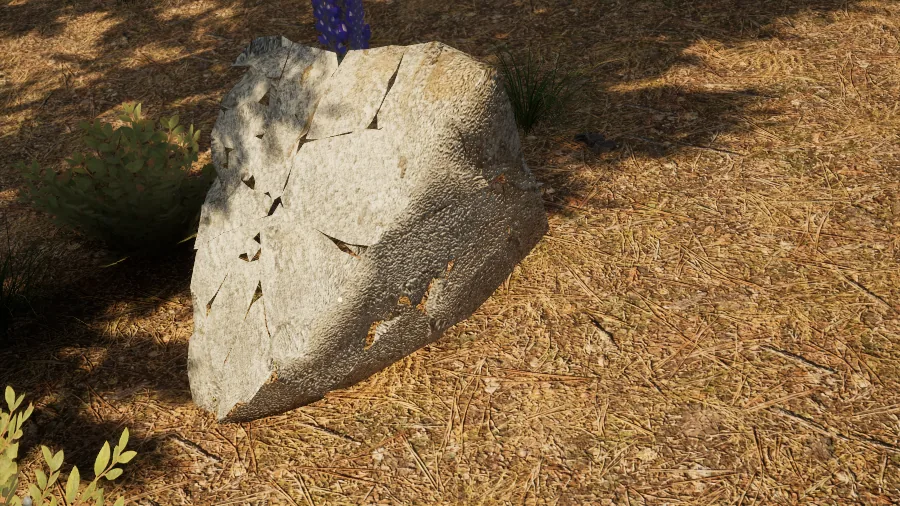
The first time the simplified rock was actually looked at in game, its jagged top edge had been smoothed away and dark gashes ran across the face where the simplification had torn the surface. An average over 40,000 points cannot see a handful of broken triangles, and a handful of broken triangles is exactly what a person notices.
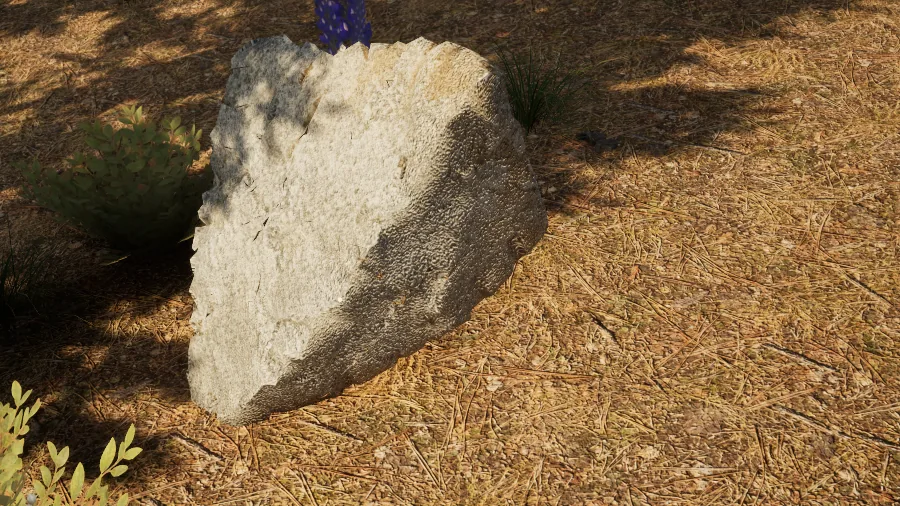
The triangle budget went up from 600 to 2,000 per meter of rock, all seven rocks were rebuilt, and the check now counts thin, broken faces directly instead of relying on the mean. The outline is still slightly softer than the original. The lesson carried beyond rocks: when a defect is rare and severe, report the worst case and how often it happens, because that is the case a player meets.