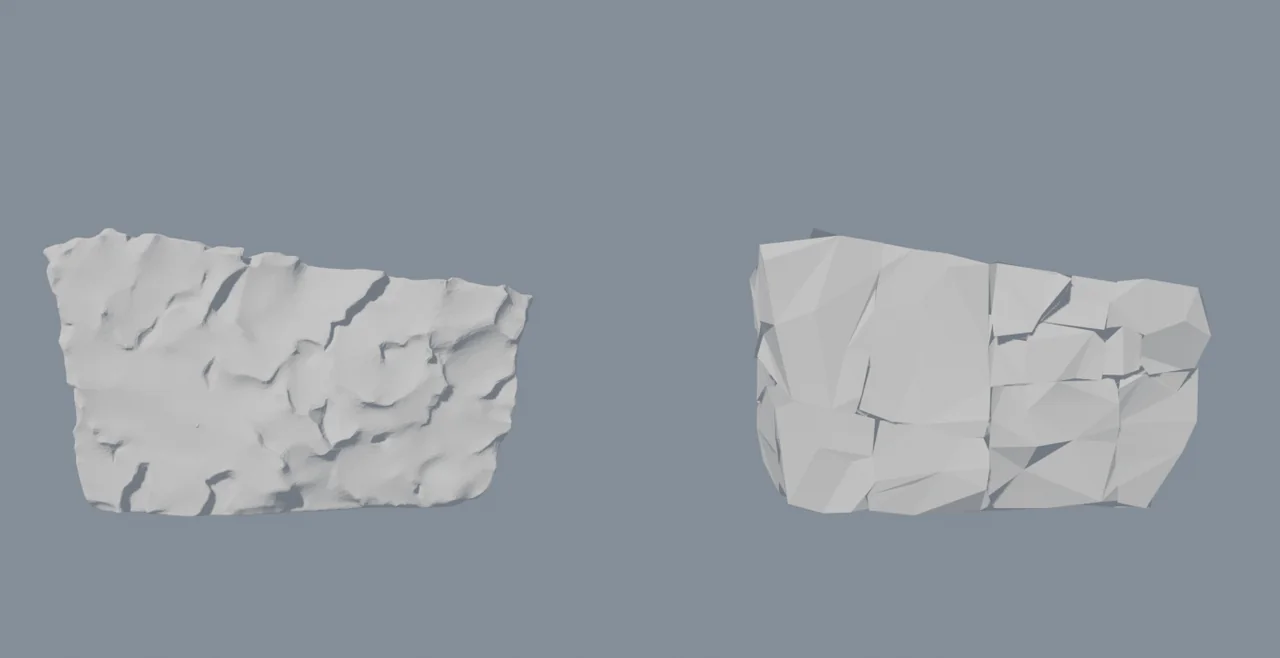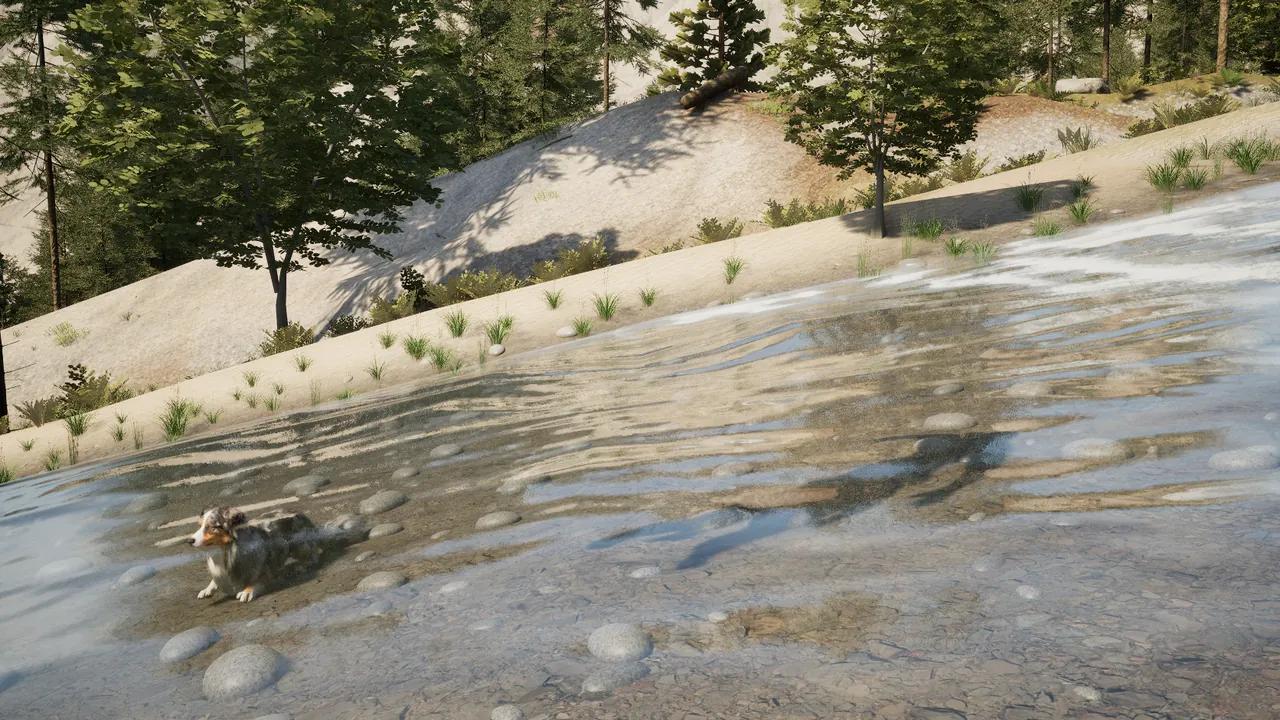
A river in a game is usually a sheet of water laid over the ground. That works until the ground has a slope, a bank or a bend, and then the sheet has to decide where it stops. In late September the answer was often wrong. A creek could stand in tall sheets over the lower ground beside it, drape up a bank, sit on a ridge, or climb a little on its way downhill.
The fix that stuck went the other way round: cut the channel first, then fill it. On September 28 new worlds began to get a planned river in the mountains, cut downhill into its own bed with real banks, with the water level worked out from the flow. It is deep and calm on the gentle valley floor and thin and fast where it pours down the steep step below the first camp. Later that day pools and gravel bars followed: deep water against the outside of each bend, a shallow bar on the inside, and quick riffles where the river crosses between bends.
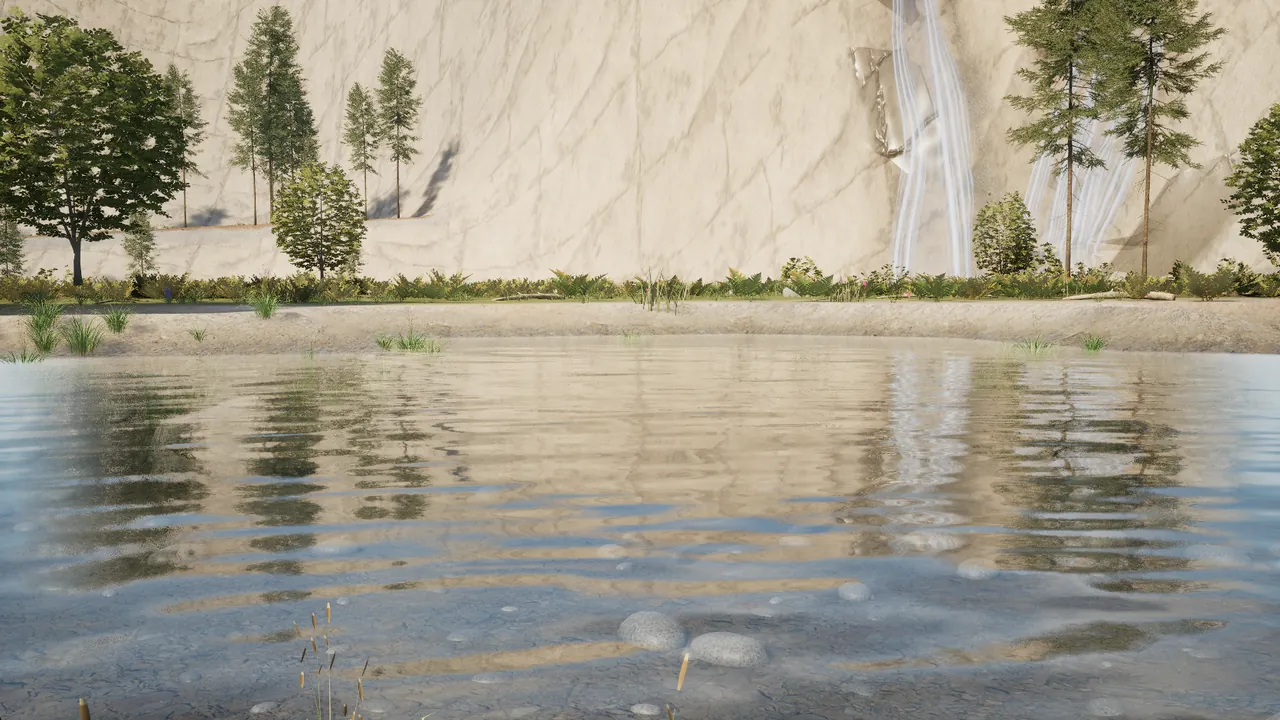
Late that day, a test-only world type grew its rivers a different way: from where water really runs on the ground. Each river follows the land’s own drainage down to its lake, in a channel that only ever runs downhill, and it meets the lake at the lake’s own level. Over the next seven hours it kept deep hollows as small ponds instead of cutting trenches through them, drew streams at their real width, joined side streams to the rivers they flow into, and built banks along their real lines instead of a square grid. Through September 29 it lived only in that test type.
Not every step held. On September 30 a creek plan gave every creek its own channel so that its water never climbed. It worked, but it took the water off the walls where creeks drop as waterfalls. Less than two hours later it was switched off, and the falls came back. A few hours later a version that kept both landed: each fall drops from the end of its creek’s channel at the lip, and the creek carries on from its foot.
The steps went last. Banks had been drawn on a 4 meter grid, so a river’s edge climbed in stair-steps and ran in straight lines. By October 2, in a new world, a river’s edge and its gravel bank curve with a bend instead. Creeks still step at their edges, because their water is too shallow for that fix to reach them.