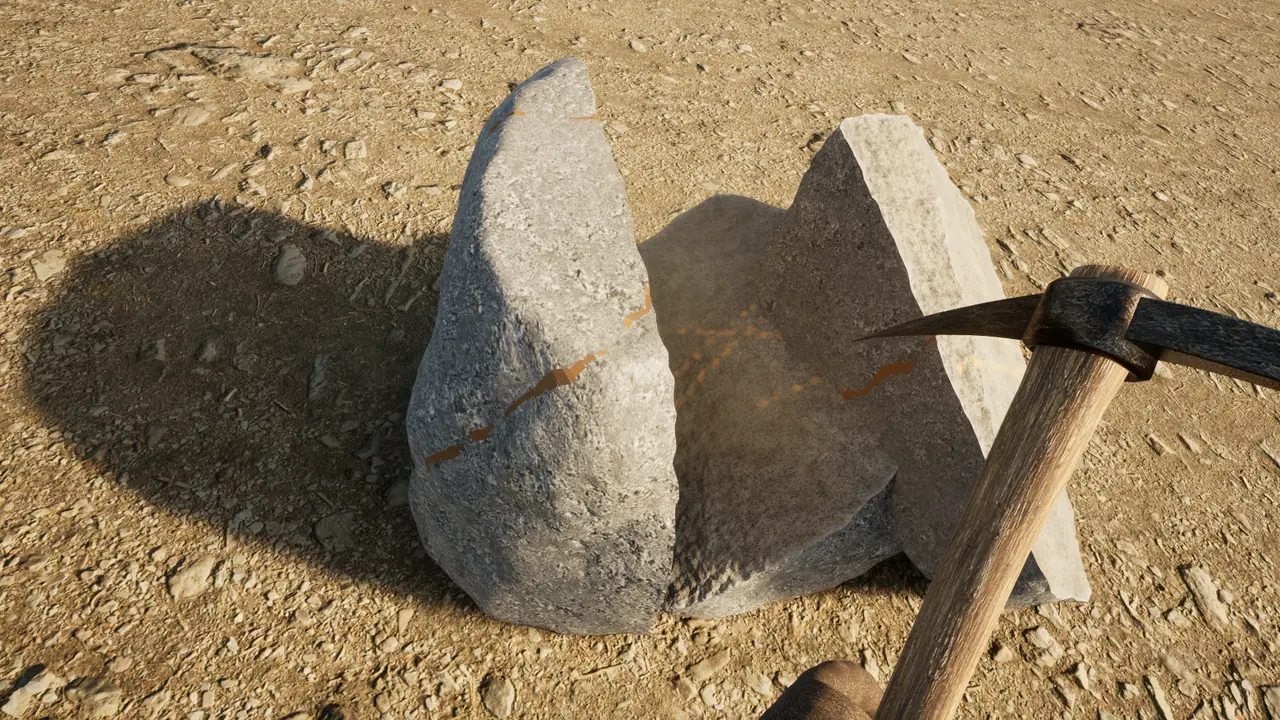
Ore now forms clusters that follow height and biome: copper and coal in the valleys, iron from 700 m and silver above 1,500 m in alpine areas. It also follows the rock type the world had been computing everywhere without anything using it.
But every deposit still looked like copper. The deposit material had copper written into it, so coal was copper with a tint, and iron and silver even picked up as a copper lump. Now the rock model decides the stone and the item decides the mineral, which gives 48 looks from 12 rock models, editable as data.
Getting the colors right needed the unlit texture maps of the ore pickups. Lit images were useless for this: a plain, uniform rock measured a 1.7 to 7.4 times color difference from lighting alone. Coal now reads glassy but not metallic, iron as dark hematite under an ochre crust, and silver as quartz with sparse specks.
The honest limit is visibility. At most about 2 percent of a boulder’s surface shows mineral, so the kinds are still hard to tell apart at a glance, and every kind still takes three hits. How much vein to show is a decision still to make. The pickup models were made from generated reference images.