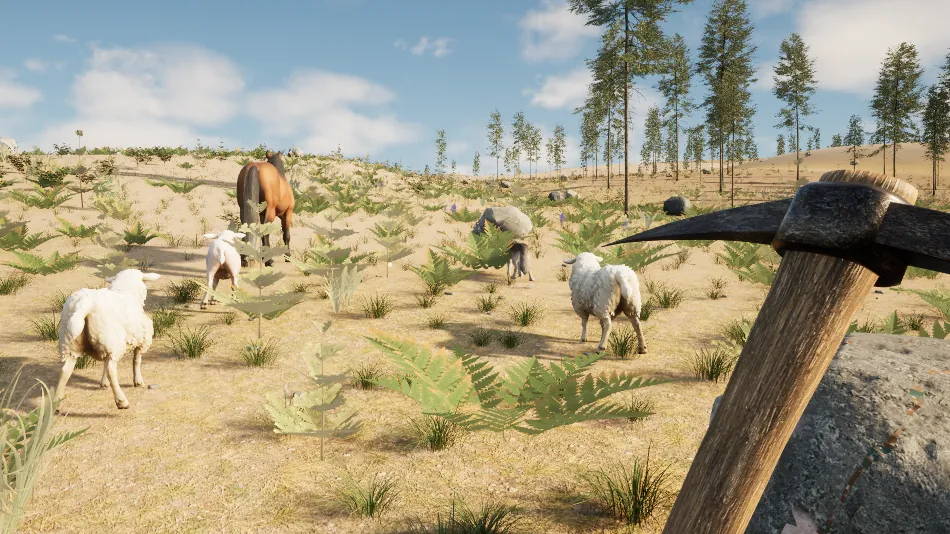
After a playtest, the game felt laggier than before. Measured on an idle machine, the close view held about 60 frames per second: 16.7 ms per frame on average and 17.4 ms for the slowest one percent, with the animals included. What had been felt was development work sharing the same computer, with builds and renders competing with the game. That work now waits while the game is running.
The investigation found other ways the tests had drifted from what a player actually launches. Eighteen automated cases carried their own hand-copied lists of launch settings, 362 copied settings in total, and the rock-breaking tests had silently lost one the real game uses. Everything now reads one launch profile, and a check rejects copies.
A freeze, where pausing, opening the pack and closing it left the game stuck with no menu, went unnoticed for 16 hours because its test was not part of the main set. The full test run takes about 23 minutes, mostly spent generating 16 worlds one after another, and making that faster is next. None of these numbers describe performance on other hardware.